


Mumbai: It began with unexplained headaches and shooting pains in the neck, often lasting minutes but sometimes much longer. Within weeks, she experienced dizziness, disorientation and multiple convulsions, forcing the family to rush her to the local hospital. Within six months, even walking became impossible. By then, an extremely frail Sita Devi (name changed), 80, had left everything to fate. Her aggressive stage-4 lung cancer was fast metastasizing to her brain, making even visits to Dr Surendra Beniwal at the Acharya Tulsi Regional Cancer Institute and Research Centre in Bikaner extremely difficult. Her condition kept worsening: she doubled down with sharp pains and elevated heartbeat with every breath.Under the usual protocol, she would have had a biopsy test followed by radiation until palliative care remained the only way out. But now she had one other option: a new genomic test called next-generation sequencing (NGS), which rapidly sorted through her DNA samples and picked out the precise genetic mutation that was most likely making her sick.
NGS, the newest frontier in medical diagnostics, is rapidly transforming patient care. It decodes genomic data and helps doctors translate that into personalised healthcare within a few days. It is a lifesaver especially for cancer patients but also for people with rare genetic disorders and reproductive and inherited diseases. This is one of the biggest leaps in a lab since the 1880s when the German bacteriologist Julius Petri came up with a way to isolate and analyse germ cultures in a gelatinous bed of algae set between two nesting discs of glass.
NGS is the first step in precision medicine as opposed to the widely practised one-size-fitsall therapies. Medical oncologist Dr Beniwal explains: “Devi had presented with an EGFR mutation [a mutation in the protein called epidermal growth factor receptor in lung cancer], which pinpointed to the use of a drug that targeted exactly that.” So instead of administering standard chemotherapy drugs like carboplatin or paclitaxel, which can cause painful side-effects, especially at her age, he treated her with an osimertinib tablet every day. “Almost a year later, the old lady, from a marginalised income stratum, walks on her own and comes to the centre for followups,” he says.Like with Devi, NGS is enabling treatment decisions to be guided by cellular characteristics, often leading to better outcomes, longer disease control and improved quality of life. From tracing family ancestry to grasping individual nutritional profile, NGS seems to have almost all the answers.
Dr Beniwal cites another case of recovery. A 24-year-old woman had stage-two breast cancer. “Because of NGS and targeted treatment, she could be saved from multiple complications of chemotherapy, expensive antibiotics and neutropenia that leads to low immunity,” he says. Today she leads a healthy, normal life.
“The future of managing disease is not going to be a magic pill,” says Hitesh Goswami, CEO of 4baseCare, a Bengaluru-based precision oncology and genomic testing startup, backed by Infosys and deeptech fund Yali Capital. “It will be about how we understand and analyse an individual’s data, from DNA to demographics. The key will be to match the right patient to the right treatment, every time, everywhere.”
Scientists and researchers have already gene-mapped nearly 4 million people worldwide under NGS and generated well over a billion gigabytes of data. The potential uses of that data are multiplying every year, says Suchita Dayanand, country head, India (commercial), Illumina, a US-headquartered biotech company that made genome sequencing accessible three decades ago.
Pharma companies too are on the hunt for the next logical step: discovery of precision drugs. Earlier this month, British pharma colossus GSK coughed up $10.6 billion for Nuvalent in US to get access to a research pipeline of sophisticated oncology drugs.
“NGS is nothing short of a revolution in the future of medicine,” says Ramakant Panda, cardiologist and founder of Asian Heart Institute, Mumbai.
WHAT HAPPENS
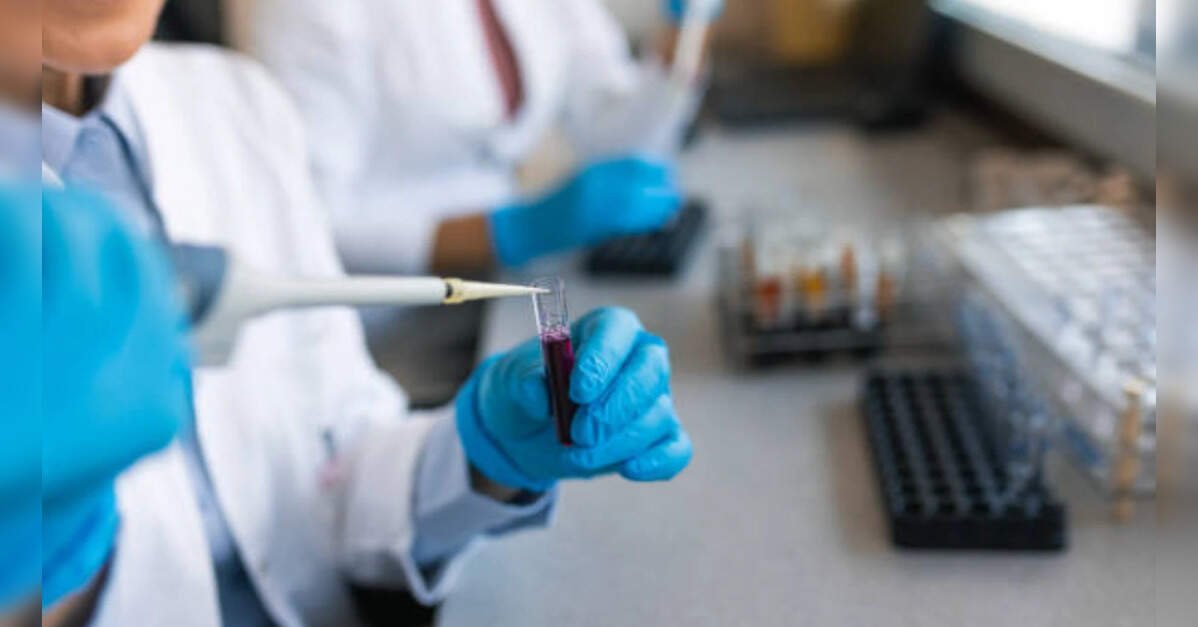
A DNA test like NGS begins with a biological sample such as blood, saliva, tissue, or other relevant specimen, depending on the condition being tested for. The sample is then processed on a sequencing machine that reads millions to billions of DNA building blocks, generating a digital map, and gives information on an individual’s genes. The changes in them, known as genetic alterations, can help doctors understand the cause of a disease, assess inherited risks, predict how a patient may respond to specific medications and identify the most appropriate treatment options.
A genomic report is only the beginning. Its real impact is realised when it helps doctors select the right therapy for a patient. Without NGS, doctors are shooting in the dark. They could prescribe drugs that may not work or even cause more harm to patients.
Joining the medical gold rush of precision treatment are leading hospital chains, young startups, diagnostics networks and global investors. By 2030, India’s genome sequencing market is expected to touch $1.5 billion, a 27% CAGR in four years, with nationwide adoption. The precision medicine market is expected to grow fivefold to $5.8 billion, according to industry estimates.
Apollo Hospitals runs genomics institutes in a dozen Indian cities and plans half a dozen more. Global suppliers of sequencing machines and panels for NGS like Illumina expect their India business to grow three-five times over the next seven years and are already supporting large initiatives like Genome India and the Bharat Cancer Genome Atlas. Genome-testing labs like MedGenome, India’s largest pure-play genome diagnostics company, and Relianceowned Strand Life Sciences have built proprietary NGS data analytics platforms.
A basic test under NGS for cancer can cost Rs 20,000. It can go up to Rs 4 lakh for a high-end panel with detailed, extensive screening.
ALLIANCE FOR ALL
To bring this technology within reach of people who are in desperate need of it, Cancer Research and Statistic Foundation, a Mumbai-based nonprofit for cancer research and patient care, has started an ambitious initiative called the Lung Cancer Genomic Solutions (LuNGS) Alliance. It is a collaboration between oncologists, government hospitals, pharma companies like AstraZeneca, Bristol Myers Squibb, Eli Lilly, Johnson & Johnson, Pfizer and Roche, NBFCs like Tata Capital and the startup 4baseCare.
LuNGS Alliance makes TARGT First Solid, an NGS test developed by 4baseCare that analyses commonly mutated genes and costs at least Rs 20,000, free for lung cancer patients. One patient, categorised as unique, gets one test for free.
Since March 2025, over 6,600 lung cancer patients in 700 cities and towns have got free NGS tests through LuNGS Alliance and its network of oncologists in tier-2 and -3 cities and large metros. It is arguably the largest collaborative initiative in the country to drive awareness about precision oncology as an essential, accessible and affordable option for lung cancer treatment.
Says Dr Kumar Prabhash, head of medical oncology department (solid tumour division) at Tata Memorial Hospital, Mumbai, and the driving force behind LuNGS Alliance: “Programmes like LuNGS Alliance have helped doctors in smaller towns make informed decisions without making it unaffordable for patients.”
“Oncology and neurology are the two fastest-growing disease segments globally. Naturally, these will have very high use cases for NGS,” says Ameera Shah, MD of the diagnostics chain Metropolis Healthcare, which acquired Core Diagnostics last year to sharpen its focus on gene-sequencing technology. She adds: “NGS is also used in the diagnosis of rare genetic disorders as well as pregnancy management and neonatal care. Critically ill infants can be sequenced for early, life-saving interventions while a patient’s entire genome can be scanned to find that single mutation that is causing symptoms.”
MUTATIONS MATTER
With cancer emerging as the largest disease segment, NGS has become the workhorse technology underpinning multi-gene panel testing, analysing mutations in hundreds or even thousands of genes simultaneously.
Cancer is caused by random genetic changes in healthy cells over time. Mutations can be triggered by lifestyle choices, familial predispositions, existing health conditions or even exposure to hazardous chemicals. As they accumulate, mutated cells become cancerous.
Every cancer is as unique as the individual it afflicts, which means even those diagnosed with the same type of cancer have only a fraction of shared mutations. Each tumour is an intricate tapestry of billions of distinct cells, constantly learning to adapt and thwart therapeutic strategies. In 2015, a cancer patient would have undergone four separate tests to identify four biomarkers, costing over Rs 20,000. For the same price now, NGS tests can throw up a minimum of 50 genetic mutations. In India, which has the third highest cancer cases and where over 80% cancers are detected late, NGS can be an effective intervention.
Strand Life Sciences, while not part of LuNGS Alliance, provides tests for multiple issues—nutritional requirements, drug tolerance and hereditary cancer risks. “Beyond immunotherapy, genomics and next-generation sequencing are transforming nearly every aspect of precision oncology—from identifying actionable mutations (where treatment is possible) and inherited cancer risks to understanding tumour heterogeneity, treatment resistance and disease evolution at the single-cell level,” says Ramesh Hariharan, CEO, Strand Life Sciences.
LOCAL IS LOGICAL
India has unique constraints: access to population-specific genomic data remains a white space. There are no centralised, electronic health records. Mutation patterns in Indians differ from those in Caucasians. But global clinical trial data for new medicines is not well represented by Indian patients. Southeast Asia, West Asia and the Indian subcontinent contribute to more than half of the world’s cancer incidences—10 million new cases annually—but there is scant data specific to this cohort. For example, KRAS gene mutation is seen in about 25% of non-small cell lung cancer patients in the West but only in 10% of patients in India. EGFR mutation is seen in 10-15% of lung cancer patients in the West and 35% patients in India.
“More data will help us know the exact patterns in India,” says Dr Prabhash. “Within India, there are serious contrasts. Cases in the Northeast could be very different from the ones in the South.”
That is where the LuNGS Alliance becomes important as it democratises precision medicine and saves lives.
Lung cancer accounts for nearly 10% of cancer deaths in India. According to Global Cancer Observatory, 81,000 new cases are reported annually and almost two-thirds of patients succumb to this modern-day epidemic within two years of diagnosis.
“This stark imbalance between incidence and mortality highlights the urgent need for data-driven precision approaches in treatment of lung cancer instead of standard chemotherapy,” says Goswami of 4baseCare.
Of the 6,600 patients tested under LuNGS Alliance, reports of 58% showed actionable mutations that could directly inform treatment decisions. So 1 in 2 patients could potentially benefit from biomarker-directed therapy. Over 60% of samples came from tier-2 and -3 cities. Rajasthan topped the chart with 858 samples, including Sita Devi’s.
When LuNGS Alliance followed up on 1,920 patients, it saw real-world impact — 45% were able to access precision-based treatment.
“Cross-sector partnerships like LuNGS Alliance are enabling more timely, informed treatment decisions in resource-constrained settings,” says Praveen Akkinepally, country president, AstraZeneca India.
Meenakshi Nevatia, MD of Pfizer India, says it’s not just about sequencing the gene: “It’s about knowing exactly what to use. The subsidy for the tests is significant.”
VOLUMES GAME
However, subsidies alone cannot galvanise a movement. Insurance cover for NGS and its integration with common tests for diabetes or liver function can unleash its full potential.
Entrepreneurs like Mohan Uttarwar, cofounder of 1Cell. AI, a cancer-testing startup, are blending AI with cell biopsy for sharper results to predict tumour growth. Says Uttarwar: “NGS is a disruptive innovation. While tests cost $4,000-5,000 in US, it is a few thousand rupees in India.” Vedam Ramprasad, CEO of MedGenome, says inclusion of NGS in government schemes such as Ayushman Bharat will catalyse adoption at the grassroots level and reverse the urban skew. He adds: “Prices have already dropped and will fall further. Once NGS becomes part of common histopathology tests (for tissue biopsy), it will go mass.” In 2025, MedGenome bought Green Cross Genetic Labs in Gujarat to expand its genomic diagnostics network.
But a genomic report like NGS is only the start of the precision-medicine journey. Unless it is backed by affordable medicines, acceptance will be limited in low- and middleincome countries. AstraZeneca’s Tagrisso (osimertinib) costs Rs 1.2-1.4 lakh for 10 tablets. A vial of the cancer drug Imfinzi is Rs 1.4 lakh while Bristol Myers Squibb’s immunotherapy medicine Opdyta costs Rs 1 lakh for a vial. Zydus Lifesciences has launched a generic version, Tishtha, for a fourth of that price.
The cost of the medicines has to align with the changing economics of the tests. “There are many barriers to implementing precision medicines. LuNGS Alliance provides access to molecular tests but efforts are also required to improve access to various medicines,” says Dr Prabhash.
Hospitals say test-based treatments are inevitable and can be made accessible through patient assistance programmes. Meanwhile, expiry of drug patents, launch of biosimilars and lower cost alternatives are changing industry dynamics. As more patients gain access to precision medicines, the demand for genomic testing will rise rapidly, making personalised cancer treatment a routine part of care, rather than an option for a chosen few. After all, time is of the essence for all cancer patients.
