



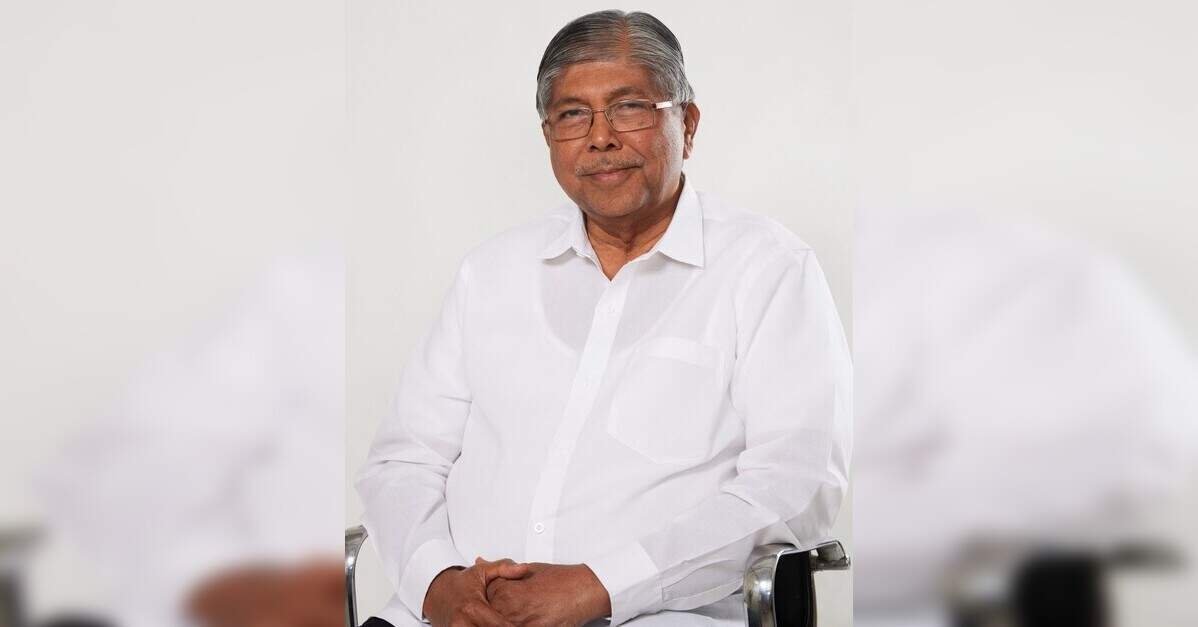
– By Hon’ble Shri Chandrakant Dada Patil
The National Education Policy 2020 has given Maharashtra an opportunity to bring academic flexibility, skill based education, research orientation and industry exposure into the centre of higher education. The State Government has approached its implementation through planned academic decisions, clear administrative action and close coordination with universities and colleges.
Maharashtra began implementation of NEP 2020 in higher education from Academic Year 2023 24. The scale of this task required coordination across non agricultural state universities, autonomous colleges, affiliated institutions and technical education bodies. For this purpose, the Sukanu Samiti, or State Steering Committee, was formed to guide implementation across the state. It has played an important role in maintaining a common academic direction across regions such as Mumbai, Pune, Vidarbha and Marathwada.
The Dr R D Kulkarni Committee provided the academic basis for the new credit and programme structure. Its recommendations helped autonomous colleges and state universities move from the earlier course pattern to a four year choice based structure from June 2023. This gave institutions clarity on credit distribution, subject combinations, skill based courses, multidisciplinary learning and student progression.
A central feature of NEP 2020 is the National Credit Framework. Maharashtra has been among the early states to align higher education with this national credit arrangement.
The credit structure connects school education, higher education and vocational learning through a common academic credit system. This allows student learning to be recorded through classroom teaching, practical work, internships, projects, skill courses, research activity and workplace exposure.
Building a flexible, multidisciplinary learning ecosystem
For students, this has brought a clear change in the content of degree education. The earlier approach was largely discipline specific. The new structure allows a student to study a major subject, select a minor from another discipline, choose open electives and complete vocational and skill enhancement courses. This gives students the academic space to combine depth in one discipline with exposure to other areas.
A commerce student can take data analytics. A humanities student can study digital tools or applications of Generative Artificial Intelligence. A technology student can study intellectual property, digital ethics or business models using Artificial Intelligence. A science student can add entrepreneurship or public policy. These combinations are important because present day employment requires subject knowledge along with analytical ability, communication, ethics, practical skills and understanding of technology.
Strengthening Industry Integration and Research
In July 2023, specific credit structures were mandated for engineering and technical programmes. This was an important academic step for preparing students in advanced technology sectors. Major disciplines give students depth in areas such as algorithms, data science architecture, neural networks, electronics, computing and core engineering. Minor disciplines provide an additional area of competence. Vocational and Skill Enhancement Courses give students practical exposure through laboratories, fabrication, coding, cloud computing, Internet of Things and Python scripting. Open Electives allow students to study areas such as digital ethics, intellectual property in Artificial Intelligence and technology based business applications.
The fourth year Honours with Research track is another important academic change. This track gives students an opportunity to take up deeper study in their major subject through research projects and dissertations. In technical and professional institutions, it can connect students with incubation centres, industry research departments and applied projects. Final year work can move towards prototypes, minimum viable products, research papers, patents or start up ideas.
The Apprenticeship Embedded Degree Programme also supports this direction. Students gain from direct work exposure while they are still pursuing their degrees. This helps them understand workplace discipline, industrial processes, tools, timelines and problem solving. Degree education and practical work experience can therefore move together, particularly in engineering, management, pharmacy, architecture, design, commerce and applied sciences.
Industry participation has received greater space through the Professor of Practice provision. Maharashtra has adopted the University Grants Commission guidelines for engaging experienced professionals in higher education institutions. This allows institutions to bring in practitioners from areas such as Artificial Intelligence, cyber security, manufacturing, finance, design, start ups, deep technology and public systems.
The removal of formal Ph.D. requirements for such practitioners allows colleges to benefit from professionals who have significant work experience. Artificial Intelligence architects from Pune and Mumbai, cyber security experts, semiconductor professionals and founders of technology start ups can contribute to teaching, mentoring and project guidance. Their presence can bring current industry problems into classrooms, including work related to Large Language Models, blockchain security, industrial automation and data systems.
Preparing faculty and expanding inclusive access
Faculty preparation remains central to this academic change. The Maharashtra State Faculty Development Academy has been given an important role in preparing college teachers for new teaching methods. Its work includes training in multidisciplinary assessment, virtual laboratory use, design thinking, project based learning and new evaluation methods. A credit based and skill based curriculum requires teachers who can guide students through practical assignments, research questions and technology based learning.
The State Government is also working to ensure that advanced education reaches students across social and regional backgrounds. Maharashtra has a large number of students from rural areas, tribal districts, small towns and Marathi medium schools. Academic reform has greater value when these students also receive access to new courses, digital resources, local language support and financial assistance.
Language support is therefore an important part of this work. Through digital translation platforms and Artificial Intelligence based tools, technical educational content is being made available in Marathi. This can help students understand complex subjects such as coding, structural mechanics, data science and engineering concepts in a language familiar to them. Marathi must also grow as a language of knowledge in higher and technical education.
Financial access is another priority. The State Government has provided 100 percent tuition and examination fee benefit to eligible girl students from families with annual income up to Rs 8 lakh. This decision reduces the cost barrier for girls entering professional education. It can help more young women pursue computer engineering, Artificial Intelligence, robotics, pharmacy, architecture, management and other professional courses.
A new era of quality assurance
Quality assessment is also changing at the national level. NAAC has discontinued the traditional eight point grading pattern such as A++, A+, A and related grades. The new system is based on Binary Accreditation and Maturity Based Graded Levels. In the first stage, institutions will be placed in two categories, Accredited or Not Accredited. Institutions that receive accreditation will later be placed from Level 1 to Level 5 based on quality maturity, with Level 5 indicating global excellence.
This change will require colleges and universities to maintain academic quality on a continuous basis. Teaching, research, student outcomes, governance, data systems, infrastructure, faculty work and Internal Quality Assurance Cell activity will become more important. Accreditation will increasingly depend on regular institutional discipline rather than preparation at one point in time.
At present, the regular NAAC portal for the old system and fresh direct applications under the new system is inactive at the national level. This is because NAAC is moving from the earlier manual and hybrid method to a technology based Binary Accreditation system. Software and database changes are underway. Pending proposals from Academic Years 2023 24 and 2024 25, estimated at more than 2,300 institutions, are also being processed. Institutions whose accreditation validity expires in 2026 have received temporary extension of their earlier grades until the new portal becomes operational.
Fresh Cycle 1 institutions that wish to apply for NAAC assessment for the first time will also have to wait for the new Binary Accreditation system. They have not been permitted to apply under the old Revised Accreditation Framework. Once NAAC opens the new guidelines and IT portal, these institutions will be able to complete registration and submit the Letter of Intent. Until then, colleges are expected to keep their Internal Quality Assurance Cells active and collect internal data as per the new ten attributes.
This is closely connected with NEP 2020. Wider subject choice, research options, skill courses and industry exposure require colleges to maintain better academic records, better faculty preparation, better governance and better student support. Academic flexibility and institutional quality must move together.
The road ahead
The Higher and Technical Education Department, Directorate of Higher Education, Maharashtra State Board of Technical Education, State CET Cell Maharashtra, RUSA and PM USHA Maharashtra all have defined roles in this process. Universities and colleges will carry the academic changes into classrooms. MSBTE will guide diploma and technical education. The State CET Cell will support admissions. RUSA and PM USHA will assist institutional development. The department dashboard will bring information together for academic and administrative planning.
The purpose of NEP 2020 in Maharashtra is to give students meaningful academic options. A student should be able to combine subjects, take up skill based courses, receive credit for practical work, gain industry exposure, pursue research, study advanced technology and continue education with greater flexibility. Students from smaller towns, rural areas and modest financial backgrounds must also be part of this change.
Maharashtra has a strong tradition of education, industry, social reform and public thought. NEP 2020 allows the state to bring these strengths into higher and technical education. The State Government’s focus is to make degree education more relevant, practical, research oriented and connected with opportunities available in Maharashtra, India and the world.
– The author is the Minister for Higher and Technical Education, Government of Maharashtra
DISCLAIMER: The views expressed are solely of the author and ETEducation does not necessarily subscribe to it. ETEducation will not be responsible for any damage caused to any person or organisation directly or indirectly.


