



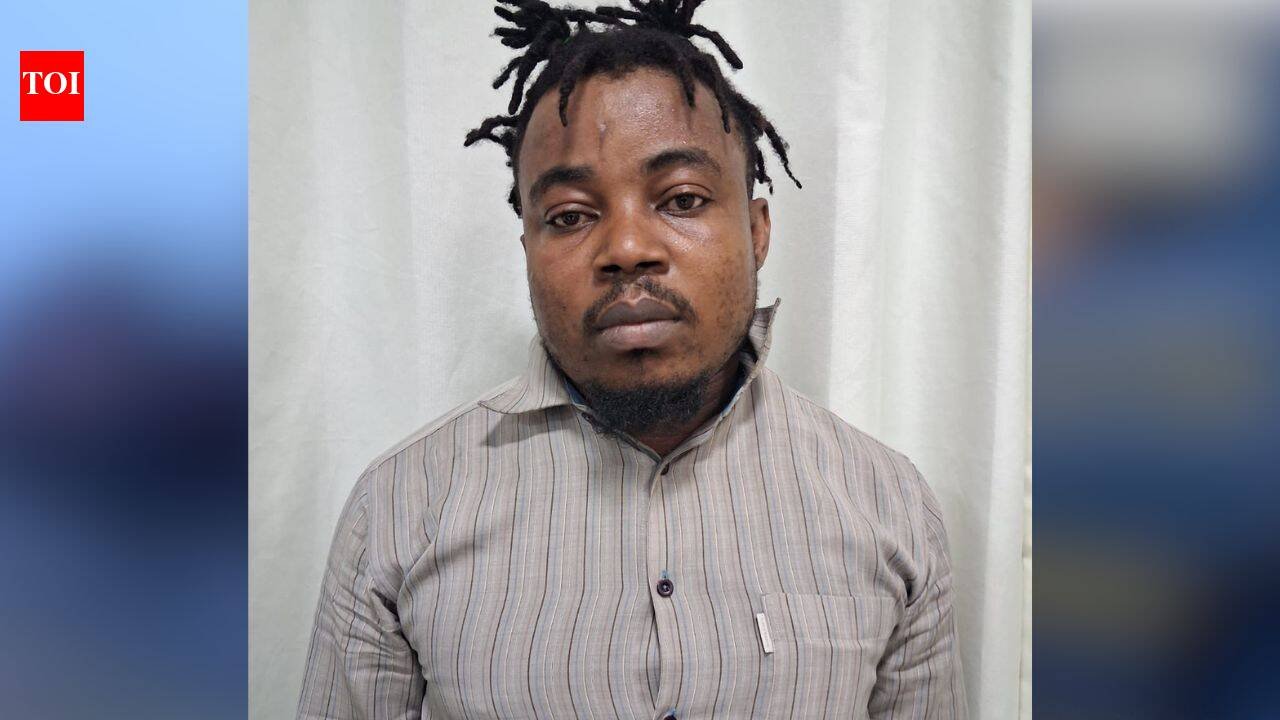
LUCKNOW: It began like an unlikely friendship with a woman claiming to be from England. It ended with a Lucknow man losing nearly Rs 68 lakh after a gang allegedly turned a fake Facebook identity, promises of expensive gifts and a fabricated customs ordeal into an elaborate cyber fraud.The Uttar Pradesh Special Task Force (STF) has now arrested a 37-year-old Nigerian national, allegedly a key member of the gang, from Delhi in connection with the case, exposing a modus operandi in which fraudsters allegedly manufacture an entire foreign persona, build an emotional connection with victims and then switch roles from “friend” to “customs official” to extract money.The accused, Nwogu Obed Osinachi, a native of Imo State, Nigeria, was arrested from a house in Kamal Vihar, Burari, Delhi, at around 1.50 pm on August 11. He was wanted in FIR No. 33/2026 registered at Madeyganj police station in Lucknow Commissionerate.According to Additional SP, STF, Vishal Vikram Singh, the victim, a Daliganj resident, was first approached on Facebook through a profile created in the name of “Doris William”, who claimed to be from England.Investigators said the initial contact appeared innocuous. The fake profile allegedly established a friendship with the victim and gradually gained his confidence. The conversation then moved to promises of sending expensive gifts, dollars and pounds to India.The trap was sprung once the victim was convinced that a parcel containing valuable gifts and foreign currency was on its way.He was allegedly informed that the purported woman had been stopped at an airport because customs authorities had detected the expensive gifts and foreign currency. The fraudsters then allegedly changed their identities and began communicating with the victim as customs and Income Tax officials.The victim was told that money had to be deposited to clear the consignment. What followed was a series of demands in the names of customs duty, income tax, GST and other charges.The gang allegedly went a step further to make the story appear authentic.“To make the deception appear genuine, the gang also allegedly sent the victim a fake RBS certificate purportedly issued in the United Kingdom. Over the course of the fraud, the victim reportedly transferred around Rs 68 lakh,” Singh said.The STF’s investigation into the case eventually took investigators from Lucknow to Delhi and into the activities of a group of Nigerian nationals allegedly operating the fake-profile racket.The STF had earlier arrested two alleged associates — Uchenwa on May 15 and Obase Prosper on July 18 — in connection with the same case.Osinachi, however, remained wanted.Following technical analysis and intelligence inputs, the STF cyber team learnt that he was staying in Kamal Vihar, Burari. A team subsequently raided the premises and arrested him.The raid also provided investigators with a glimpse into the digital machinery allegedly used to manufacture such identities.The STF seized 11 mobile phones, a laptop, a passport, four ATM cards and 34 screenshots. The screenshots reportedly contained photographs and videos of foreign women allegedly used to create fake social media profiles, besides material linked to impersonating customs officials.During interrogation, Osinachi reportedly told investigators that he had entered India on a business visa in 2022, but remained in Delhi after the visa expired.According to the STF, he disclosed that other Nigerian nationals living in Delhi introduced him to the fraud operation. The group allegedly created fake Facebook and Instagram profiles in the names of US and UK citizens and used them to befriend Indian men and women.The victims were then allegedly promised expensive gifts and foreign currency. Once the victims were emotionally invested, the fraudsters allegedly introduced the second layer of the deception — claims that the gifts or foreign currency had been intercepted at an airport.The accused reportedly admitted to investigators that the Rs 68-lakh fraud involving the Lucknow resident was carried out with Uchenwa and Prosper.The STF said the interrogation has also thrown up indications that the network may have targeted victims in several states.Investigators suspect that the gang used Indian bank accounts obtained on rent to receive money from victims, making it harder to immediately trace the beneficiaries.The agency is now examining the accused’s bank accounts, digital wallets and electronic devices to determine where the money went and identify other members of the network.The seized electronic devices will also undergo forensic examination.For investigators, the case is significant not merely because of the amount lost by one Lucknow resident, but because it reveals how a cyber fraud can be built around an entire fictional character — complete with a foreign identity, photographs, a relationship, a promised gift and even a fake official document — before the victim is confronted with the final demand for money.


