



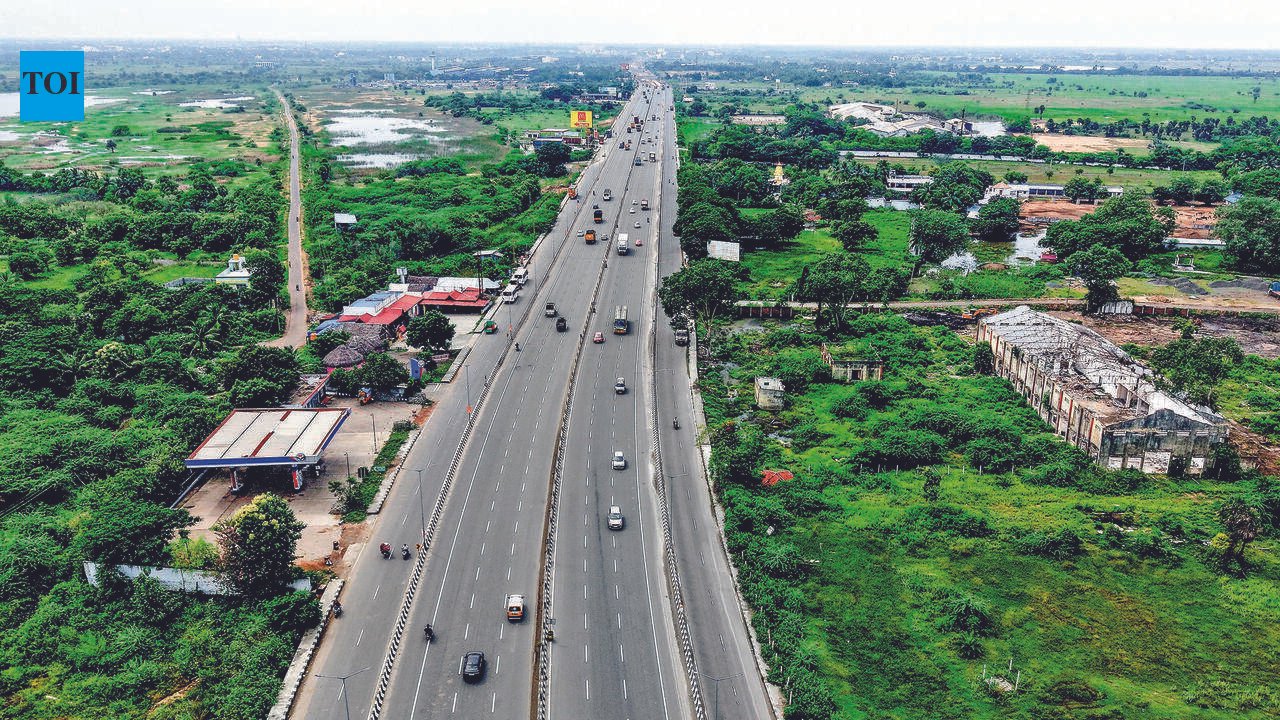
Alagappan Ramanathan & Madhu Meenakshi KarthikeyanIn India, traffic accidents claim the lives of 480 people every day, or one life every three minutes. Every number represents a family, a means of subsistence, and a suddenly upended future. But road deaths rarely generate the same urgency as other national problems.Safety is a key component of sustainable mobility, along with efficiency and accessibility, according to the UN’s Decade of Sustainable Transport 2026–2035. It is also closely linked to the Sustainable Development Goals, which call for access to safe, affordable and sustainable public transport and a reduction in deaths and injuries from road crashes.The Motor Vehicles Act addresses almost every major traffic violation. India, therefore, does not lack rules. We have speed limits, helmet laws, seatbelt requirements, lane discipline regulations, penalties for drunk driving and provisions against dangerous driving. The real challenge lies in enforcement. With 40 crore vehicles registered in India (as per Ministry of Road Transport data), it is humanly impossible to monitor every vehicle, particularly at night, during extreme weather, and on highways and rural roads where many fatal crashes occur.This is the gap that AI-based enforcement is designed to close. Modern systems combine CCTV networks, computer vision and automatic number plate recognition cameras to monitor stretches of road continuously, without needing a human observer at every point. They can automatically flag speeding, red-light jumping, riding without a helmet and mobile phone use while driving. Such technology can also generate time-stamped video records that serve as evidence, without needing a police officer to have witnessed the violation in person.The Bengaluru-Mysuru Expressway uses an automatic traffic management system, AI-powered surveillance cameras and restrictions on certain vehicles to improve road safety. Cameras installed at more than 20 locations along the expressway detect speeding and other traffic violations, with e-challans sent to the mobile numbers of registered vehicle owners. The maximum speed is capped at 100kmph, while AI systems track the average speed of vehicles across designated stretches. The impact has been significant, with fatalities falling from 188 in 2023 to 50 in 2024.Several states and cities, including parts of Uttar Pradesh, Rajasthan and Kerala, have begun testing AI-based traffic surveillance, with early reports indicating a decline in violations. In time, these systems could be integrated with the govt’s integrated road accident database, which digitises crash data across states. Tamil Nadu does not have automated enforcement solutions for its roads though plans are underway to install AI-based security cameras across the state.If AI-based enforcement were rolled out systematically across the country and achieved even a 10% reduction in road fatalities, it could save close to 20,000 lives every year. That is roughly equivalent to the population of a small town. This is not an unreasonable goal, as speeding is among the violations that automated systems are best equipped to detect, and it accounts for more than half of India’s road deaths.Enforcement technology works best as one part of a wider road safety system. Better infrastructure is essential, including proper footpaths, well-designed intersections, medians and adequate street lighting. Poorly designed roads will continue to kill people regardless of how many violations a camera detects after the event.However, concerns over privacy, data storage, misuse and cost need to be addressed. Also, automated enforcement will also work only if penalties are collected and acted upon.Despite these challenges, AI has proved its potential to improve road safety. In a country that loses 480 people every day, it must be treated not merely as a technological upgrade but as a public policy imperative.(Alagappan Ramanathan is a former development goals specialist at UNDP; Madhu Meenakshi Karthikeyan is MD of DataCorp Traffic Private Limited)


