






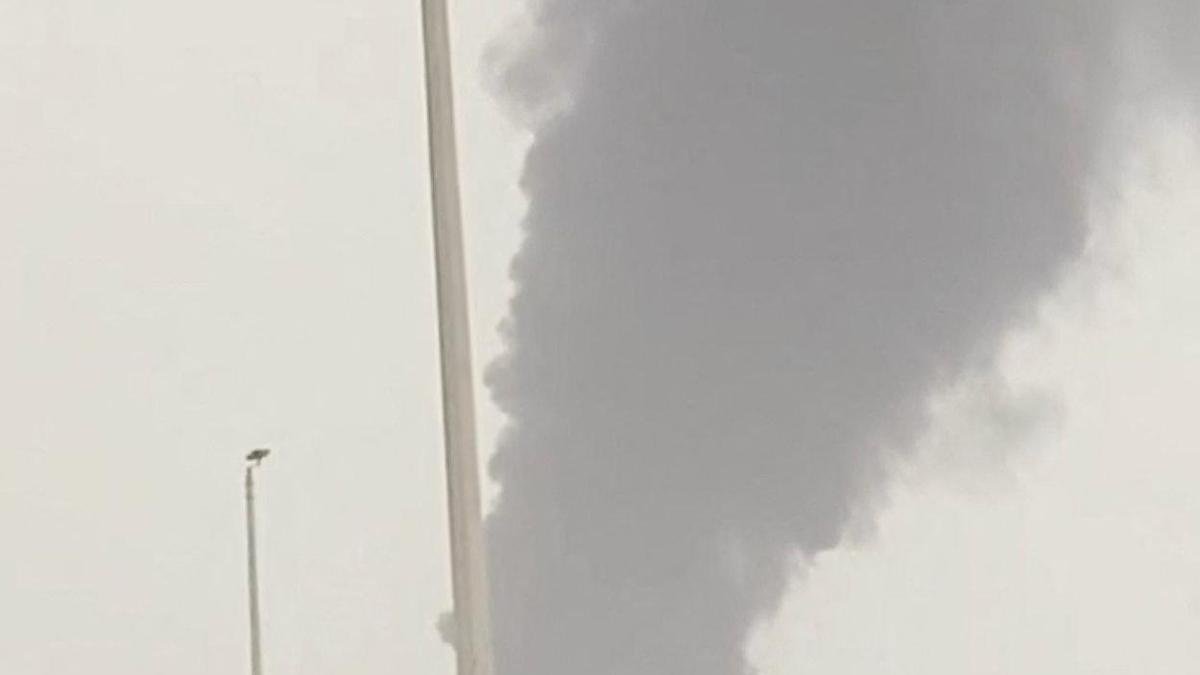
Yemen’sIran-backed Houthi rebels said Saturday (July 25, 2026) that they fired missiles and drones at Saudi Arabia in response to Saudi airstrikes on the strategic Red Sea city of Hodeida, in another escalation over vital shipping routes in West Asia, while the United States and Iran vie for control of the Strait of Hormuz.
Also read | Will Houthi attacks on Saudi ships hurt India | Explained
Brig. Gen. Yahya Saree, the Houthis’ military spokesman, said in a prerecorded statement that the attack targeted facilities in the Red Sea cities of Yanbu and Jizan that belong to Aramco, the world’s largest oil company.
Saudi Arabia’s civil defence said alerts sounded multiple times early Saturday (July 25) in both cities, but the Kingdom hasn’t commented further.
There were no reported strikes overnight in Iran, in an apparent break from nearly two weeks of consecutive nights of U.S. attacks, though tension remains high following a recent escalation between the two countries over the Strait of Hormuz.
Red Sea escalation further threatens global shipping
The rising tension in the Red Sea threatens to choke global shipping further because the rebels have said they would close the Bab el-Mandeb Strait to Saudi-linked shipping.
That strait, at the southern tip of the Arabian Peninsula, is a vital shipping chokepoint, connecting the Red Sea to the Gulf of Aden. Around 12% of the world’s trade, including a quarter of its container traffic, passes through the narrows.
The Houthis targeted two Saudi oil tankers in the Red Sea this week. In response, Saudi Arabia struck the Yemeni port city of Hodeida, the Saudi-led coalition in Yemen said early Saturday (July 25). The strikes late Friday (July 24) hit the city’s port and the state-run telecommunications corporation, injuring two people, said Anees al-Asbahi, a spokesman for the Houthi-run Health Ministry.
The Saudi-led coalition fighting in Yemen said it didn’t hit the port but struck “legitimate military targets” in Hodeida province, which “were linked to threats to commercial vessels in the Red Sea.”
Iran’s Foreign Minister, Abbas Araghchi, called for “diplomacy and dialogue” to solve the Yemen conflict without “military confrontations” in an interview published Saturday (July 25) in the state-run Iran newspaper.
No new strikes overnight in Iran, but tension remains high
“Iran had a peaceful night,” Hossein Kermanpour, a spokesperson for Iran’s Health Ministry, posted Saturday (July 25) on X.
U.S. Central Command didn’t immediately respond to a request for comment. However, unlike the previous 13 nights, it didn’t announce new strikes.
After the U.S. and Israel attacked Iran in late February, a tenuous ceasefire that halted major operations for several weeks has seemed to unravel this month. The U.S. accused Iran of striking three ships in the Strait of Hormuz and responded by striking dozens of targets in Iran, which retaliated by firing at US-allied Gulf Arab states.
The Strait of Hormuz has been at the centre of the conflict. The U.S. military on Friday (July 24) fired on a merchant vessel in the Gulf of Oman that was trying to breach its renewed blockade of Iran’s ports, while Iran targeted U.S.-allied countries in the region.
U.S. embassies alerted American nationals in West Asia on Friday (July 24) that options to leave could become more limited, as Iran’s Revolutionary Guard advised residents of neighbouring countries to stay away from bases with U.S. troops.
The war has killed more than 3,400 people in Iran, according to the Iranian Health Ministry. Eighteen US service members, 24 civilians in Israel, and smaller numbers of civilians have been reported dead in countries across the region.
In Lebanon, more than 4,000 people have been killed, as well as 38 Israeli troops, after the Iran-backed Hezbollah militants fired at Israel in support of the Islamic Republic.
Published – July 25, 2026 09:39 pm IST


