




A surprise attack, heavy casualties, the outbreak of war and a surge in oil prices across the world: the chain of events following the joint US-Israeli attack on Iran in February bears a striking resemblance to what happened 53 years ago.
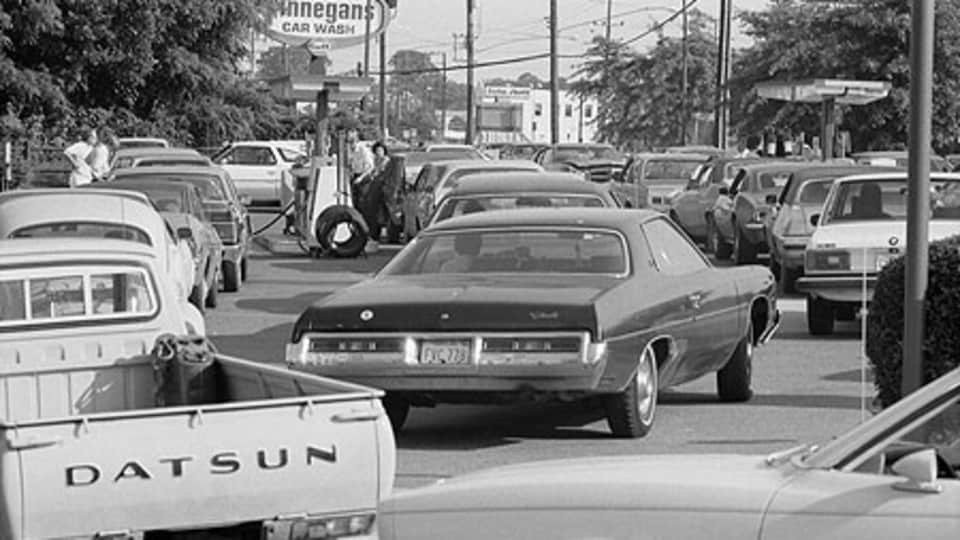
The key difference is that in 1973, Israel was the target of a surprise attack by Egypt and Syria, which sought to reclaim territories lost to Israel in the 1967 Six-Day War.
As the continued closure of the Strait of Hormuz rattles global markets and drives oil prices higher, the aftermath of the 1973 Yom Kippur War offers a historical reminder of the link between conflict involving Israel and global energy crises.
Israel’s occupation of Arab territories in 1967, and the oil crisis that followed
Egypt and Syria launched their joint attack on Israel five years after the Six-Day War of 1967, in which Israel captured the West Bank and East Jerusalem from Jordan, the Golan Heights from Syria, and the Sinai Peninsula and Gaza Strip from Egypt.
Five years later, another brief but intense war erupted as Egypt and Syria attempted to reclaim the Sinai Peninsula and the Golan Heights. The conflict came to be known as the Yom Kippur War because the attack was launched on Yom Kippur, the holiest day in the Jewish calendar.
Israel pushed back both armies within three weeks, a feat aided significantly by US military support. However, Washington’s backing of Israel also helped trigger an Arab oil embargo that would severely disrupt the US economy and those of several other countries.
Oil embargo against Israel’s supporters
On October 17, 1973, Arab oil-producing nations announced an embargo against the US and other countries that supported Israel during the Yom Kippur War. The repercussions were far-reaching, affecting not only the US but also Japan, Canada, South Africa, the Netherlands and several European countries.
The embargo restricted petroleum exports to targeted countries, while major cuts in oil production further tightened global supplies. Oil prices soared, forcing governments and businesses to curb fuel consumption. According to a paper published by Cambridge University Press, prices quadrupled in just four months, rising from $2.90 to $11.65 per barrel between October 1973 and January 1974.
The fuel shortage in the US was so severe that then-President Richard Nixon ordered the National Christmas Tree to be lit with just one light and asked Congress to authorise restrictions on outdoor holiday lighting. “We are heading toward the most acute shortages of energy since World War II,” Nixon said in November 1973, according to a *Washington Post* report.
Similar energy-saving measures were introduced in Canada, the Netherlands and other countries affected by the embargo. The crisis exposed the dependence of major economies on Arab oil supplies and accelerated efforts to develop domestic oil and gas resources.
53 years later, Israel is at the centre of another oil crisis
More than five decades later, major economies are grappling with another oil crisis, this time triggered by disruptions in the Strait of Hormuz, a strategic waterway through which roughly one-fifth of the world’s oil supply passes. As in 1973, the crisis is rooted in a war involving Israel, although the current conflict pits Iran against its longstanding adversaries, Israel and the US.
The latest conflict began on February 28, 2026, when the US and Israel launched a surprise attack on Iran, killing Supreme Leader Ayatollah Ali Khamenei. The conflict subsequently escalated into a wider regional war, with Iran also targeting several Gulf countries, including Oman, Bahrain and the United Arab Emirates, over their alleged role in facilitating US military operations against the Islamic Republic.
Seeking to exert economic pressure on the US and other countries, Iran announced the closure of the Strait of Hormuz, a critical chokepoint for global oil shipments. The waterway lies between Iran and the Arabian Peninsula and serves as a key export route for oil from Gulf producers, including Iraq, Saudi Arabia, the UAE and Kuwait.
Disruptions to shipping through the strait have persisted for months. The waterway remains effectively closed to normal commercial shipping, despite US President Donald Trump’s claims that operations are proceeding as usual. “We are getting everything we want,” Trump said on Friday, October 23.
Commercial vessels have also come under attack in the strait and nearby waterways. According to data compiled by a Washington-based think tank, 113 attacks have been reported since the war began. The International Maritime Organization (IMO) has listed more than 30 supertankers, also known as very large crude carriers (VLCCs), as having sustained damage during the attacks, according to a Reuters report.
Israeli elections and the US-Iran war
As the conflict in West Asia continues to fuel regional instability, Israeli Prime Minister Benjamin Netanyahu is facing mounting political scrutiny ahead of the country’s parliamentary elections later this month. The stakes are particularly high, as these will be the first elections since the October 7, 2023, Hamas attack on Israel.
A Reuters report published in July noted that successive opinion polls suggested Netanyahu was on course to lose the election, with public confidence in his leadership declining despite support among sections of the Israeli public for military action against Hamas, Hezbollah and Iran.
Opposition figures have accused Netanyahu of pushing for renewed military action against Iran in a move that could invite retaliation, heighten security tensions and potentially delay the vote.
Netanyahu, however, has denied seeking a pre-election strike. “It is not convenient for us, it’s no good,” he said in a recent interview with Israel’s Army Radio, while warning Iran against launching attacks. According to a *Times of Israel* report, Israel Defense Forces Chief of Staff Lt Gen Eyal Zamir has also said he sees no operational need to strike Iran before the elections.
