



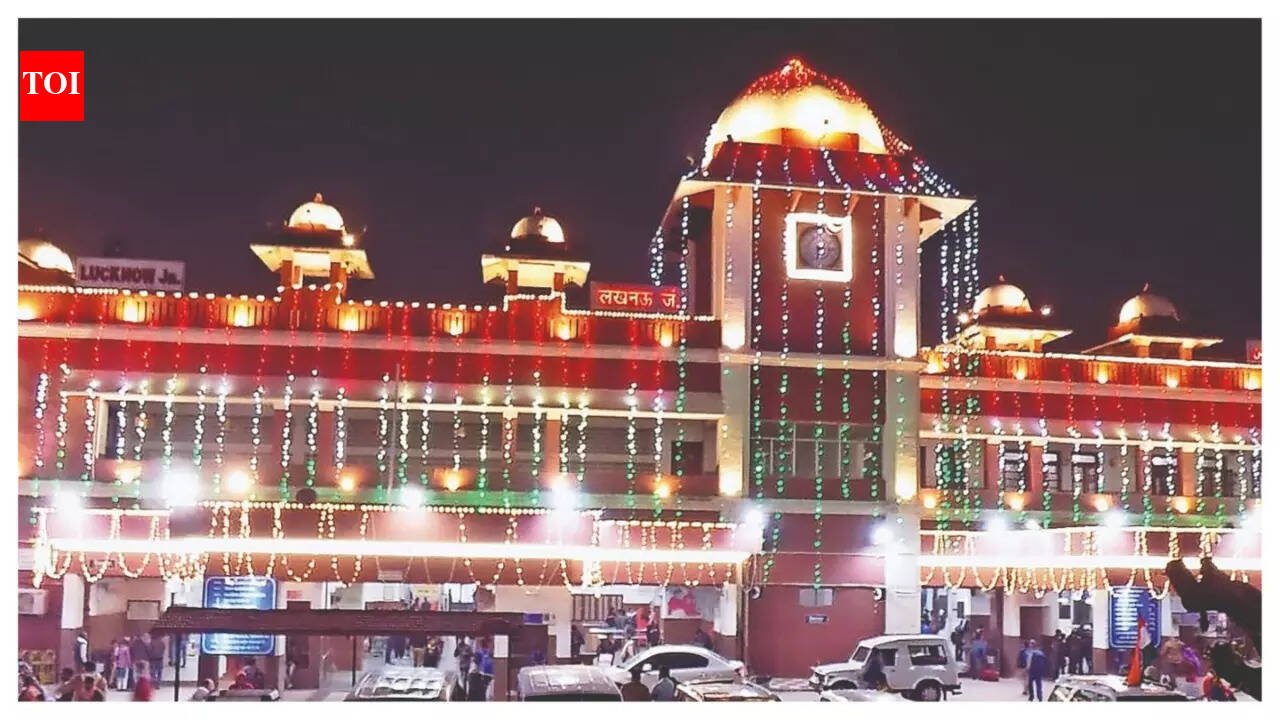
A century of railway history has come full circle at Lucknow Junction Railway Station (NER), popularly known as the Chhoti Line Station, which has completed 100 years this year. Established in 1926 under the North Eastern Railway (NER) network, the station has long been associated with the city’s historic metre-gauge railway routes, from which it derives the name “Chhoti Line”.To mark the station’s centenary, the Lucknow division of NER has created a heritage exhibition inside the station, bringing together cinema, railway technology, archival photographs and interactive installations that recreate how railway systems functioned in earlier decades.
Chhoti Line Station in 1962
Parineeti Chopra’s Jabaria Jodi was also shot at the Chhoti Line station (R) Gaurav Agarwal, DRM LJN, NER, Lucknow
Railway stations through the lens of cinemaOne of the most engaging sections of the exhibition focuses on cinema and railway locations. Digital panels installed at the station highlight films and series that have used railway locations in the Lucknow division as shooting sites. Explaining the idea behind the installation, Divisional Railway Manager (DRM) for the Lucknow (LJN) division of the North Eastern Railway (NER), says the concept is designed to show visitors how frequently the railway network becomes part of storytelling on screen. “We have created a dedicated display showing films that were shot at railway locations in our division. For each film we have mentioned the year it was shot, the actors who appeared in it, the location where the shooting happened and even the exact time frame in the movie where that scene appears. So if someone watches that film later, they can identify the precise moment where the railway station appears.”
Parineeti Chopra while shooting for Jabaria Jodi at the Chhoti Line station
Preserving every aspect of railway lifeAnother section of the exhibition highlights the operational tools and systems used by railways in the past, including signalling lamps, couplers, early ticketing systems, token systems and communication equipment. “We have tried to show both the old and the new so that people can understand how railway systems evolved,” Agarwal explained.
(L) Photographs such as this one have been displayed showing the historical evolution of the station (R) A special surprise for Harry Potter Fans is a replica of the Hogwarts Train set up at the station
He said the exhibition even highlights aspects of railway work that people rarely notice. “For example, we have displayed items related to cleaning systems used in railway stations. Normally people would not think of discussing cleaning equipment, but these are also an important part of the railway ecosystem. Different surfaces require different materials and chemicals for cleaning, so we thought it was important to show that aspect as well.”The displays also highlight how operations have shifted from manual processes to digital systems. “Earlier many things were completely manual. Ticketing, parcel booking and record keeping were all handled physically. Now most of these processes have moved to digital platforms.”
Old documents and tickets issued by the railways are also on display at the exhibition
Railway’s canine unit on duty for passenger safetyThe exhibition also highlights the role of sniffer dogs used by the railway division for security operations. Speaking about the railway’s canine security unit, Gaurav Agarwal said the Lucknow division currently has a dedicated team of trained sniffer dogs deployed for safety and detection duties. He added that the dogs are not just symbolic members of the railway force but are formally part of the security system. “They are actually on the railway rolls and receive proper care and allowances, just like any other working unit in the department.”
BCCL
Protecting Chhoti Line’s heritage amid metro expansionTalking about preserving the station’s heritage while improving connectivity, Agarwal said discussions have taken place regarding connectivity with the Charbagh side and the metro, but the railway division has been careful that the historic structure of the Chhoti Line station is not altered. “Charbagh station and the metro wanted better connectivity so that passengers do not have to walk long distances between the two. But we made it clear that nothing should be demolished or altered here in a way that obstructs the view or damages the heritage structure of the station.”He added that instead of modifying the structure, the railway division suggested an alternative. “We suggested that if connectivity is required, it should ideally be created through an underground passage, the way it is done in several metro systems. That way passengers will get easier access between the metro and the railway station, but the historic character of the Chhoti Line station will remain preserved.”Opening the station to public initiativesOn the future possibilities for the space, Agarwal also said the railway division is open to allowing individuals and organisations to set up activities, stalls or initiatives within the station premises. “We are ready to provide space for people who want to set up something meaningful here, whether it is a small stall, a cultural activity, a craft display or even a reading space. The idea is that the station should remain lively and interactive.”Recreating railway heritage through installationsMany of the displays attempt to recreate how railway systems functioned in earlier decades. One installation recreates a manual water-lifting system, complete with a human figure pulling the mechanism, demonstrating how water was once drawn and stored for railway use. The exhibition also includes displays explaining steam locomotives, metre-gauge trains and early railway infrastructure, along with archival photographs showing how railway operations looked in earlier decades.Another major attraction is a working miniature railway model that recreates the functioning of trains and tracks in a small mechanical layout. The model demonstrates how trains move along tracks and has become particularly popular among children and families. Visitors are also drawn to a Hogwarts-style train installation, inspired by the iconic locomotive from the Harry Potter universe. “It has become one of the most popular photo spots here. People stop there, click pictures and enjoy the experience,” Agarwal said.-Manas Mishra


