



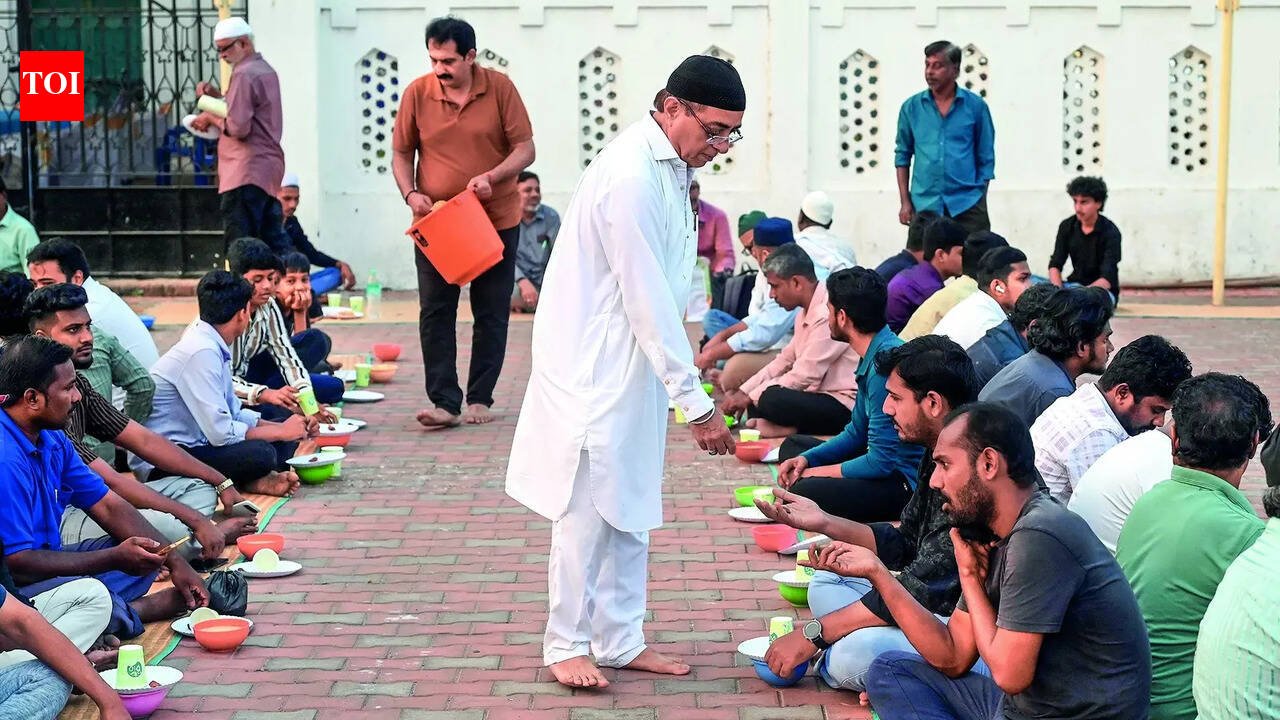
At first glance, one might think the 50-odd men wearing skull caps filling up coloured buckets with iftar dishes — dates, bananas, cake, rice gruel, pista milk and juice packs — to be distributed to the thousands gathered at the Walajah Big Mosque are Muslims.It’s only later that you realise the men are Sindhis, originally from Pakistan, and of Hindu faith. “We have been serving iftar here every Ramzan for the past 40 years,” says Ashok Khubchandani, one of the oldest members of the group. The vegetarian food, he says, is arranged at the Sufi Dar temple in Mylapore, and they are all “sevadaris”.
Ashok Khubchandani serving Iftar
The Sufi Dar temple has pictures of Jesus Christ and Mother Mary, Sikh gurus, and Sufi and Hindu saints. “Service to mankind is service to God, is what our dada (guru) Pujniya Dada Ratanchand, who started this tradition, believed in,” says Khubchandani, who arrived in Chennai 50 years ago from Delhi for business, and has not missed a year of iftar since.Ratanchand was a refugee who migrated to Chennai during Partition.The funding comes solely from the Sufi Dar Trust, which was established in 1980, and they are “strictly against donations”. “We serve food to orphanages too on Sundays.” Sufi Dars are a community of Sindhi Hindus who practice a unique blend of Hinduism and Sufism, often worshipping at shrines (dars or darbars) dedicated to Sufi saints.Most of those in the group are businesspeople who leave their offices every evening to bring the food here and serve it themselves, says Mohammed Asif Ali, heir-apparent to the Prince of Arcot, founder of the Walajah Mosque. Most of those who attend iftar are workers from nearby areas in Royapettah, but “anyone hungry can walk into the mosque and partake in it,” says Asif Ali. “The Nawab of Arcot had said that whatever is brought from the temple will be accepted. We feel blessed,” says Khubchandani.As the azan sounds, the crowd starts eating, the women at another part of the mosque, who are served by Sufi Dar women. “I hope to continue this tradition,” says Navnit, one of the youngest in the Sufi Dar group. “Just to see the smiles on the faces of those being served makes it worthwhile.”Iftar, with love from the JesuitsEvery Ramzan season at the Institute of Dialogue with Religions and Cultures (IDRC) in Chennai, the Jesuits of Loyola offer iftar to people from across communities. “The festival is about celebrating humanity, while respecting religious sentiments, about enriching the inner self and reaching out to the poor, and listening to their cries. “We have been distributing iftar for the past seven years,” says Father Maria Arul Raja, former director of IDCR.


