



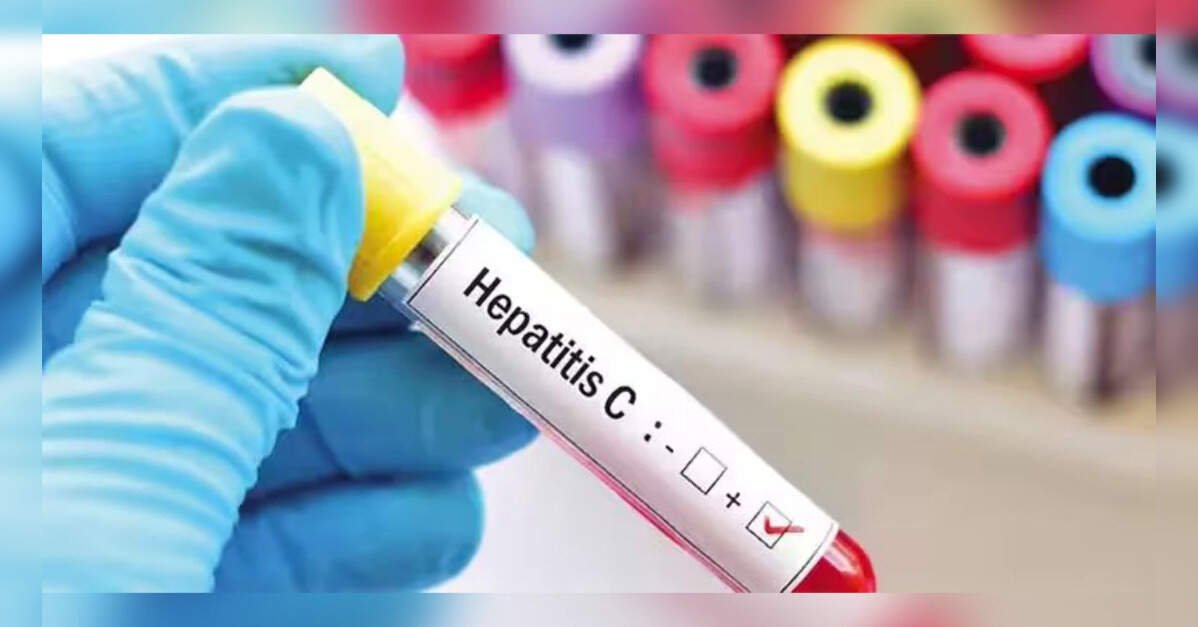
Lucknow:The treatment duration for hepatitis C is likely to be reduced from a 12-week regimen to an eight-week course for patients without cirrhosis using a direct-acting antiviral (DAA) drug called sofosbuvir-velpatasvir in the days to come.
This follows an Indian Council of Medical Research-funded study, called RESOLVE trial, undertaken by Sanjay Gandhi Post Graduate Institute of Medical Sciences (SGPGIMS), which proved that the effectiveness of the shorter regimen was as good as that of the standard-duration treatment. The work was published in the current edition of The Lancet.
“A shorter treatment course may reduce the medication burden on patients while promising a greater rate of compliance. It can help bring treatment costs down by one-third while helping patients save on out-of-pocket expenditure,” lead author Rakesh Aggarwal said, adding that the findings could have significant public health implications.
The 12-week regimen costs around Rs 15,000 with made-in-India drugs, which means the per-patient saving would be Rs 5,000.
Numbers show that 60 lakh people in India need the medicine, translating into cumulative estimated savings of about Rs 3,000 crore.
“This may also mean covering more patients with available resources, not just in India but also in many Southeast Asian countries,” he said.
Currently serving as national chair for disease estimation at ICMR, Aggarwal said the work involved 880 patients from five centres, including SGPGI, KG Medical University, Lucknow; Institute of Medical Sciences, Banaras Hindu University; All India Institute of Medical Sciences, New Delhi; and Central Drug Research Institute, Lucknow, among others.
Of the total, 443 patients with chronic hepatitis C were assigned to the eight-week treatment arm, while the others were provided the standard 12-week regimen.
In the end, 816 participants completed treatment and underwent testing for sustained virological response 12 weeks after completion.
“In the eight-week regimen, 98.8% achieved viral clearance, while in the standard category, the clearance rate was 99%. No participant reported a drug-related serious adverse event or discontinued treatment because of an adverse event.”
Aggarwal, however, cautioned that the findings apply specifically to patients without cirrhosis who had not received previous treatment.
“The study does not mean that all patients with hepatitis C can shift to an eight-week course. Treatment duration would continue to depend on individual clinical assessment and existing treatment guidelines,” he said.
On the way forward, he said, “In the next leg, we would work on patients with cirrhosis. The project and funding have been approved.”
· Hepatitis C is a liver disease caused by a virus that can cause both acute and chronic hepatitis.
· The severity ranges from mild illness lasting a few weeks to serious lifelong illness.
· A significant number of those with chronic hepatitis C are at risk of developing cirrhosis or liver cancer.
· DAA is the only available treatment that can help about 95% of the patients.
· In India, 60 lakh people need the treatment while globally the number goes up to five crore.
· A shorter regimen means a per-patient saving of Rs 5,000.
· The cumulative savings for India are pegged to be Rs 3,000 crore, which means providing treatment to more patients with available resources.
