


“Look at Lamine Yamal over at Barcelona,” said Pollock. “He is only 18.
“We need to spotlight those young stars, those coming through the grassroots, and ultimately the game will grow through that.”
Rugby success spawning mainstream breakthrough names has been patchy.
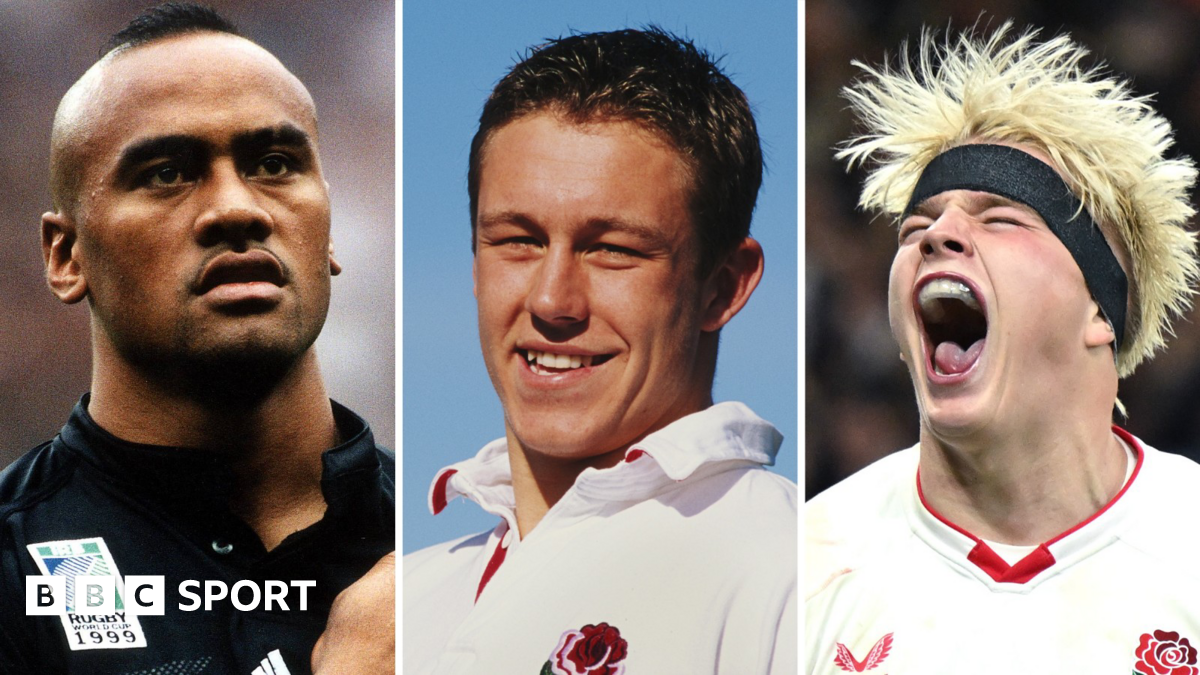
After skittling tacklers as a 20-year-old at the 1995 Rugby World Cup, Jonah Lomu was linked to the NFL, starred in his own video game and became famous around the world.
Jonny Wilkinson, the steely calm at the centre of England’s success at the tournament eight years later, was similarly stratospheric.
Dan Carter, Siya Kolisi, Brian O’Driscoll, Richie McCaw, Gavin Henson, Sebastien Chabal and Danny Cipriani have also, to varying degrees and for differing reasons, cut through in the modern era.
But they are few and far between.
Chris Thompson is the founder of We Know Rugby, an agency that advises brands on the personalities and commercial properties within the sport.
“There is the perennial challenge of getting big names in people’s eyeballs all year round – and that’s for any sport,” he told BBC Sport.
“International and club rugby are two distinct products each with its own audience and experience and the more they can collaborate, particularly in relation to content, the stronger the sport will become.”
Thompson is hopeful that Pollock and the like will soon have the year-round publicity they need to burn bright.
England’s top flight has pulled in several big investors in the past year, with Red Bull buying Newcastle, Sir James Dyson becoming co-owner of Bath and an offer on the table from a US investor group for Exeter.
A reorganised international calendar has begun with the Nations Championship, a season-long north v south-themed series that culminates in a finals weekend at Twickenham’s Allianz Stadium, aiming to weave a narrative that tempts in more casual fans.
A free-to-air deal for the first two editions of that tournament has been struck with ITV, who also share the Six Nations rights with BBC Sport, maximising audience.
A Club World Cup is in the pipeline for 2028, bringing global stars up against each other in club colours.
As well as a tweak in formats, Thompson sees a change in culture as well.
“I think the response from fans in rugby to Henry Pollock has been genuinely really positive,” he says.
“No-one’s telling him ‘don’t do that’. As long as his performance stays at a high level, people want him to go and express himself and show everyone how he feels.”
Earlier this season, Pollock played away against Bordeaux-Begles.
Northampton’s previous meeting with the French side – in the final of last year’s Champions Cup – had been marked by bad blood and a scuffle, centred on Pollock, after the final whistle.
Pollock was jeered throughout but at the final whistle, as he applauded the Stade Chaban-Delmas, those same fans chanted his name in a show of respect, external.
Pollock’s fame has been supercharged by viral moments.
His gurning response to the haka in November, external, his pulse-check try celebration against Leinster last season, his sock-pulling and his try-scoring England debut against Wales – the constant in each is an unabashed enjoyment of the game and his own proficiency at it.
