




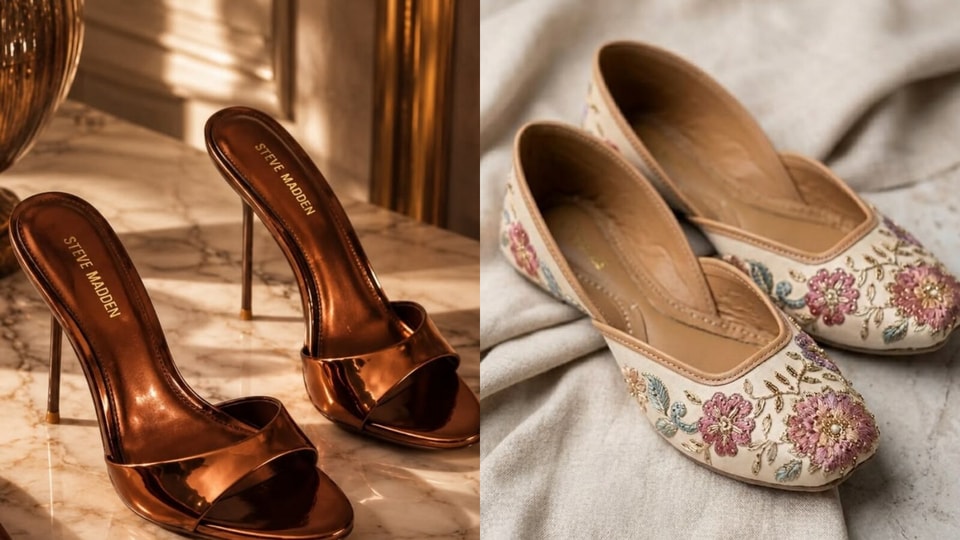

Indian weddings can mean hours of standing, walking, dancing and moving between different venues, which makes footwear almost as important as the outfit itself. While heels can instantly dress up a saree or lehenga, flats have become a much more practical option for long wedding functions.
So, which should you actually choose?
The answer depends less on whether heels or flats look more fashionable and more on the function, venue, outfit silhouette and how long you expect to be on your feet.
Heels work best when you want a more polished silhouette
There is a reason heels remain a popular choice with wedding outfits. They can change the way a saree, lehenga or floor-length outfit falls and give the overall look a more elongated, formal finish.
Block heels are particularly useful for weddings because they offer some height without putting as much pressure on the foot as a very narrow stiletto. They also tend to be easier to walk in, particularly if the wedding involves moving between different spaces.
For a reception, cocktail evening or formal sangeet, a pointed heel or dressier sandal can work well when the outfit itself is relatively streamlined.
The important thing is heel height. You do not need a very high heel to make an occasionwear outfit look elegant.
Flats make more sense when comfort is the priority
If you know you will be standing for hours, dancing or walking on uneven surfaces, flats can be the smarter choice.
Embellished juttis, mojaris, ballet flats and dressy sandals can all work with Indian occasionwear without making the outfit feel too casual. They are particularly useful for daytime functions, mehendi ceremonies and outdoor celebrations where walking in heels can become uncomfortable.
A well-designed flat can also look intentional rather than like a last-minute replacement for heels.
The trick is to choose a pair with some festive detail. Metallic finishes, embroidery, embellishment or interesting textures can make flats feel just as appropriate for a wedding.
Your outfit should decide the footwear
The best footwear is not necessarily the most glamorous pair you own. It is the one that works with the proportions of your outfit.
With a saree, a small or medium heel can help maintain the intended fall of the fabric. If you are wearing a lehenga, the right height can also prevent the hem from dragging while allowing the skirt to move naturally.
Flats can work beautifully too, particularly with shorter or more structured silhouettes. With a floor-length lehenga, however, check the hem before choosing completely flat footwear.
If you are switching from heels to flats during the event, make sure the difference in height does not cause the outfit to drag on the floor.
Think about the wedding venue
This is one of the most practical factors people often overlook.
A hotel ballroom, banquet hall or polished indoor venue makes it easier to wear heels for longer. An outdoor lawn, beachside wedding or venue with uneven ground is a different story.
Thin stilettos can sink into grass, get caught between uneven surfaces or simply become difficult to walk in.
For outdoor functions, block heels, wedges or embellished flats are generally more practical. You can still get a dressed-up look without constantly thinking about where you are stepping.
Different wedding functions call for different footwear
You do not have to wear the same type of shoe to every function.
Mehendi:
Embellished flats, juttis or comfortable sandals are practical, particularly if the event is during the day or outdoors.
Sangeet:
Block heels or dressy sandals can work well if you want height but still expect to dance and move around.
Wedding ceremony:
Your choice can depend on the venue and outfit. A comfortable heel works well with a saree or lehenga, while embellished flats are a good alternative for longer ceremonies.
Reception:
This is where you can opt for a more formal heel if you are comfortable wearing one for several hours.
Do not break in new wedding footwear on the actual day
This is probably the simplest footwear mistake to avoid.
A pair that feels comfortable for five minutes in a shop may not feel the same after several hours. If you are buying new wedding footwear, wear it around the house beforehand and check whether it rubs, slips or puts pressure on particular areas.
Also pay attention to how securely the shoe stays on your foot. Constantly adjusting a loose sandal or slipping out of a heel can become frustrating during a long event.
If you already own a comfortable pair that works with the outfit, there is nothing wrong with choosing it over a brand-new pair simply because the new one looks more elaborate.
Heels vs flats: which should you choose?
Factor | Heels | Flats |
| Formality | Higher | Can be formal with the right design |
| Comfort for long hours | Depends on heel and fit | Generally easier for extended wear |
| Dancing | Block heels are useful | Excellent for movement |
| Outdoor venues | Less practical with thin heels | Usually more practical |
| Sarees | Can help maintain the drape | Works with the right length |
| Lehengas | Useful for controlling hem length | Check the hem carefully |
| Daytime functions | Block heels or sandals work | Excellent choice |
| Re-wearability | Depends on style | Often easier for everyday festive wear |
The best compromise? A low or block heel
If you cannot decide between the two, a low block heel is often the most practical middle ground.
You get some additional height and structure without committing to a very high heel. It can work with sarees, lehengas, anarkalis and other occasionwear, making it a useful addition to a wedding wardrobe.
Another option is to carry a pair of embellished flats for later in the evening. If you want to wear heels for photographs or the beginning of the event, changing into comfortable footwear before dancing can save your feet without requiring you to compromise on the initial look.
There is no universal winner between heels and flats for Indian weddings.
Choose heels when height, silhouette and formality are your priorities and you are confident you can comfortably wear them for the duration of the event.
Choose flats when you expect a lot of walking, dancing or standing, particularly at outdoor or daytime functions.
And if you want both comfort and height, a low block heel is probably the safest middle ground.
The best wedding footwear is ultimately the pair you can forget you are wearing. If you spend the entire function thinking about your feet, even the most beautiful shoes are not doing their job.
Similar stories for you:
5 Capsule fashion investments for September 2026 that skip the microtrend noise
The ‘Quiet Luxury’ secret: 5 Simple fashion hacks to look expensive on a budget
Disclaimer: At Hindustan Times, we help you stay up-to-date with the latest trends and products. Hindustan Times has an affiliate partnership, so we may get a part of the revenue when you make a purchase. We shall not be liable for any claim under applicable laws, including but not limited to the Consumer Protection Act, 2019, with respect to the products. The products listed in this article are in no particular order of priority.
