



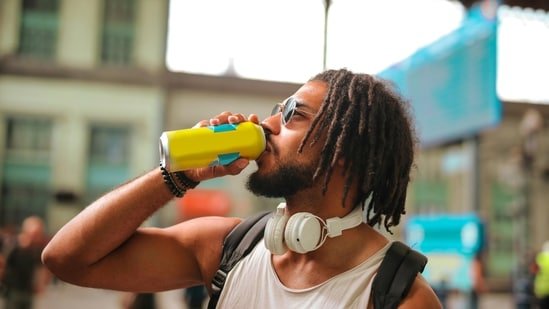
Energy drinks are non-alcoholic, caffeinated beverages that have been marketed for decades as something that boosts both mental and physical performance of individuals. It is often what students chug during their late-night cramming sessions, and what people take a swig of in the middle of a hectic day.
Also Read | Malaika Arora is ‘killing it’ in her 50s at the gym in new workout videos: Check out her training session
However, for some people, the effect of the energy drink does not match expectations. In some cases, people are known to fall asleep right after consuming the beverage, which likely baffles them and others who hear about it. Taking to Instagram on June 8, Dr Kunal Sood, a Maryland-based physician in Anesthesiology and Interventional Pain Medicine, explained why this happens.
Caffeine in energy drinks is not real energy
Dr Sood explained that the high concentration of caffeine in energy drinks, which is supposed to wake us up, is not actually a source of energy. It functions by blocking the chemicals that signal sleep, which in turn leads to the brain being more alert.
In his words, “Energy drinks are supposed to wake you up. So why do some people feel even sleepier after drinking one? The reason is that caffeine is not real energy. It mainly works by blocking adenosine, which is a brain chemical that builds sleep pressure the longer you’re awake.”
Therefore, if a person is already sleep-deprived, caffeine may mute that tired signal for a little while, but it does not erase that sleep debt underneath. “Eventually, that pressure can break through, and you feel like you’ve crashed,” he noted.
Energy drinks can cause blood sugar spike
Most of the energy drinks available in the market have a high volume of sugar in them, which leads to the inevitable sugar spike and crash after drinking. The caffeine concentration in the beverage does not help, either.
As Dr Sood explained, “Many energy drinks also contain a lot of sugar, which can cause a quick rise in blood glucose, followed by an insulin response. And for some people, that drop can feel like sudden fatigue. Caffeine can also temporarily affect insulin sensitivity, especially if you drink it on an empty stomach.”
“And if you use energy drinks often, your brain can adapt, meaning the same amount of caffeine may no longer feel as stimulating,” he added.
The important thing to keep in mind is that if an energy drink makes a person feel sleepy, the body may not need more caffeine, noted the doctor. It may need sleep, food, hydration, or a lower sugar option.
“And if you’re having palpitations, chest pain, fainting, severe shakiness, or persistent daytime sleepiness, that’s worth getting checked,” he cautioned.
Note to readers: This article is for informational purposes only and not a substitute for professional medical advice. Always seek the advice of your doctor with any questions about a medical condition.
This report is based on user-generated content from social media. HT.com has not independently verified the claims and does not endorse them.


