



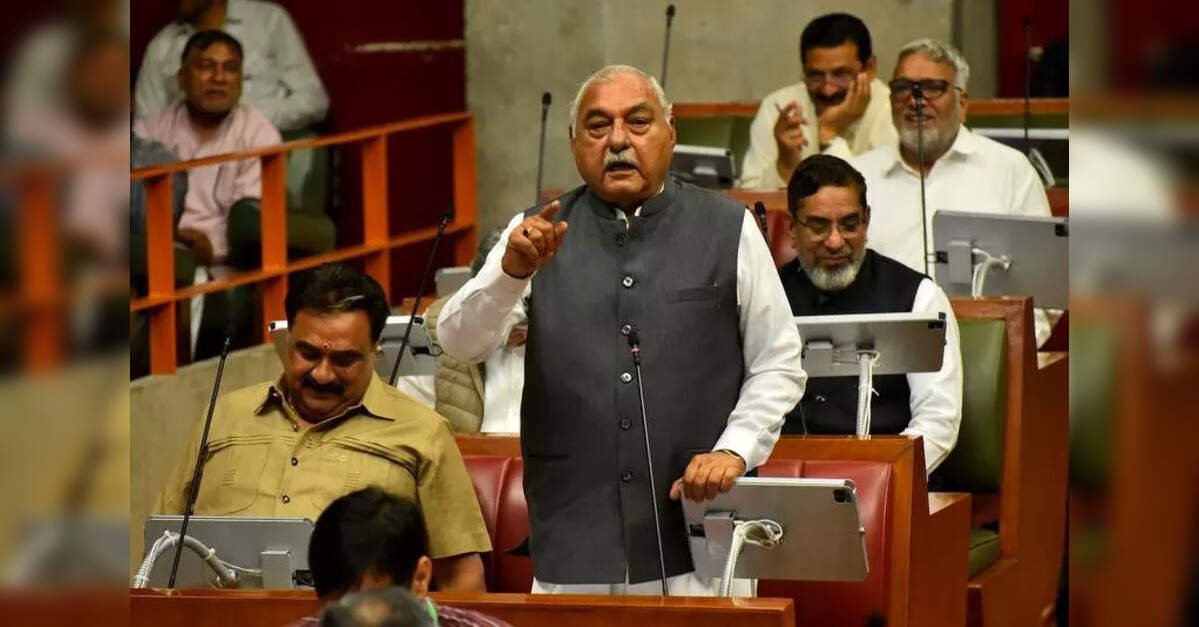
Chandigarh: Haryana continues to face sharp regional disparities in school retention, with Nuh district recording the highest dropout rate among students at the elementary level, according to district-wise data presented in the state assembly.
The data, shared by school education minister Mahipal Dhanda during Thursday’s sitting of the budget session, covers academic years from 2023–24 to 2025–26 and highlights worrying trends in some districts even as others report minimal dropouts.
Aftab Ahmad, the Congress MLA from Nuh, had posed a starred question on the issue. Figures from the U-DISE portal show that Nuh reported a dropout rate of 12.84% in 2025-26 at the elementary level (Class VI–VIII), significantly higher than the state average of 3.05%. Other districts with relatively high dropout rates included Panchkula (6.03%), Palwal (5.8%), Ambala (4.39%) and Sirsa (3.39%). Bhiwani, Panipat, Yamunanagar, Fatehabad and Faridabad districts also feature among the top 10 with higher dropout levels.
In contrast, several districts managed to maintain extremely low dropout levels. Mahendragarh and Rewari reported zero dropout rates at the elementary level in 2025-26, while Jhajjar and Rohtak districts recorded minimal figures.
The situation in Nuh (Mewat) remains a major concern as the dropout rate there steadily rose from 8.61% in 2023–24 to 12.84% in 2025–26. At the senior secondary entry stage (Class XI), dropout rates also remain higher than the state average in several districts. Govt data suggests that a lack of nearby secondary schools, financial constraints and limited transport facilities contributed to students leaving school early, particularly among girls.
With regard to steps taken by the govt to improve conditions, the minister told the House the govt initiated several measures to tackle the problem, including door-to-door enrolment campaigns under ‘Pravesh Utsav’, tracking of students through the MIS portal, and household surveys to identify out-of-school children. Residential facilities such as Kasturba Gandhi Balika Vidyalayas and girls’ hostels were also set up in educationally backward blocks to improve girls’ retention in schools.
In remote areas of Nuh, students in Class IX to XII who live more than 5km from their schools are provided annual transport assistance of Rs 6,000.
The House was also informed that many girls leave school after completing Class V due to the non-availability of schools near their habitation. To overcome this, five Kasturba Gandhi Balika Vidhayalas (KGBVs), which are residential schools, and three girls’ hostels were set up in educational backwards blocks (EBBs) of Nuh district. Such girls are admitted to KGBVs. A total of 1,167 girls are studying in KGBVs.
The assembly reply also revealed a significant shortage of teachers in Nuh, where 4,804 posts are vacant out of 10,053 sanctioned posts across govt schools. The state govt sent requisitions to recruitment agencies and initiated promotions and contractual appointments to address the gap.


