



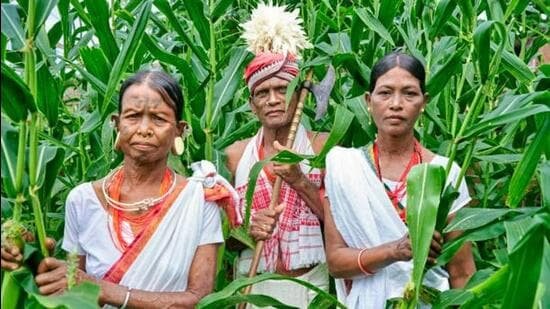
A performance audit by the Comptroller and Auditor General of India has flagged major lapses in welfare delivery for Odisha’s most vulnerable tribal groups, revealing that over half of the Particularly Vulnerable Tribal Groups (PVTGs) remain excluded from key schemes, while the Mahatma Gandhi National Rural Employment Guarantee Scheme has failed to provide the mandated 100 days of work to 90% of households.


The report, tabled in the state assembly, highlights that despite hundreds of crores in expenditure, 54% of the PVTG population—approximately 1.60 lakh people—were left out of welfare coverage, as the Micro Project Agencies, the primary institutional mechanism for tribal upliftment, failed to extend basic services to newly notified habitations populated by tribals of 13 PVTGs.
According to the report, a baseline survey in 2018–19 identified 1,138 new villages inhabited by PVTGs, yet these areas remained outside the reach of the Odisha PVTG Empowerment and Livelihood Improvement Programme.
While 18% of these excluded households had access to safe drinking water, gas connectivity reached only 34% of them. In some cases, the report said that entire communities like the Birhors, identified as a PVTG in 1986, remained beyond the reach of benefits because the designated agency had not become functional.
A joint physical inspection of 69 drinking water projects showed that 55% were non-operational. Similarly, 58% of inspected irrigation projects were defunct due to a lack of maintenance and repair funds. In one village, a solar power irrigation project completed in 2022 was found defunct by 2024.
To combat malnutrition, the state established 116 Nutrition Resource Centres, yet 55 of these units built at a cost of ₹3.59 crore were found lying idle because the department failed to plan for operational expenses.
The state spent ₹48.29 crore on 229 processing units (such as oil extraction and dal mills) to boost tribal income. However, the audit found that 46% were non-functional, largely due to a lack of electricity or poor assessment of local capabilities.
The audit of Mahatma Gandhi National Rural Employment Guarantee Scheme (MGNREGS), a centrally sponsored scheme designed to provide a legal “guarantee” of 100 days of work per year, found that only 6.24% to 11.26% of households that demanded work were actually provided with the full 100 days of employment during the 2019–24 period. In some districts, this figure plummeted as low as 0.20%.
Furthermore, 1.22 lakh households in test-checked districts were denied work entirely, yet the state failed to pay the mandatory “unemployment allowance” required under the Act. The average annual income for households in some districts under the scheme was as low as ₹7,256, providing just 34 days of work. Beneficiaries reported a lack of interest in the scheme due to wages significantly lower than the state’s minimum wage and chronic payment delays.
The CAG report said that payments totaling ₹37,380 were made in the names of four dead beneficiaries in the Kalimela and Chitrakonda blocks of Malkangiri district. They were shown as engaged in manual labour for up to four years after their recorded dates of death.
Out of 36.99 lakh works initiated, 35% (12.96 lakh projects) remained incomplete as of March 2024, despite an expenditure of ₹9,898.70 crore. The state diverted ₹14.42 crore of MGNREGS funds towards school upgrades, such as “e-libraries” and “school ambience” projects, which the Union ministry of rural development explicitly disallowed. Auditors found ₹61.35 crore in unspent tribal welfare funds lying in bank accounts while the targeted population continued to lack basic amenities.
The audit found a 54% vacancy for Gram Rozgar Sevaks (village employment assistants), the key officials responsible for maintaining work records and verifying job cards under NREGS.


