



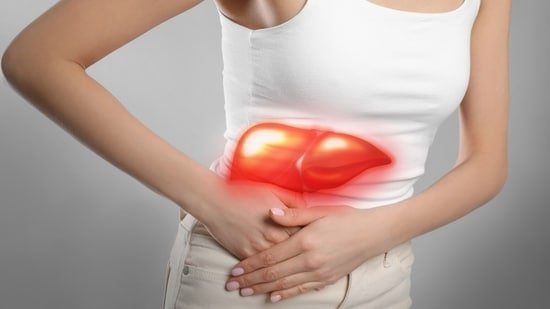
When women reach menopause, a major physical and hormonal shift occurs as estrogen levels drop. Consequently, many health risks may also increase because of the hormonal change, making it important to be cautious. Several organs and body systems are affected, and one of them is the liver.
HT Lifestyle connected with Dr Kanaga Lakshmi K, senior consultant – obstetrics and gynaecology at MGM Malar in Chennai, who revealed that women tend to gain liver fat faster after menopause, typically after the age of 45.
Why does liver fat increase after 45?
“After 45, many women enter perimenopause or menopause, where estrogen levels decline significantly. So, estrogen plays a very crucial protective role in how fat is distributed and metabolised,” she explained. It shows how influential estrogen is in a woman’s body, going beyond the reproductive system and managing fat distribution, too.
The gynaecologist further explained that when estrogen levels fall, fat shifts from the peripheral areas, like the hips and thighs, to visceral areas around the abdomen and internal organs.
This fat shift can set off a chain reaction, disrupting blood sugar control and overall metabolism. “Insulin resistance increases, and this in turn promotes fat deposition in the liver. This is why the risk of fatty liver rises sharply in women during perimenopause and after menopause,” Dr Kanaga noted. What’s the bigger concern is that fatty liver is largely silent in its early stages.
Why is fatty liver silent in early stages?
The main reason fatty liver progresses silently is that the changes are often not visible. In fact, women may not gain much weight on the scale. As a result, attention tends to be on visible fat, while internal fat in the liver gets overlooked, delaying diagnosis and potentially leading to complications.
“Before menopause, women are relatively protected compared to men due to estrogen,” the doctor reiterated, highlighting the importance of estrogen in women’s bodies. After menopause, women lose this protective effect, which increases fat accumulation in the liver and other visceral areas, making them more prone to metabolic issues than men.
The gynaecologist revealed an alarming fact: “After menopause, the risk not only catches up but can even surpass men, increasing vulnerability to metabolic complications and cardiovascular disease.”
While there are no specific warning signs, some indicators can help detect fatty liver early. Dr Kanaga shared that these include increasing abdominal girth despite stable weight, persistent fatigue, mild elevation in liver enzymes, and associated conditions such as a history of PCOS, diabetes or high cholesterol. It is important to understand that fatty liver is not just a liver condition; it is a big metabolic red flag. The doctor cautioned that it raises the risk of type 2 diabetes, heart disease, and stroke.
How to manage?
The doctor urged focusing on a protein-rich, balanced diet, regular strength training, and aerobic exercise, not just walking. So, maintaining a healthy weight, prioritising sleep, managing stress and undergoing regular screening when risk factors are present helps to reverse this condition.
Note to readers: This article is for informational purposes only and not a substitute for professional medical advice. Always seek the advice of your doctor with any questions about a medical condition.


