



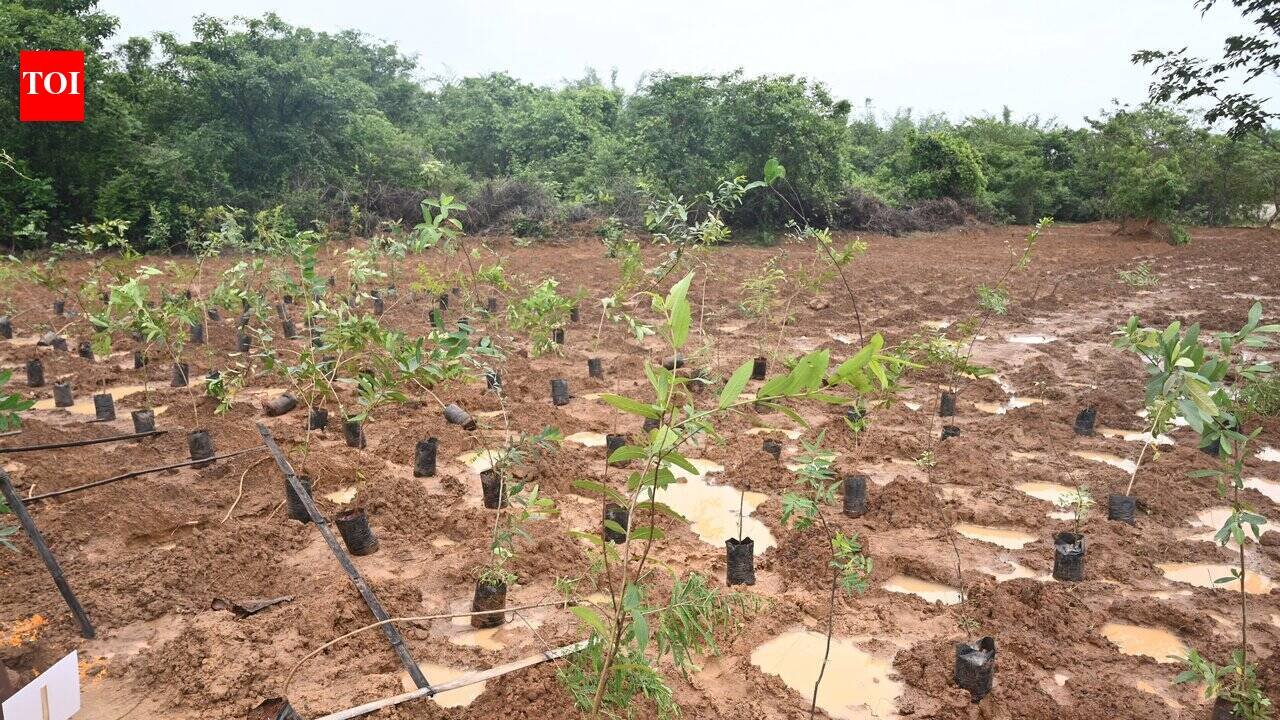
Gurgaon: Nearly six of every 10 saplings proposed under the Compensatory Afforestation Fund Management and Planning Authority (CAMPA) programme are set to be planted in just four districts.The city alone has been allotted more than one-fifth of the state’s total plantation target — 4.7 lakh saplings over 477.7 hectares — underscoring the increasing focus on the southern Aravali belt.Haryana’s tentative CAMPA plantation plan for 2026-27 reveals a striking geographical concentration of afforestation efforts. However, the proposal does not indicate where nearly 478 hectares of land required for the plantations have been identified.According to the district-wise plantation plan, the forest department has proposed planting 22.4 lakh saplings across 2,101 hectares during the upcoming monsoon season.The city tops the list, followed by Mahendergarh (3.5 lakh), Mewat (2.5 lakh) and Rewari (2.3 lakh). Together, these four districts account for over 13 lakh saplings, or nearly 60% of the state’s plantation target.The concentration is reflected at the forest circle level as well. The south circle — comprising Gurgaon, Faridabad, Rewari, Mahendergarh, Palwal and Mewat — has been allocated nearly 14.7 lakh saplings, around 66% of the state’s total plantation programme.In comparison, the north circle has been allotted 1.87 lakh saplings, the central circle 2.2 lakh and the west circle 3.6 lakh.The district-wise distribution points to where the state’s compensatory afforestation obligations are increasingly concentrated.Southern Haryana has witnessed extensive diversion of forest land over the past decade for highways, rail corridors, urban expansion, industrial projects and other infrastructure, particularly across the NCR districts and the Aravali landscape.The large allocations are likely to reflect both these statutory obligations and the availability of land for raising compensatory plantations. However, the figures also raise important questions.The city, despite being Haryana’s most urbanised district, has been assigned the state’s largest plantation target.In previous years, the forest department has often faced challenges in finding suitable land within districts where forests were diverted, leading to compensatory plantations being undertaken elsewhere.Divisional forest officer Surender Dangi told TOI, “We will try to complete maximum work when it gets finalised. We will finish the leftover work next year.”Environmentalist Vivek Kamboj said, “While the numbers indicate where plantations are proposed, they leave unanswered questions over land availability, survival of past plantations and whether the concentration of resources in a handful of districts will translate into meaningful ecological gains.”The data also reveals disparities among districts sharing similar ecological characteristics. While Gurgaon, Mahendergarh and Mewat receive substantial allocations, Faridabad, another district with extensive Aravali forests and continuing development pressure, has been allotted a comparatively modest 1.13 lakh saplings.Several northern districts with significant forest cover, including Panchkula, Ambala and Yamunanagar, also receive much smaller allocations.The plantation programme is overwhelmingly driven by compensatory afforestation. Of the proposed 2,101 hectares, nearly 1,882 hectares fall under conventional compensatory plantations, while much smaller areas have been earmarked for Aravali plantations, ridge plantations on encroached land and Miyawaki plantations.Forest officials are expected to finalise the plan soon. But the district-wise data suggests that Haryana’s CAMPA strategy is becoming increasingly concentrated in southern districts, reflecting the growing ecological cost of development in the Aravali region and the state’s mounting compensatory afforestation commitments.


