



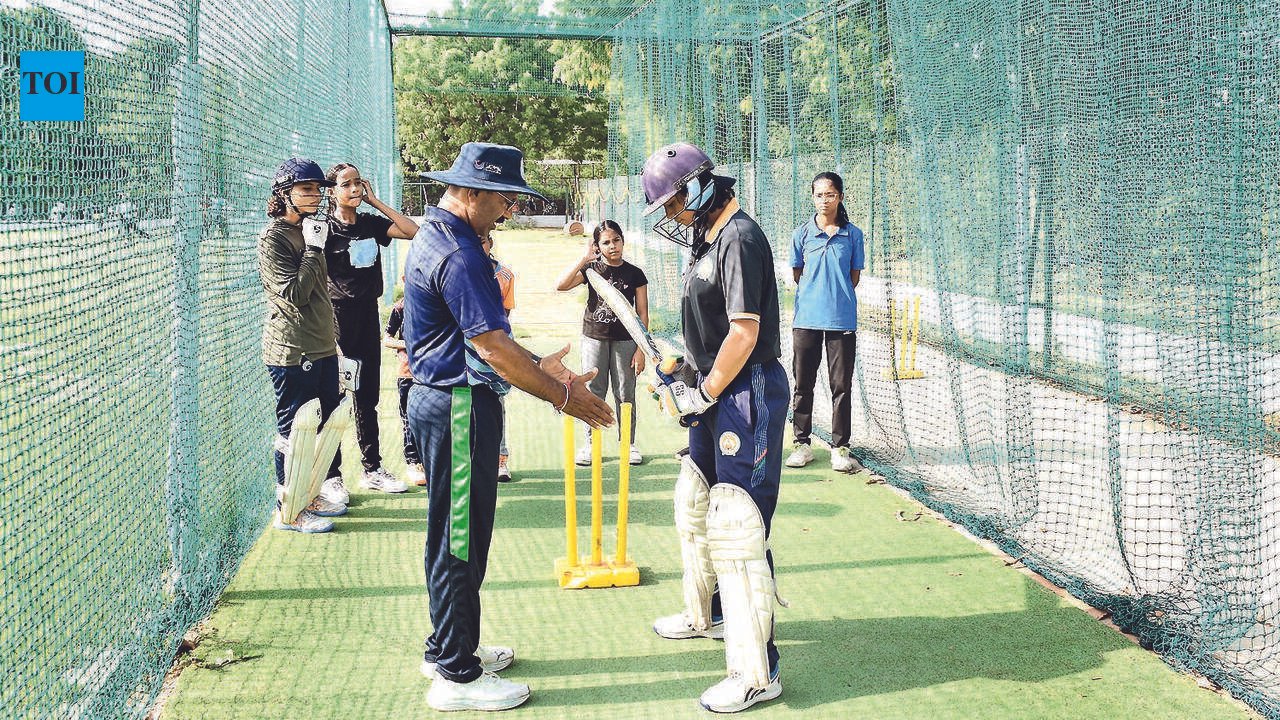
At the Youth Service Centre (YSC) in Vadodara, dozens of young girls spend their evenings drilling cover drives, practising yorkers and diving to stop balls — each dreaming of the India jersey. Watching them is 86-year-old Sudhir Parab, who has waited decades to see this. “There was a time when we had a strong crop of women cricketers in the 1980s and 1990s, but the numbers gradually dwindled. Today, it’s wonderful to see girls viewing cricket as a career. Enrolments have gone up after our women’s team won the World Cup,” says Parab, founder of YSC, one of the first clubs in the city to promote women’s cricket.“The Indian team’s recent achievements have changed how society perceives women’s cricket, encouraging more parents to support their daughters in pursuing the sport,” says Yastika Bhatia. “Today, women cricketers enjoy the same respect as their male counterparts.”Vadodara’s academies are building on that interest. Shreyas Cricket Academy launched a cricket programme a few years ago to ensure girls had access to coaching. Its owner, Pankaj Jani, who also runs Shreyas School, said parents are increasingly keen to enrol their daughters, adding that quality coaching and infrastructure are key to nurturing talent. Kiran More Cricket Academy also trains young women cricketers, while the Baroda Cricket Association organises two annual women’s tournaments.| Mixed signals in AhmedabadIn Ahmedabad, the picture is more mixed. Deval Lathigara, who runs the Sports Promoters Charitable Trust academy, says, “There has been a rise in girls’ enrolments since last Nov’s World Cup triumph. Before that, we had just three or four girls; today, we have 18 to 20.”However, Sumer Singh Bhati of M Power Cricket Academy, which runs two centres in the city, has had a different experience. “There were inquiries after the World Cup win, but they did not translate into enrolments. We have 15 to 20 girls through direct admissions, but they joined before the tournament,” he says.The bigger gap is at the school level. “Talent has to be nurtured at the grassroots. A lot of work remains — schools, parents, coaches and girls must be brought on the same page,” Bhati adds. Gujarat Cricket Association’s media manager Jagat Patel says, “There is no girls’ cricket in the city’s schools. Girls who excel in the academies are recommended to the Central Board of Cricket Ahmedabad, through which promising players make it to the district teams.” Former cricketer Jigna Gajjar calls this a golden period for girls’ cricket. “Parents’ involvement has also grown. Cricket has given girls an identity, especially with the ICC announcing pay parity,” she says.| Rajkot’s new turfIn Rajkot, Genius School on Kalawad Road has invested in a cricket facility for girls — six practice nets, a turf wicket, a bowling machine simulating pace, spin and swing, a fitness coach, an ice bath, and a psychotherapist. Access is open to any girl for a fee. “About eight players are training here. Saurashtra has produced several prominent cricketers, but girls lack resources. We want Saurashtra to lead in producing top women cricketers, as it has in men’s cricket,” says Tejas Oza, mentor at the facility.| Surat’s unlikely coachIn South Gujarat, a farmer has been doing the game’s most neglected job — knocking on doors to ask families if their girls are willing to play cricket. Dhansukh Patel, a former cricketer from Surat, scouts talent across the region, winning over families wary of safety, expenses and letting girls play. For girls from poor families, Patel provides accommodation, meals and cricket gear, along with practice facilities and coaching. “I take in girls for training based on their talent and dedication. Once they leave their homes for cricket, they become my responsibility,” Patel says.
Dhansukh Patel demonstrates a follow-through to a trainee at a Surat facility
Renuka Chaudhary is proof of that promise — she rose through Patel’s academy to the National A team, and cricket later earned her a railway job. Fenny Chaudhary and Tanu Gopale have also progressed to national camps. “It is good that girls are getting opportunities now, but we need to do more. Established organisations can lift these girls further,” Patel says.(With inputs from Yagnesh Mehta in Surat and Nimesh Khakhariya in Rajkot)


