



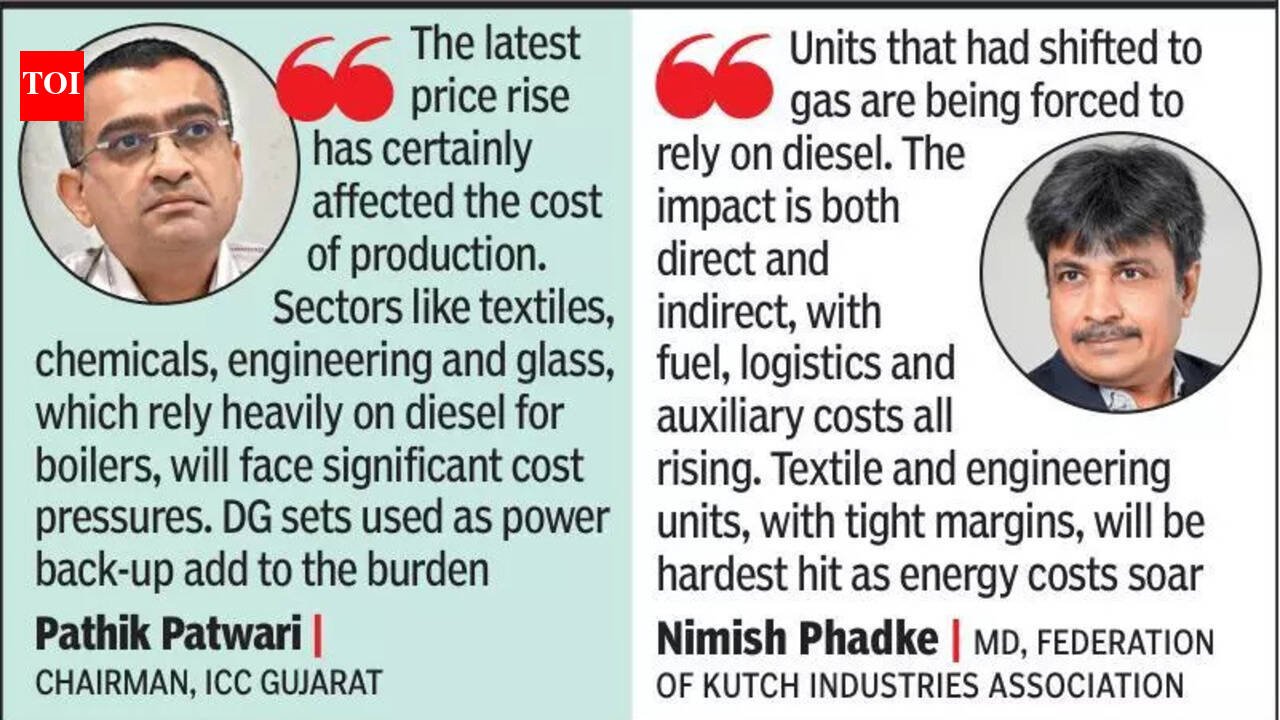
Ahmedabad: A sharp increase in industrial diesel prices has left manufacturers and transporters across Gujarat grappling with rising costs, adding to existing pressures from inflation and volatile energy markets.State-run oil marketing companies have raised diesel prices for bulk buyers by nearly 25%, with Indian Oil Corporation (IOC) revising rates from Rs 87.57 per litre to Rs 109.5 per litre on Friday. The hike impacts industries and transporters that procure fuel directly in large quantities. The timing has compounded challenges for sectors already navigating energy uncertainties. Gas shortages and a surge in coal prices in recent months pushed many textile and chemical units to shift to petroleum-based fuels for boiler operations. In areas with inconsistent power supply, diesel generator (DG) sets remain critical, increasing reliance on bulk diesel. “Over the past fortnight, gas availability issues have already pushed several industry players to shift towards petroleum-based fuels. With this latest price rise, the cost of production has certainly been impacted,” said Pathik Patwari, chairman, ICC Gujarat. He noted that the immediate impact is partly muted due to subdued activity. “Exports are currently slow, and production volumes remain low, so the direct impact is not being felt as sharply. Demand-supply mismatches and vessel availability have also softened the blow.” However, he warned of sustained pressure if prices remain elevated. “Sectors such as textiles, chemicals, engineering and glass, which rely heavily on diesel for boilers, will face significant cost pressures. DG sets used as power back-up add to the burden.” The industrial diesel price hike will directly push up manufacturing costs, especially at a time when volatility is rising and gas shortages over the past 10 days have already disrupted operations. Nimish Phadke, MD, Federation of Kutch Industries Association (FOKIA), said, “Units that had shifted to gas are now being forced to rely on diesel, particularly for DG sets, making production significantly more expensive. The impact is both direct and indirect, with fuel, logistics and auxiliary costs all rising. Textile processing units and engineering goods manufacturers will be among the worst hit, as energy is a key input and margins are already tight. If this continues, it could dampen industrial activity in the near term.” The textile industry is already going through a rough patch, and this diesel price hike has added to multiple cost pressures across the value chain. Niraj Shah, chairperson, GCCI textile committee, said, “Chemical, energy and steam coal costs have risen, and now diesel is impacting production. Margins are already thin, and rising logistics costs and electricity shortages are worsening profitability.” Shah highlighted export challenges as well. “Container availability, freight rates for regions like Africa and the UAE, war-related surcharges and higher insurance costs are all concerns. With contracts finalised months in advance, costs cannot be renegotiated. In the past six months, production costs have risen by 15-20%. If this trend continues, the stress on the industry will deepen,” he said. Experts said sustained fuel cost increases could eventually be passed on to consumers, as businesses face limited room to absorb rising input costs.


