



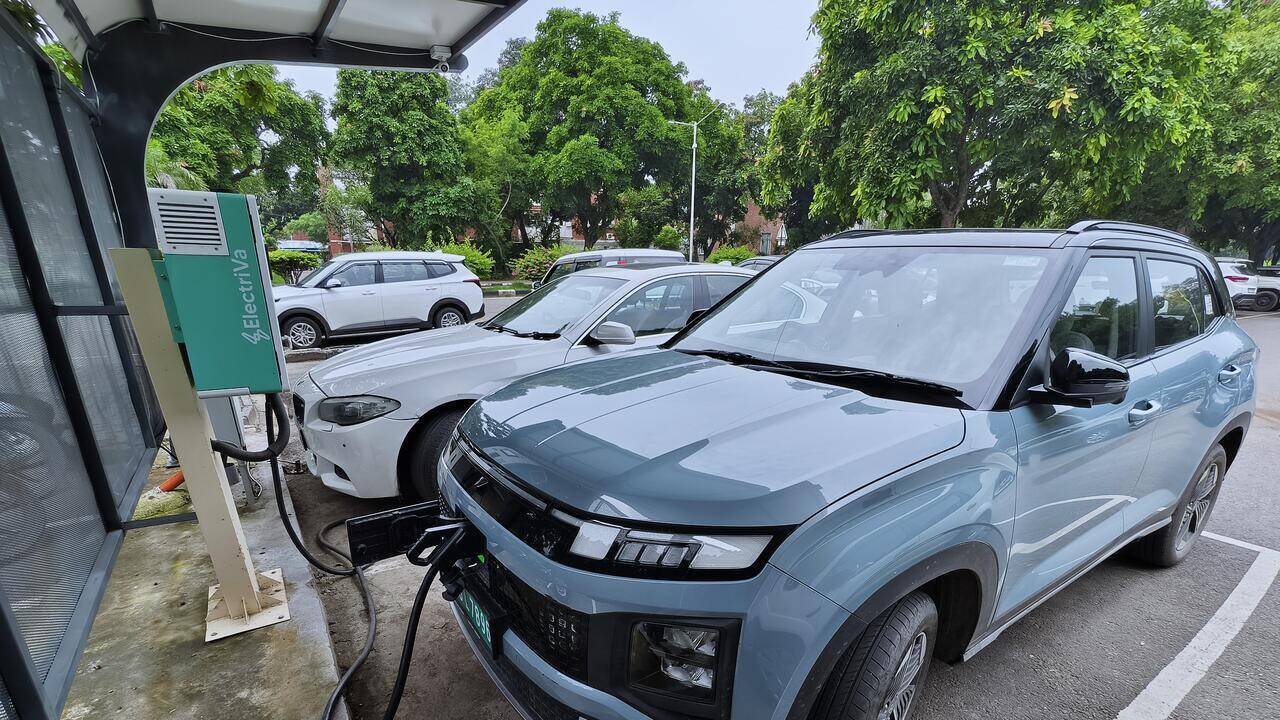
Chandigarh: Zero-emission vehicles are no longer a niche segment in Chandigarh. Registrations of battery electric vehicles (BEVs) have grown steadily over the past four years, signalling a gradual shift in consumer preference towards cleaner mobility even as petrol-powered vehicles continue to dominate the city’s roads.An analysis of fuel-wise registration data from the Registering and Licensing Authority (RLA) shows that pure EVs and electric (battery operated vehicle/BOV) models are steadily increasing their share in new vehicle registrations.Data shows a clear shift in buying patterns. In 2023, the city registered 6,394 electric vehicles, all classified under the electric (battery operated vehicle) category. By 2024, the Registering and Licensing Authority (RLA) had started distinguishing pure EVs from the older BOV classification, recording 963 pure EVs and 5,219 electric (BOV) vehicles.The transformation became more evident in 2025 when pure EV registrations jumped more than three-fold to 3,244, while electric (BOV) registrations declined to 1,937 — a fall that reflects a change in classification rather than a slowdown in adoption.In the first half of 2026, Chandigarh had already registered 2,964 pure EVs and 532 electric (BOV) vehicles, putting the city on track for another strong year.Yet, even as buyers embrace cleaner mobility, petrol vehicles continue to dominate the market, exposing the limits of the current transition.Industry insiders say demand is no longer the primary hurdle.Despite the growing buzz around electric mobility, petrol vehicles continue to be the backbone of Chandigarh’s automobile market.Petrol registrations stood at 34,456 in 2023, accounting for nearly 65% of all vehicle registrations. The number declined to 30,299 in 2024 but remained the dominant fuel category. In 2025, petrol registrations were largely split between conventional petrol (30,299) and E20-petrol vehicles (460), reflecting the gradual rollout of ethanol-blended fuel technology.In the first half of 2026, 14,535 E20-compatible petrol vehicles and 4,236 conventional petrol vehicles were registered, indicating that manufacturers have rapidly transitioned to E20-compliant models.“The response to EVs is much better than it was even two years ago. Buyers today understand the benefits of lower running and maintenance costs. But petrol cars still account for the bulk of our sales because many consumers are not yet fully confident about charging availability. More fast-charging stations across highways and residential areas, coupled with additional government incentives, would encourage many fence-sitters to make the switch,“ said a senior executive at a Chandigarh-based automobile dealership.The concern is echoed by buyers themselves.“Range anxiety is real, especially on highways, but nearly 90% of my driving is within the Tricity. Home charging takes care of most of my needs. With petrol prices remaining high, the savings on running costs made the decision easy despite the limited charging infrastructure,“ said Rohit Sharma, an IT professional who recently bought an electric SUV.Data also suggests that consumers are increasingly viewing hybrids as a stepping stone rather than the final destination.Petrol-hybrid registrations stood at 3,753 in 2023, but subsequent years witnessed the emergence of strong hybrids, plug-in hybrids and E20-compatible hybrid vehicles, indicating that manufacturers are diversifying powertrain options to suit buyers who remain hesitant about fully electric vehicles.Meanwhile, diesel — the dominant fuel for SUVs just a few years ago — has been steadily losing ground. Registrations fell by nearly 31%, from 7,647 in 2023 to 5,308 in 2025, with diesel’s share in overall registrations dropping from 14.4% to 10.4%. Rising ownership costs, tighter BS-VI emission norms and expanding petrol-hybrid and EV choices appear to be accelerating the decline.BOX1: Year-wise figuresYear | Total vehicle registrations | Zero-emission vehicles (Pure EV + Electric BOV) | Share in total registrations |2023 | 53,232 | 6,394 | 12.0%|2024 | 46,397 | 6,182 |13.3% |2025 |50,943 |5,181 |10.2%|2026 (till June) |28,605 | 3,496 | 12.2% |BOX2: CNG vehicles lose groundWhile electric and hybrid vehicles have gained momentum, CNG vehicle registrations have remained subdued in Chandigarh over the past four years, with the fuel failing to emerge as a major alternative to conventional petrol vehicles.Year | CNG-only | Petrol/CNG | Petrol (E20)/CNG | Total CNG-based registrations2023 | 121 | 579 | 1,7012024 | 110 | 583 | — | 6932025 110 | 583 | 460 | 1,1532026 (till June) | 64 | 81| 473| 618


