



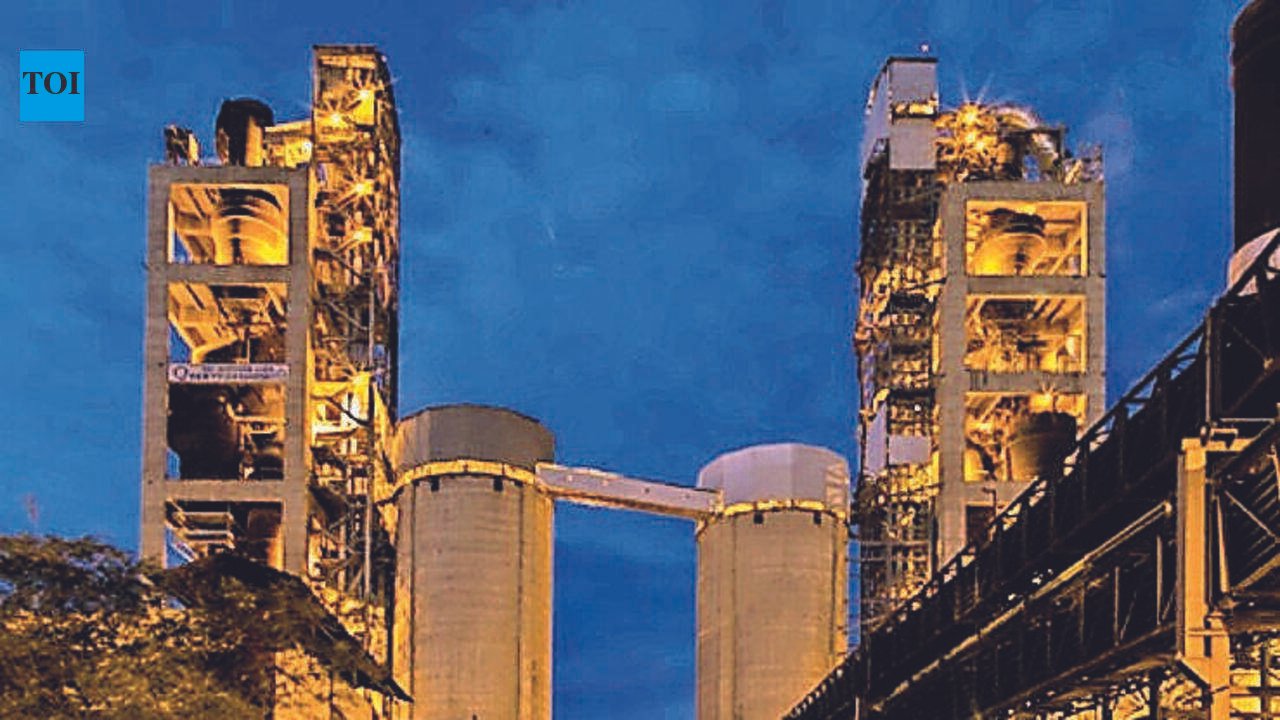
India is the world’s second-largest cement market, driven by strong structural demand from urbanisation, infrastructure development, housing and industrial growth. Cement production capacity stood at 718 million tonnes per annum (MTPA) at the end of FY26, with independent agencies estimating another 100 million tonnes of grinding capacity to be added by FY28.As cement remains one of the most emission-intensive industries, manufacturers are committing to ambitious decarbonisation initiatives. Leading cement producers have laid out net-zero emission roadmaps over the next 15-20 years.“The cement industry is accelerating its decarbonisation efforts through increased adoption of green power, blended cement, alternative fuels and clinker efficiency improvements. Apart from sustainability commitments, this transition is also being driven by the need to mitigate fuel cost volatility and enhance cost competitiveness,” rating agency Icra said. Cement makers are stepping up efforts to increase the share of green power in their overall energy mix, among other initiatives. Driven largely by waste heat recovery systems (WHRS), this transition is expected to lower power costs and reduce pressure on margins. WHRS captures heat generated during the cement production process and converts it into electricity for captive use.Ramco Cements Ltd, a leading cement maker in South India, has built 53MW of WHRS capacity to reduce energy consumption, while also optimising logistics to lower lead distances and emissions. The company’s wind power capacity stands at 166MW. “We continued to make tangible progress on our sustainability agenda. In FY26, we commissioned an 8MW WHRS at our Ramasamy Raja Nagar plant. Alongside improved wind power generation, this reduced our dependence on purchased power and increased the share of green energy in our overall energy mix. These initiatives not only strengthen our cost structure but also support our long-term carbon commitments,” said P R Venketrama Raja, MD, Ramco Cements.In FY26, the company met about 40% of its energy requirements through green power, up from 36% in FY25. The increase was primarily driven by record wind power generation. India Cements, now owned by UltraTech Cement, is also accelerating its transition towards cleaner energy. Investments are being made to increase renewable power consumption through solar and wind energy, while WHRS is being introduced across suitable manufacturing locations.The company utilises renewable power from windmills at its factories in Tamil Nadu and hybrid power at its Banswara unit in Rajasthan. Green power accounts for about one-fourth of its energy mix. Dalmia Cement has also strengthened its renewable energy portfolio and enhanced access to captive green power in Tamil Nadu. In October 2025, it increased its stake in two solar projects to source up to 28MW and acquired a 38.6% stake in another project with a capacity of up to 9MW, taking its total captive solar power capacity to 37MW. Overall, its renewable energy capacity stands at 449MW, with renewable energy accounting for 46% of its energy mix in FY26.“Every 5% increase in green power replacement can lower power and fuel costs by `15-16 per tonne. Consequently, a 25% replacement level could translate into cost savings of `75-80 per tonne and support operating margin expansion of 140-160 basis points,” said Anupama Reddy, Vice-President and Group Head, Corporate Ratings, ICRA.India’s major cement companies to increase their green power capacity to 5.8-6.0 GW by March 2028 from around 4.0GW as of March 2026, supported by planned investments of `12,000-13,000 crore over the next two years. The additional capacity is likely to generate annual savings of `6,200-6,700 crore, according to Icra.The cement industry is also evaluating advanced technologies such as carbon capture, utilisation and storage (CCUS). The govt of India has proposed an outlay of `20,000 crore over five years to support CCUS deployment across key sectors, including cement.Meanwhile, green financing has emerged as an important enabler of the industry’s decarbonisation journey. While adoption remains at a nascent stage in India, some leading cement manufacturers have tapped sustainability-linked bonds and loans to finance renewable power projects, WHRS and other sustainability-focused initiatives.
