


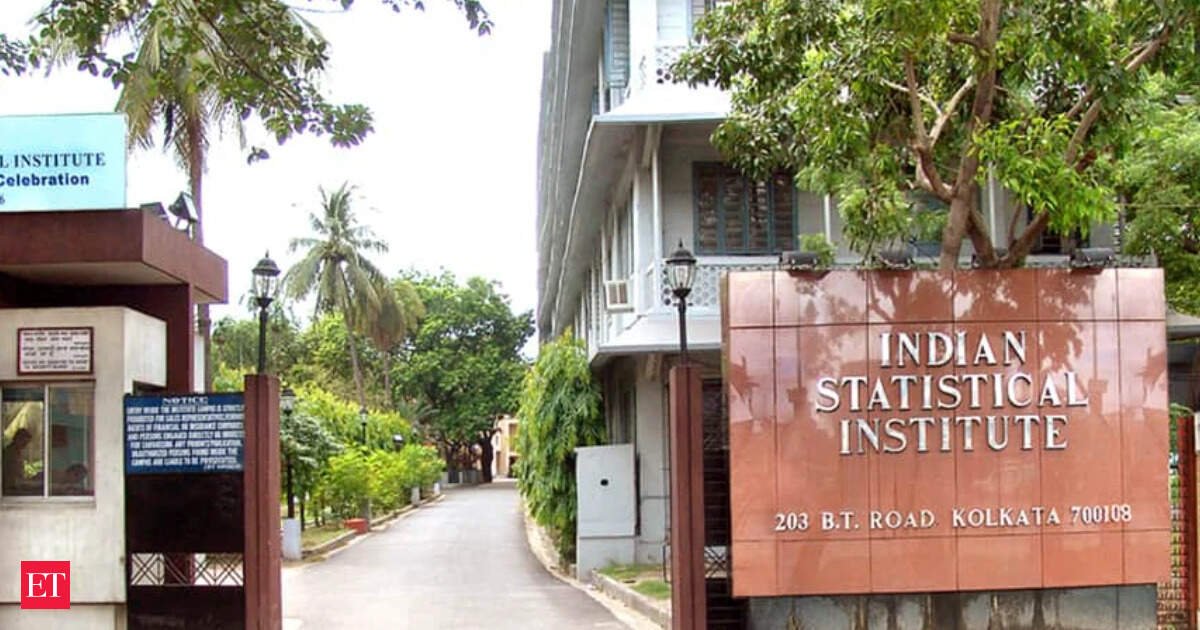
Union Minister Rao Indrajit Singh introduced the bill amid opposition protests over the NEET paper leak issue and alleged theft of donations from the Ram temple in Ayodhya. Some opposition members who had submitted notices opposing the bill at the introduction stage did not speak, following which it was introduced through a voice vote.
Also Read: Bill to provide statutory framework to Indian Statistical Institute up for introduction in Lok Sabha
New Board of Governors, Academic Council proposed
The proposed legislation seeks to incorporate the Indian Statistical Institute (ISI) as a ‘body corporate’ with the aim of strengthening its governance, promoting academic excellence and research, and enabling it to address emerging requirements in statistics and related disciplines.
Under the proposed framework, the President of India will serve as the Visitor of the institute. A Board of Governors will function as the principal policy and executive body.
The board will be headed by a chairperson who will be an eminent person from academia, industry, education, public policy or statistical sciences. It will remain accountable to the central government, according to the bill.
The institute will also have an Academic Council, headed by its director, as the principal academic body. All full-time professors and faculty members will be part of the council.The bill seeks to repeal the Indian Statistical Institute Act, 1959, which declared ISI an institution of national importance and empowered it to award degrees and diplomas in statistics.
The 1959 law was amended in 1995 to expand the institute’s degree- and diploma-granting powers to mathematics, quantitative economics, computer science and other subjects related to statistics as determined by the institute.
According to the government, the existing law has limited provisions governing the institute’s administration, finance, accountability and functioning, making it inadequate for an evolving academic and research environment.
New law aims to boost data science talent
The proposed legislation is intended to provide a comprehensive framework for the incorporation and functioning of ISI as an institution of national importance and enable it to develop into a globally recognised centre for statistical sciences and allied fields.
The bill also states that the proposed legal overhaul could help build an ecosystem to train a new generation of data scientists and statisticians and address the talent gap faced by India’s technology and financial sectors.
