



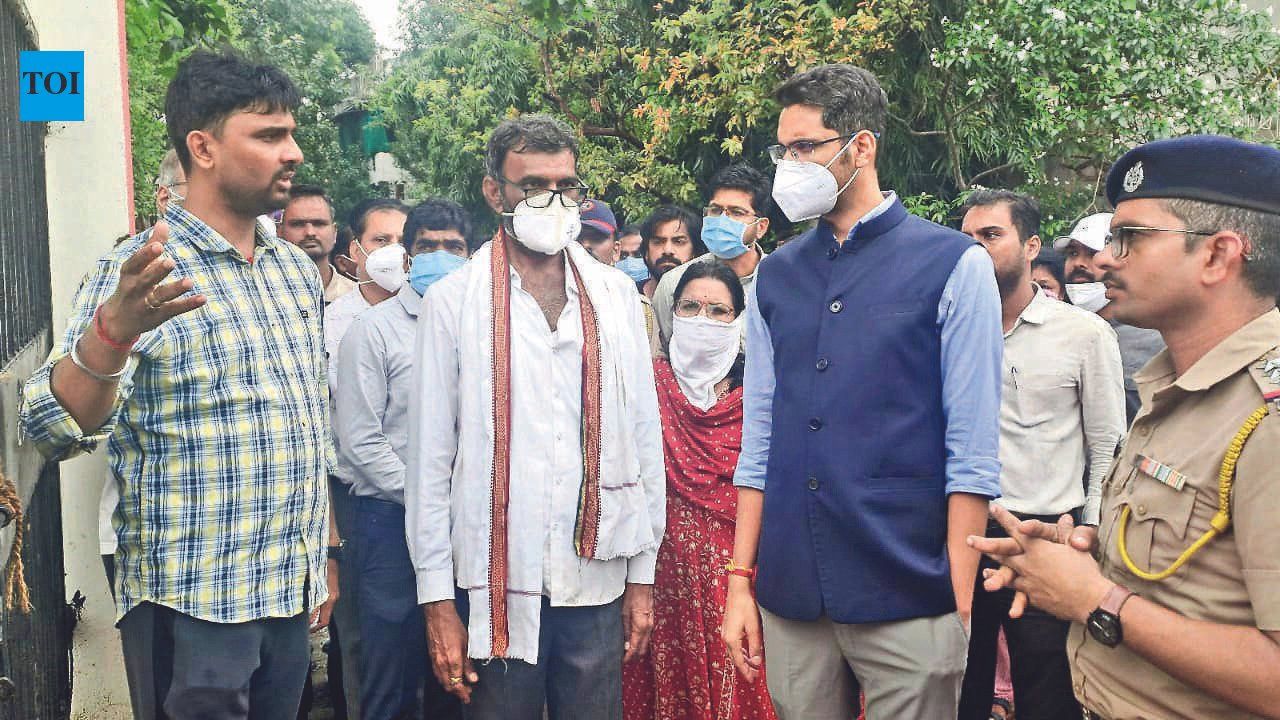
Nagpur: District collector Kumar Ashirwad has ordered a technical probe into the chlorine gas leak at Maharashtra Jeevan Pradhikaran (MJP) water treatment plant in Godhani, directing a six-member committee to inspect the facility, establish the exact cause of the leak and identify any technical, human or administrative lapses.The committee has been asked to submit its detailed report to the district collector within two days, according to an order issued on Monday by the District Disaster Management Authority under sections 28, 30 and 34 of the Disaster Management Act, 2005.The order comes after the leak from a 900kg chlorine cylinder at the 4.5 MLD water treatment plant late Sunday night triggered panic in nearby residential areas and led to several people being hospitalised.The committee comprises officials from Maharashtra Pollution Control Board, public health engineering department of Nagpur Municipal Corporation, Nagpur rural administration, NMC fire department, NDRF and the Directorate of Industrial Safety and Health.The collector has specifically directed the panel to examine the exact point and cause of the leakage, condition and functioning of equipment and cylinders, storage and handling of chlorine, safety standards, maintenance records and the plant’s emergency response system.The panel will also examine response of various agencies during the incident, including evacuation of residents, medical assistance and measures taken to contain the leak. Officials have been asked to record statements of MJP personnel and examine logbooks, safety records, maintenance documents and other relevant records.The order also makes clear that the inquiry will determine whether the incident resulted from technical, human or administrative shortcomings and fix responsibility wherever lapses are established.Safety of chlorine storage has emerged as a key concern following the incident. The collector had earlier flagged the manner in which the 900kg cylinder was kept at the plant, questioning why a hazardous gas cylinder was located in an open environment rather than in a properly sealed and contained room.The leak began around 12.10am from a reserve cylinder, according to the collector. The plant had two 900kg cylinders, one of which was not being used at the time.The administration has also directed the committee to recommend measures including improved safety protocols, standard operating procedures, emergency response plans and training to prevent recurrence.The district administration is simultaneously examining safety arrangements at other water and sewage treatment plants where hazardous gases are stored, amid concerns that the Godhani incident could expose wider gaps in handling and emergency preparedness.


