


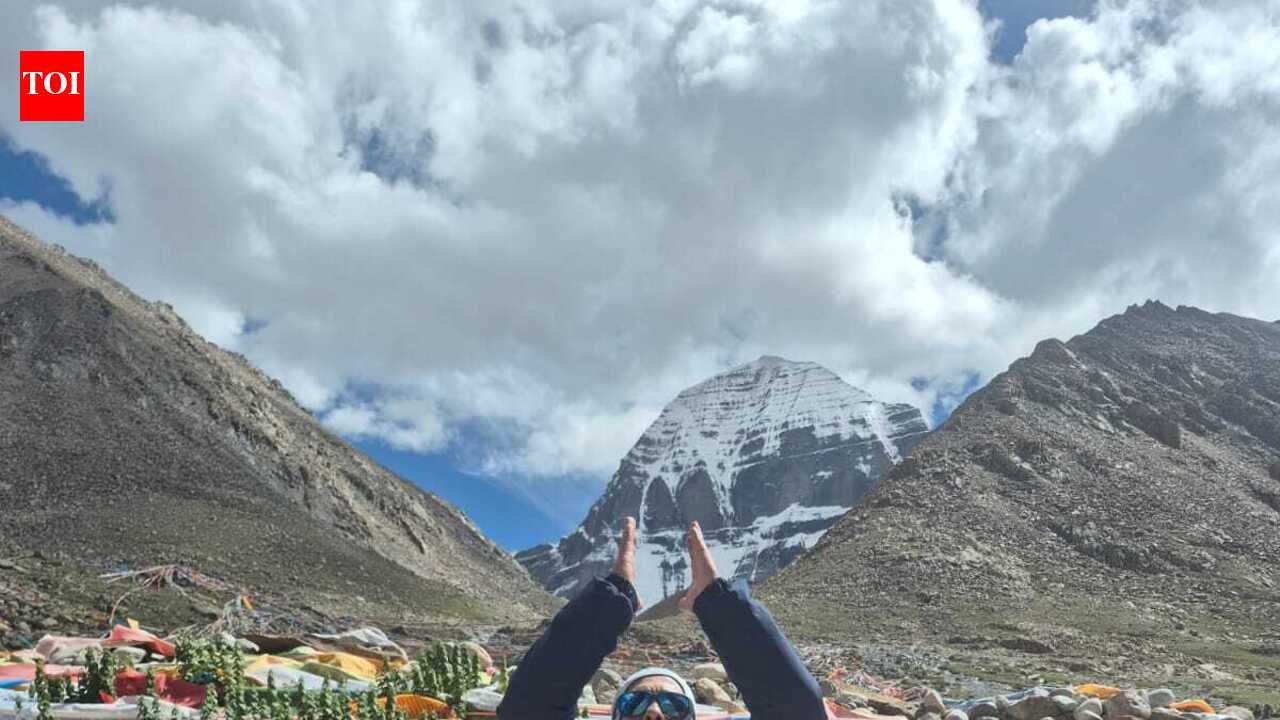
Margao: Standing on the shores of the sacred Lake Mansarovar on the morning of Aug 26, word reached Amit Naik Burye and his group of pilgrims that the road they had travelled just two days earlier, the hotel they had slept in, the border post they had crossed, even the little home where a Nepalese family had fed them a hot lunch, had all been wiped out by a catastrophic flash flood. Before them lay the most punishing stretch of their pilgrimage, the 52-km trek around Mount Kailash. Behind them lay a trail of devastation they had missed by less than two days. The Panaji-based restaurateur and his two fellow Goan pilgrims did not turn back. Instead, they stopped, prayed for the dead and the missing, and walked on.“We prayed that whoever has lost their lives be brought back, and that whoever is trapped be released from their pain,” said Naik, 52, recalling the moment his 150-member spiritual group — pilgrims drawn from nearly 25 countries — learnt the scale of the disaster unfolding behind them on the Nepal-Tibet border.Just days earlier, the mood had been jubilant. On their way to the border, the group — travelling with Naik were Rashmi Row and Priyanka Row, also from Goa — had stopped for a home-cooked lunch prepared by a Nepalese family a few kilometres from the border town of Timure, grateful for a warm meal before the hardest leg of the journey. At the immigration post further along, they’d struck up an easy, cheerful conversation with a young Chinese woman running the coffee counter, delighted to find someone speaking a smattering of Hindi.Neither the family nor the woman could have known that within 48 hours, everything around them would be buried under mud, rock, and rushing water. “We were so thankful to them for that food. I only pray they were somehow saved that day,” Naik said. “Everything there is gone now — buried under the earth.”Naik’s group, pilgrims of the Mohanji spiritual order undertaking the Kailash Mansarovar yatra during this year’s rare ‘horse year’ — considered highly auspicious to undertake the sacred parikrama — had set off from Kathmandu on Aug 17. The 185-km road journey to the border by narrow, rocky mountain roads was gruelling. The group crossed into Chinese territory via Gyirong on Aug 23, then moved on to Saga to acclimatise before reaching Mansarovar — unaware that a glacial burst was about to unleash one of the worst disasters to hit the region in a century, one that officials fear has left nearly 4,000 people buried.“We were told we were among the second-last batch to cross before it happened,” Naik said. It was only at Mansarovar, far from the wreckage, that the full horror reached them. Rather than abandon the yatra, the pilgrims pressed on. The Kailash parikrama that followed tested them further: Three gruelling days on foot, crossing the Dolma La pass at nearly 5,600m, in air so thin that 15-20 of the group’s 150 pilgrims were forced to turn back, unable to continue.The journey back was just as harrowing. With the original route through Timure washed away entirely, the group was diverted along an alternative path via Tatopani, forced to abandon their vehicles and trek nearly 3km through mud, rubble, and rushing water — helped across the slippery, dangerous stretch by Nepalese villagers who guided the women and elderly to safety. With helicopters in the region grounded or diverted to relief operations, the group had no choice but to risk the battered mountain roads by bus to reach Kathmandu, arriving late at night, shaken but unhurt.For Naik, it’s still hard to let it sink in — they missed the disaster by less than 48 hours. “We feel blessed to have come back home to our families in the face of such a tragedy,” he said. “But at the same time, we feel really sad for whatever has happened to those who could not.” Asked if he would undertake the yatra yet again, Naik didn’t pause: “If the calling comes again, I’ll go. The Kailash experience is indescribable. It’s that unearthly experience alone that let us overcome the melancholy of the tragedy.”
