



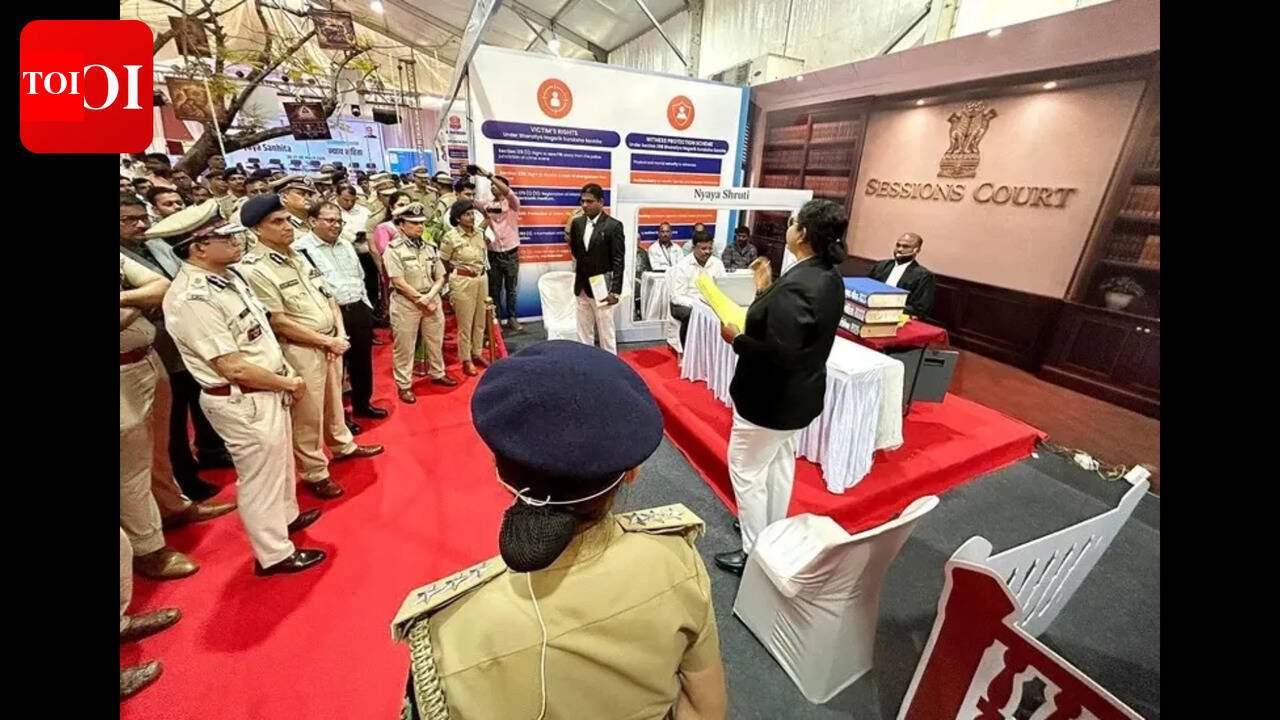
Panaji: Goa police have maintained a 70% conviction rate in the cases registered against criminals under the new criminal laws, including Bharatiya Nyaya Sanhita (BNS), Bharatiya Nagarik Suraksha Sanhita (BNSS), and Bharatiya Sakshya Adhiniyam (BSA).Director general of police (DGP) Alok Kumar said Goa secured the first position in the country in the implementation of the Nyaya Sanhitas. He said this is a dynamic rating and that Goa police will strive to retain this position, which was secured two months back.“This is not just a ranking — it is a reflection of collective commitment, coordination, and innovation across all pillars of the criminal justice system,” the DGP said.Goa police have achieved 100% in administrative reforms, ensuring complete readiness for implementation, and 92% in information and communication technologies (ICT) applications, through e-Summons, Nyaya Shruti, and MedLeaPR.Kumar said Goa police achieved 100% in system integration, enabling seamless coordination between police, courts, prisons, forensic science, and prosecution.“Strong progress in operational efficiency, with strong compliance in zero FIR, forensic integration, and evidence-based investigation,” he said after inaugurating an exhibition on Nyaya Sanhita at Kala Academy on Thursday.The DGP said that awareness brings change, understanding brings change, and participation brings change. “And that is precisely why this Nyaya Sanhita Exhibition has been organised. This exhibition takes you through the entire journey of justice,” he said.Kumar said that through interactive stalls and a live skit, representatives of all pillars of the criminal justice system have attempted to bring the law out of books and into real life.He said the Nyaya Sanhita introduces several important reforms, including time-bound investigation and trial, trial in absentia to ensure absconders cannot escape justice, limit on adjournments to reduce delays, and undertrial dignity, among others.Kumar said that in Goa, these legal reforms have been complemented with technology-driven policing initiatives from the AI-ML lab and PRISM intelligence fusion center, and with tools like deep trace and radical content analyser.


