


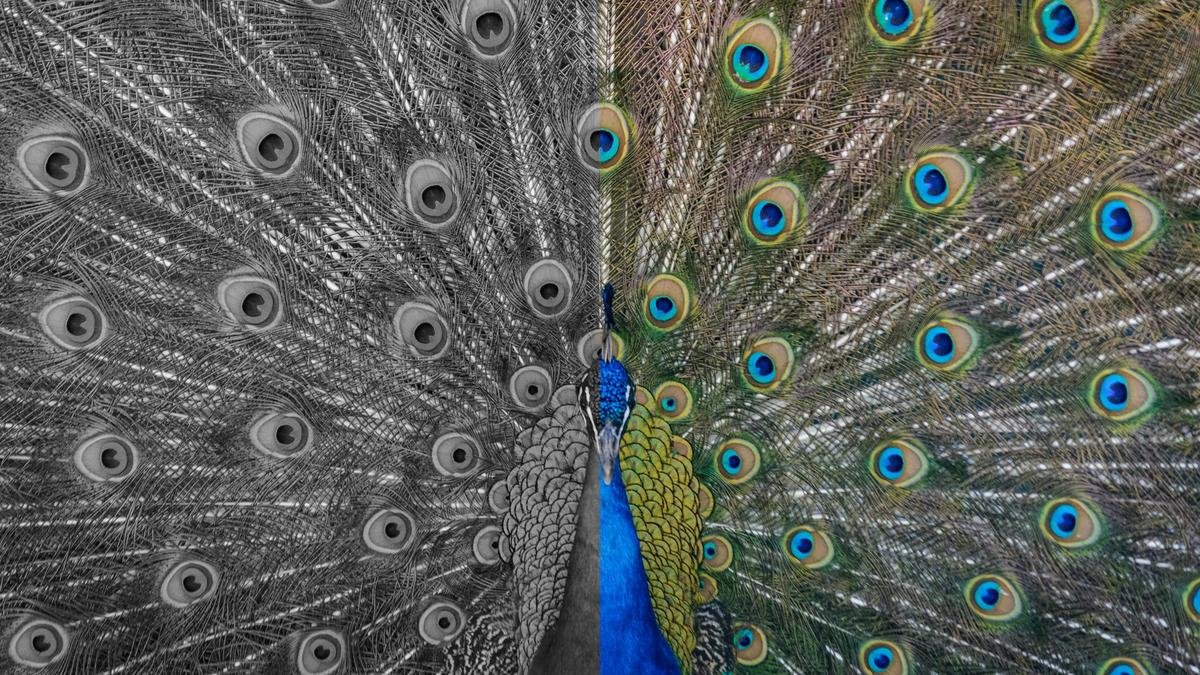
The colours of the natural world are not what they once were. More than half of the oceans have become greener over the last 20 years, and forests are turning brown prematurely. Various species of flora and fauna have also been changing their colours to adapt to rising temperatures, loss of habitats, and pollution.
This ecological discoloration is a direct consequence of climate change.
Living creatures are coloured a certain way for their survival and reproductive needs. Colours help escape predators, attract mates, and manage heat, among other functions.
A study published in Biodiversity and Conservation found that rising deforestation in the Amazon is causing butterflies to lose their bright displays. Butterflies in areas with human disturbance also sported a less diverse palette on the wings than those in the deeper, untouched parts of the forest. The researchers also found that areas with large-scale deforestation lacked the most colourful butterflies: less bright butterflies were able to camouflage better to escape predators and adapt to the loss of natural vegetation.
Becoming lighter
These changes echo one during the Industrial Revolution, when engine smoke and soot darkened the barks of trees and rendered the natural camouflage of lighter peppered moths ineffective. Over time, the darker peppered moths — which used to be rare — became more common in urban areas.
“In theory, the main adaptive pattern of colour change in relation to global warming would be a reduction in the deposition of melanin pigments,” Kaspar Delhey, an ornithologist at the Monash University, told The Hindu.
Eumelanin produces dark brown/black shades and pheomelanin produces yellow and red hues. They’re the two main types of melanin pigments in animals. When their bodies produce less melanin, they become lighter.
In a 2024 study in Ecology and Evolution, scientists also reported that several insects, including ladybirds and dragonflies, in the temperate northern hemisphere are turning lighter due to frequent heatwaves.
“Colour changes can have clear thermoregulatory benefits: lighter colour under warmer conditions can prevent overheating and allow insects to remain active for longer periods, while darker insects heat up faster in colder regions,” Md Tangigul Haque, researcher at Macquarie University and one of the authors of the study, said.
Plants affect animals
The finding is in line with Bogert’s rule: that animals in colder regions will be darker and those in warmer regions will be lighter. It’s mainly applicable to cold-blooded animals. On the other hand, Gloger’s rule applies to warm-blooded creatures, saying animals are darker in areas with high humidity and rainfall and lighter in colder, drier regions.
In a 2024 study in Molecular Ecology, scientists found that thanks to milder winters, the brown morph of the tawny owl was found to be more dominant than the grey one in Europe. This was because the darker colour protected better against UV radiation.
Aside from climate change, rapid urbanisation and pollution are changing colours in the wild. In a 2024 study of 547 bird species in China, scientists found those in cities were darker and duller while rural areas abounded (relatively) in the more colourful birds. The authors speculated that heavy metals like lead could bind with melanin to produce darker plumage in urban areas.
Changes in plants’ pigments of plants also affect animals. Carotenoids afford plants red, yellow, and orange hues, and draw animals to consume them. Scientists have noticed that urban plants produce this pigment less. A 2020 study in Current Biology reported that flowers were altering their UV-related pigments to prevent being damaged by sunlight. These pigments aren’t visible to the human eye; they’re intended for pollinators instead, and by changing them the plants could become less ‘attractive’.
“Colour changes that improve survival might reduce mating success or involve other fitness costs,“ Dr. Haque said. This affects reproduction in particular, with animals shifting their courtship timing to cooler periods, he added.
‘Underwater forest’
A striking example of ecological discolouration in India is underwater. In February 2025, scientists reported coral bleaching events in the Gulf of Mannar, Palk Bay, Lakshadweep, Andaman and Nicobar Islands, and the Gulf of Kachchh. When corals suffer heat stress, they expel symbiotic algae and turn white. Such bleached corals face a higher risk of starvation and disease.
“A healthy coral reef is like an underwater forest,” Thinesh T., assistant professor at Sultan Qaboos University in Oman and one of the authors of the study, said. “When corals bleach or die, reefs lose their complex structure that provides shelter and breeding areas for many marine organisms. Fish and invertebrate populations decline, while algae and other stress-tolerant organisms often take over. This reduces biodiversity and disrupts the balance of the marine ecosystem,”
A burgeoning population of algae is also rendering the oceans greener.
“Algal blooms can reduce water clarity and block sunlight, making it harder for corals and seagrasses to photosynthesise. When blooms die and decompose, they can also lower oxygen levels in the water, harming fish and other marine life,” Dr. Thinesh said.
A positive effect
Given the cascading effects of colours, minimising their change has become an important thrust of climate action. However, experts have flagged a large knowledge gap thanks to a lack of studies in the southern hemisphere and tropical areas and that large geographic surveys are required to establish the current trends.
“By successfully implementing strategies from both field- and lab-based monitoring, we can guide interventions; for example, preserving microhabitats such as shaded areas may help dark-coloured insects avoid overheating,” Dr. Haque said.
On the bright side, the study in the Amazon rainforest also found that forest areas that had regenerated naturally had a positive effect on the colours of butterfly species. In India, experts have said, regulating coastal development, improving water quality, and tracking stress indicators will minimise coral bleaching. Put another way, it’s still not too late to restore the world its true colours.
nivedita.s@thehindu.co.in
Published – February 11, 2026 05:30 am IST


