


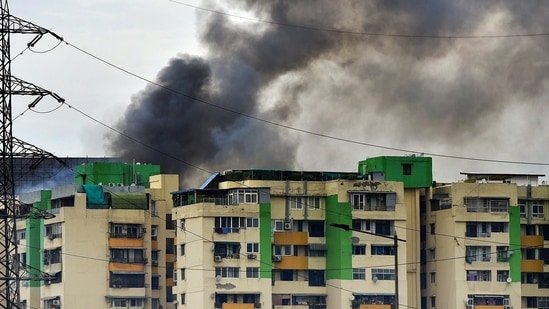
A major fire broke out in a high-rise residential building in Indirapuram, Ghaziabad, on April 29, triggering a large-scale firefighting and rescue operation. The incident comes close on the heels of a fire in Gurugram, where two luxury flats in Sector 63A were reportedly engulfed in flames.

Such incidents are becoming increasingly frequent, often linked to short circuits during peak summer heat, raising fresh concerns about fire safety in multi-storey housing complexes, particularly for residents on higher floors. Experts say these cases highlight the need for stricter compliance and regular fire safety audits, especially during renovation work.
Here’s what residents of high-rise complexes should know:
1. Maintain air conditioning units regularly
Poor maintenance of electrical appliances, especially air conditioners, is a leading cause of fires. With power demand surging in summer, housing societies must assess load capacity and plan upgrades in advance.
“While societies should ideally increase their power load capacity in anticipation of higher consumption, many delay it due to cost and procedural challenges,” said Munish Kumar, founder director, EHS Guru Sustainable Solutions Pvt Ltd.
Residents should avoid running ACs continuously and maintain a temperature of around 24°C to reduce load stress.
2. Install and learn to use fire extinguishers
Fire extinguishers should be installed both inside and outside apartments in high-rises. Resident Welfare Associations (RWAs) must conduct regular training and mock drills to ensure residents know how to use them during emergencies.
3. Use staircases, not lifts, during a fire
Lifts should only be used by firefighters. Staircases are designed to remain relatively smoke-free due to pressurisation systems, making them the safest escape route, say fire safety experts.
Also Read: Noida resident calls high rise towers ‘luxury chawls’, cites daily lift chaos. Watch
Common areas, especially staircases, must remain free of obstructions. Pressurisation systems and smoke detectors should be regularly checked for functionality.
4. Maintain chimneys and kitchen safety systems
Oil deposits in chimneys can ignite under high temperatures, making regular cleaning essential. Societies with commercial kitchens, such as those in clubhouses, must have additional fire safety systems in place, they say.
Also Read: 800 high-rise buildings in Gurugram lack fire safety clearance
5. Ensure fire water systems are functional
Fire tanks, typically located underground or on terraces, are critical during emergencies. In some complexes, swimming pools are integrated with fire systems and can act as supplementary water sources, experts say.
6. Conduct regular fire safety audits
Fire audits, mandated every two years under the National Building Code 2016, assess the readiness of fire systems, electrical risks, and emergency preparedness. Despite this, many societies treat audits as an avoidable expense, said Kumar.
7. Check smoke detectors and sprinkler systems
Smoke detectors inside apartments and in common areas must be functional. In buildings taller than 30 metres (over 15 floors), detectors in homes are mandatory and linked to the central fire system.
Experts warn that renovation work often damages or disables these systems. “Residents should ensure that smoke detection systems are not tampered with during interior work,” Kumar said.
Fire infrastructure must keep pace with vertical growth
Experts also flag a larger concern: firefighting infrastructure in cities like Delhi-NCR has not kept pace with rapid vertical expansion. High-rises must ensure the timely renewal of fire No Objection Certificates and strict adherence to safety norms.
“If high-rises are India’s future, fire safety must be treated as a human right, not a compliance checkbox,” Kumar said.
Rajiva Singh, president of the Noida Federation of Apartment Owners Associations, urged RWAs and residents to prioritise electrical audits and fire preparedness. “Simple steps like servicing AC units and removing inflammable materials can prevent disasters. A safety-first mindset is critical, especially during peak summer,” he said.
