



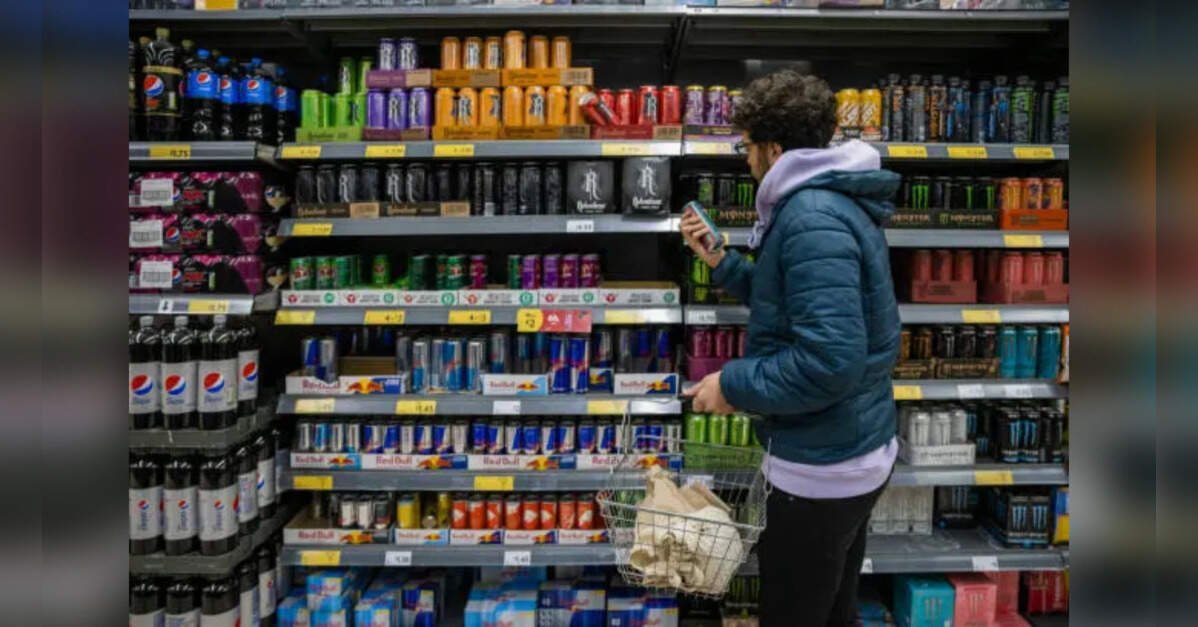
Berlin: A German push to tax sugary drinks and ban energy drinks for under-16s will be voted on by the country’s assembly of regional states on Friday as public and cross-party support emerges for tougher action on obesity and related illness.
The proposal seen by Reuters and going before the Bundesrat on Friday would kickstart the legislative process for such a move. It does not spell out how a levy should be designed, but it does propose that revenue raised should be used for health initiatives.
“Manufacturers should have an incentive to revise their recipes and reduce sugar content. So far they have had no such incentive,” said Daniel Guenther, state premier of Schleswig-Holstein and initiator of the legislative proposal.
MORE THAN 100 COUNTRIES TAX SUGARY DRINKS
The proposal also calls for a ban on the sale of energy drinks to children under 16 because of the high caffeine, taurine and sugar content of such drinks.
“Energy drinks are not harmless, trendy beverages,” Guenther said. “They can become a real burden, especially for young people.”
More than 100 countries tax sugary drinks, the World Health Organization says, including about half of the European Union’s member states, such as Belgium, France and Portugal.
The EU has no bloc-wide levy, leaving such measures to national governments.
Though Guenther’s conservative CDU party rejected the idea in February, backing has since come from some in the party as well as from the Greens and Social Democrats.
Greens lawmaker Johannes Wagner said he supported the plan because the industry has little reason to reduce sugar content voluntarily. “Anyone making profits from heavily sugared drinks must also contribute more to financing the resulting costs,” he said.
Sabine Dittmar of the Social Democrats called the proposed levy “sensible, necessary and long overdue”, adding that it should be tiered so drinks with higher sugar content are taxed more heavily than lower-sugar alternatives.
PUBLIC SUPPORT FOR TOUGHER ACTION
A Forsa survey published in February showed about 60% of Germans supported a levy on soft drinks with high sugar content.
A 2023 modelling study led by researchers at the Technical University of Munich found that a levy modelled on Britain’s sugar tax could reduce daily sugar intake in Germany by 2-3 grams, prevent or delay up to about 244,000 cases of type 2 diabetes over 20 years and save as much as 16 billion euros ($17.3 billion) over that period.
Germany’s sugar industry association WVZ, meanwhile, says that a “punitive tax on sugar” could push manufacturers to replace sugar with artificial sweeteners without improving public health.
“A sugar tax creates the false impression that a single ingredient is to blame for the development of obesity. There is no scientifically reliable evidence for this,” said WVZ Director General Guenter Tissen.
(Reporting by Maria Martinez Editing by David Goodman )


