



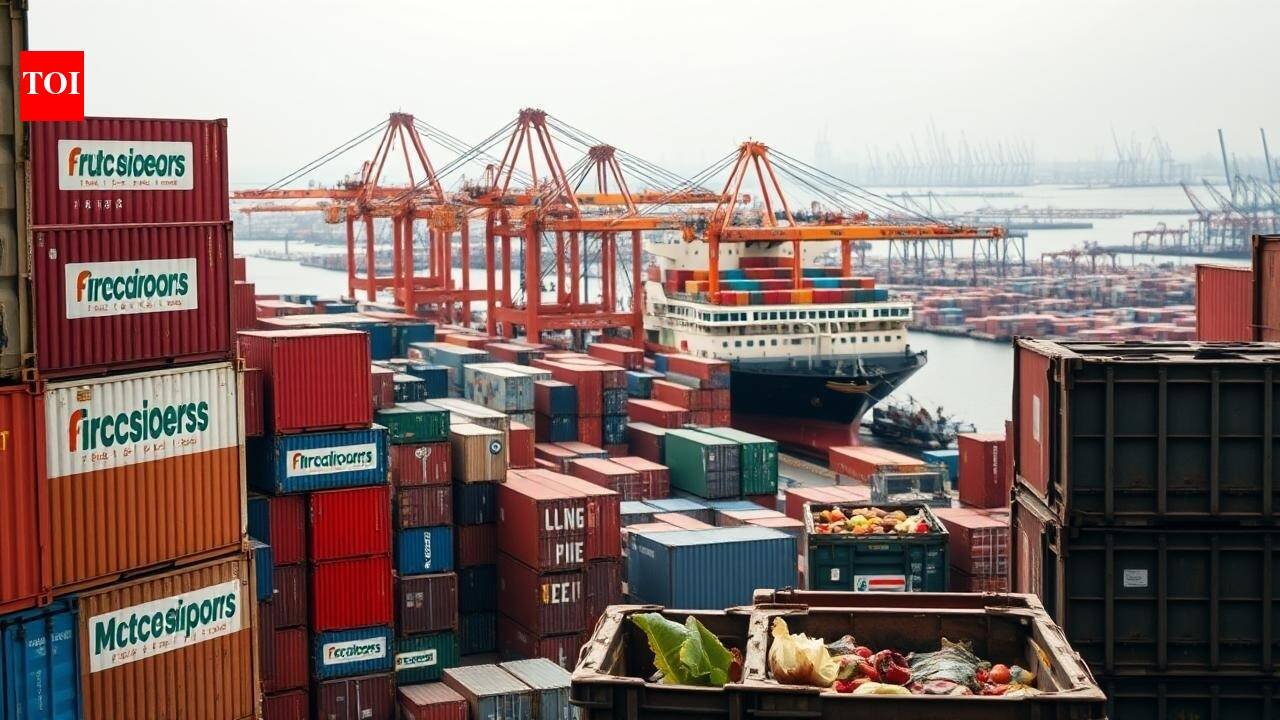
NEW DELHI: Ramzan and Easter are important dates in the calendars of several fruits and vegetables exporters to West Asia and Europe. Some of them, in fact, source seeds and grow vegetables meant specially for Europe as Jan to April is lean season for cultivation there.“We were ready with our consignments of onions for Europe, but now we have to deal with higher freight, longer sail times of 40-45 days (instead of 20-25 days) and a lot of uncertainty. Even transshipment hubs have been hit,” said Danesh Shah, a Pune-based fruits and vegetables exporter, who had booked large orders from West Asia and Europe.While Shah is looking to offload stocks of bananas meant for the Gulf markets at a discount, he fears that a lot of onions will be wasted.Kushal Thakkar of Kay Bee Exports has reduced spot purchases as goods in transit are affected and air freight is either too expensive or unavailable. Thakkar exports to supermarkets in the UK and UAE and his list includes fresh vegetables, ranging from okra and lauki to baby corn.
Most exporters are complaining of hefty freight rates, wherever space is available. Airlines are charging a significant premium – 30-40% – for goods going to Europe. Their bargaining power has gone up as airports in West Asia, which accounted for nearly half the traffic to Europe, are shut.Sending goods by sea is also expensive. Indian Rice Exporter’s Federation vice-president Dev Garg said that a 20-feet container to Saudi Arabia is seeing costs skyrocket to $2,600 in 48 hours as shipping lines, such as Maersk and MSC imposed a war surcharge of $2,000. “There is a 20% increase even for Africa as availability of vessels is not there and shipping lines are unwilling to place orders,” he said.The industry body has advised its members to either call back cargo meant for Iran and UAE or reroute it to other ports, including in Europe or the US. Besides, wherever goods have reached their destinations, members are being advised to ask buyers to share the cost and going forward, book cargo on free-on-board basis, given the uncertainty in freight and insurance charges. One estimate suggested that there is 4 lakh tonnes of rice in transit at the moment.Thakkar said that there are buyers in Europe who are willing to pay a premium for food and his company has loaded cargo but added that uncertainty is not something that augurs well with global retailers.


