






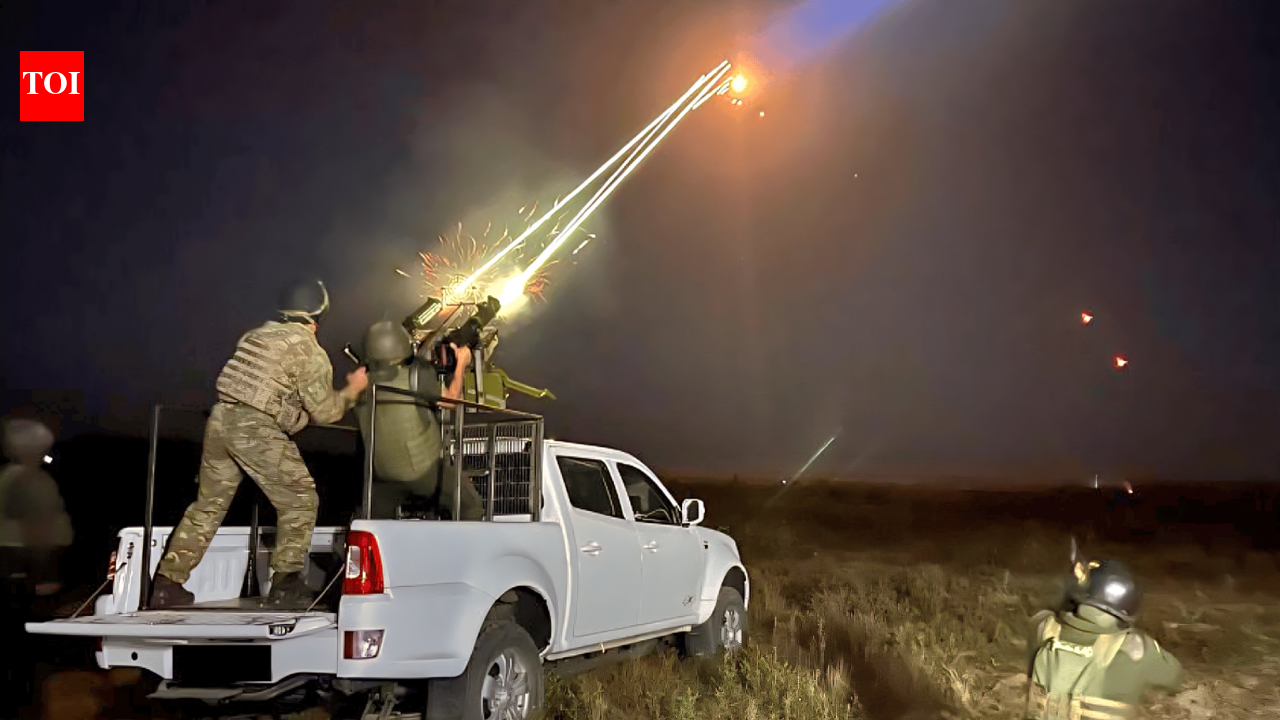
The rapid proliferation of attack drones and loitering munitions on modern battlefields is pushing militaries around the world towards a new layer of air defence — using drones to hunt down other drones. The ongoing Russo-Ukrainian conflict, which is characterised by drone warfare, has been the biggest driver of this shift. Ukraine has increasingly relied on interceptor UAVs to bring down Russian Shahed-type one-way attack drones, a tactic aimed at conserving costlier surface-to-air missiles for higher-value targets. Sudan’s army, using a Turkish origin Akinci drone, has even shot down a Chinese-made CH-95 drone operated by UAE-backed Rapid Support Force.Interceptor drones work by detecting, chasing and neutralising hostile UAVs, either through direct collision, small onboard warheads or guided engagement systems. Unlike traditional air defence missiles, most of these interceptors are cheap to build and can be manufactured at scale, making them an attractive option against swarms of low-cost enemy drones.Ukraine has become the primary testing ground for this emerging technology. Ukrainian firms such as Wild Hornets have fielded systems like the Sting interceptor, built specifically to pursue and destroy incoming attack drones. Kyiv has also been linking interceptor UAVs to radar networks and command systems to sharpen detection, tracking and engagement.The next frontier is autonomous interception. In June 2026, Ukraine’s Brave1 defence innovation programme confirmed the combat testing of an AI-assisted system, which fuses radar data with onboard recognition software to track Shahed-type drones while keeping a human in the loop.This area of warfare, like others is also experiencing an arms race where the development of a system leads to a counter-system and this cycle continues with each side one upping the other. In this scenario, newer jet-powered attack drones are cutting down reaction time, forcing Ukraine to develop faster interceptors and sharper guidance systems. Swarm tactics, jamming and the difficulty of spotting low-flying drones greatly add to the complications.Other major powers are pursuing similar systems. The United States has deployed its Merops counter-drone system along NATO’s eastern flank and tested the Bumblebee interceptor, which uses automatic target recognition. Israel and several European nations are also building out aerial interception capabilities as part of broader counter-drone architectures.India, too, is building its own answer to the threat. The DRDO-BEL D4 system combines radar, electro-optical sensors and electronic warfare to detect and neutralise hostile UAVs, though this remains distinct from a dedicated interceptor drone built to physically engage airborne targets. Separately, DRDO completed development trials of its Unmanned Aerial Vehicle Launched Precision Guided Missile-V3 in May 2026, covering both air-to-air and air-to-ground modes, this step that could feed into future aerial interception and can be deployed as an anti-drone weapon.The learnings from Operation Sindoor have provided greater impetus to indigenous unmanned platforms and counter-UAS systems, as India works towards a layered defence combining radars, electronic warfare, interceptor drones, low-cost missiles and conventional weapons.


