



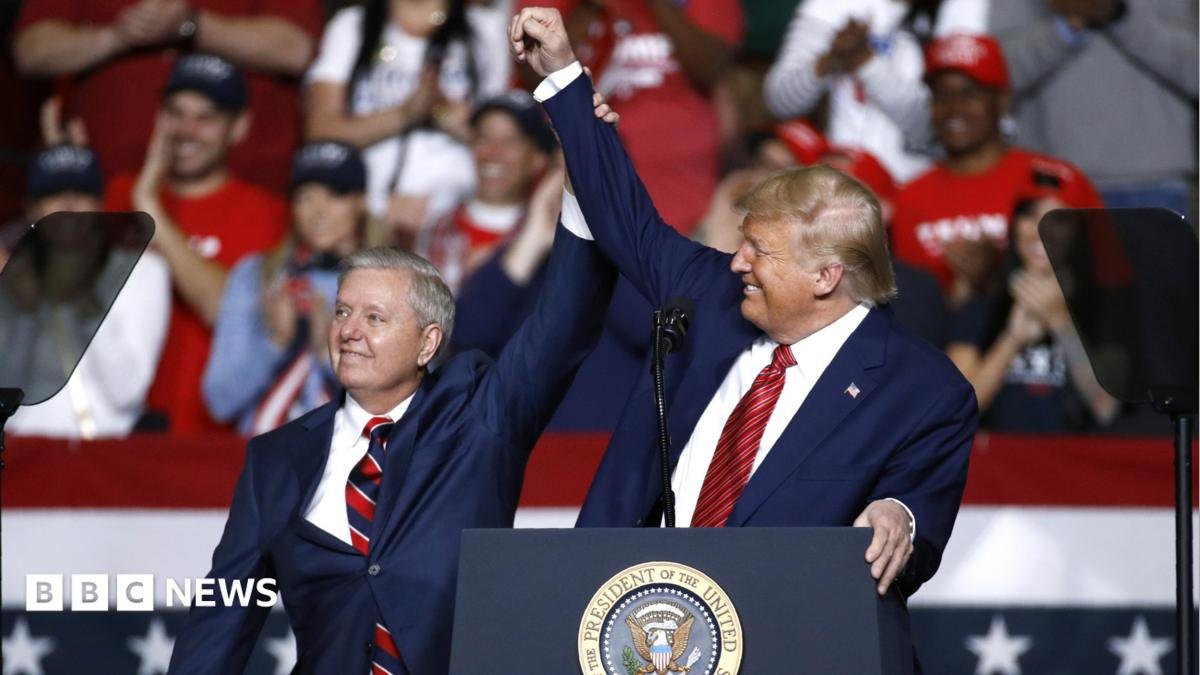
Lindsey Graham was a political survivor whose career as a Republican senator served as a telling barometer for the dramatically changing climate in his political party – and America – in the Donald Trump era.
While there were certain issues that were always central to Graham’s political identity – including a hawkish foreign policy that focused on containing Russian global ambitions, support for Israel and regime change in Iran – his 23-year career in the Senate was marked by a willingness to adapt to the gale-force change of political winds that accompanied Trump’s rise to power.
Shortly after being elected to represent South Carolina in the Senate in 2002, Graham became a close ally of Senator John McCain, the Arizona Republican who, while a staunch conservative, developed a national reputation for political independence.
When Graham ran for president in 2015, the idea of cooling partisan tensions and working with political opponents was one of his central messages.
“If I get to be president, we’re going to open up a bar in the White House,” Graham said. “We’re going to get liquored up and solve problems.”
He bristled when Trump criticised war-hero McCain for being a prisoner of war, with the New York real estate mogul telling a campaign event: “He’s a war hero because he was captured. I like people that weren’t captured.” Graham called Trump a “jackass” who shouldn’t be president.
Trump then read out Graham’s phone number at a rally, which inundated the senator with angry calls and messages.
In response, Graham destroyed a collection of mobile phones in a stunt video.


