


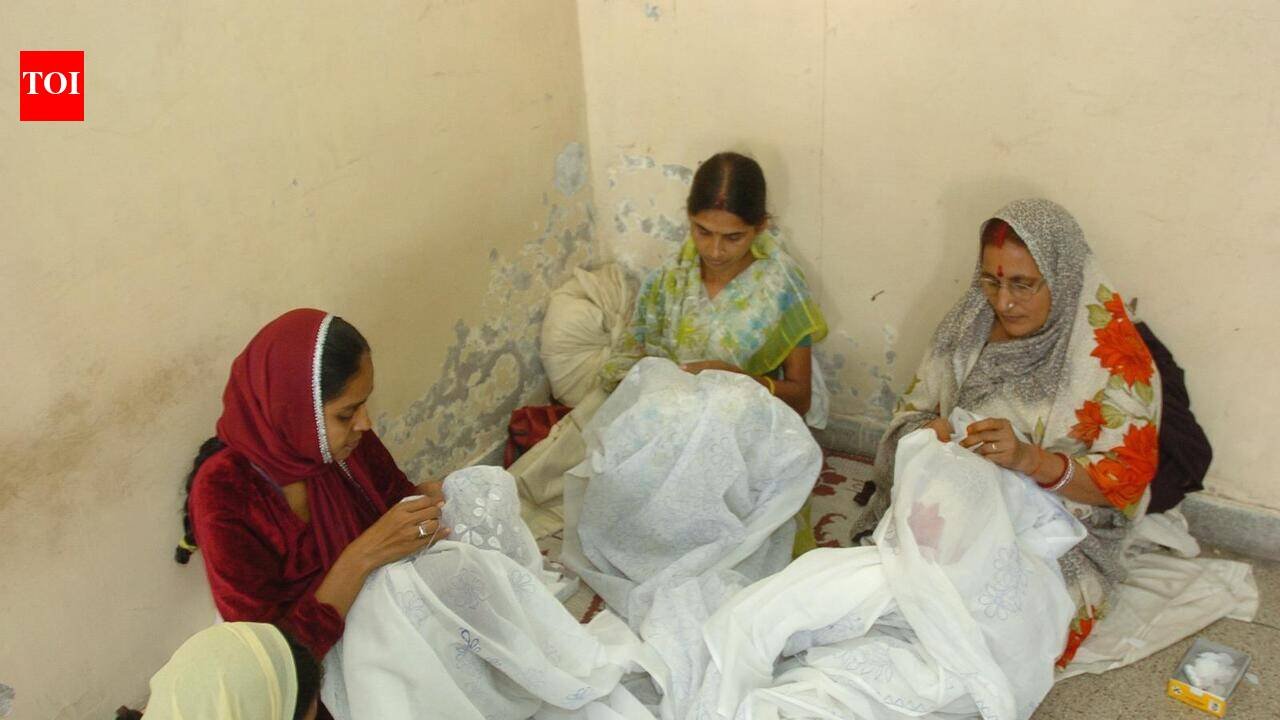
Lucknow: In the age of Instagram stores, digital payments and global fashion trends, Lucknow’s centuries-old chikankari craft has found new takers.While earlier generations relied on local markets and middlemen to sell products, a growing number of young entrepreneurs are using technology, branding and contemporary designs to transform the traditional embroidery business.For decades, chikankari has been an integral part of Lucknow’s cultural identity and a source of livelihood for thousands of artisans, especially women. However, low wages, limited market access and changing career aspirations have posed challenges to the craft. Instead of turning away from chikankari, many young Lucknowites are choosing to reinvent it.From launching online boutiques and creating social media campaigns to introducing contemporary designs and sustainable fashion collections, the younger generation is bringing a fresh perspective to a centuries-old tradition.Twenty-six-year-old entrepreneur Taranjeet Singh started his online chikankari label during the Covid-19 pandemic when conventional retail markets were shut.What began as a small social media page and WhatsApp group has since grown into a business catering to customers in India and abroad.“Earlier, artisans depended heavily on traders and wholesalers. Today, social media allows us to directly showcase their work. Customers are not just buying clothes anymore; they want to know who made them and how,” he says.Talking to TOI, secretary of Lucknow Chikankari Handicraft Association, Shailesh Tandon says: “Earlier, we had to travel to Delhi or Mumbai and stay there for two days just for product sampling. Now, we simply send photos and videos over WhatsApp, and buyers can even inspect the chikankari work through Zoom. It saves time.”“Payments are also instant, eliminating the risk of cheque bounces or forgery. Earlier, we often had Rs 5-7 lakh tied up in transactions, but the entire way of doing business has changed. Artisans have benefited too as they receive their payments on time,” he says.Shailesh says that e-commerce platforms have also significantly expanded the reach.“Earlier, a product would be displayed at just one location; today, the same product can be showcased across a dozen online platforms,” he adds.According to Nawab Masood Abdullah of the erstwhile Awadh royal family, chikankari has undergone a remarkable transformation over the years.“Chikankari was once confined to the domestic sphere. Today, with the rise of digital platforms, it has grown from a household craft into a nationally and internationally recognised art form. Over time, leading designers have reinvented the craft by introducing new colours, fabrics and contemporary designs,” he says.“While chikankari was once done mainly on muslin using cotton thread, artisans now work on silk and other fabrics, often combining it with embellishments like ‘zardozi’ and ‘mukesh’ to create fusion designs,” he says, adding that social media platforms have helped increase sales by around 50%.Young designers are also moving beyond traditional kurtas and sarees. Chikankari is now being incorporated into dresses, jackets, co-ord sets, motifs, office wear and fusion outfits designed for younger consumers. Fashion students and emerging designers are experimenting with new fabrics, silhouettes and colour palettes while retaining the essence of the embroidery.Consumers increasingly value products that carry a sense of authenticity and craftsmanship, giving chikankari a unique advantage in a market flooded with machine-made garments.A GAME CHANGERTechnology has emerged as a gamechanger. Digital catalogues, online marketplaces, live shopping sessions and influencer collaborations have helped small businesses reach customers far beyond Lucknow’s traditional markets.Many young entrepreneurs are also introducing professional branding practices that were largely absent in the sector. Product photography, packaging, storytelling through Instagram reels and Facebook stories and customer engagement have become as important as the embroidery itself.“Earlier, chikankari was sold as a product. Now, it is being marketed as an experience and a heritage craft. The younger generation understands how to position it for modern consumers,” says a city-based fashion consultant.Several startups are also focusing on improving the lives of artisans. By offering fairer wages, transparent pricing and skill-development opportunities, these ventures aim to create a sustainable ecosystem around the craft.FROM PERSIA TO LUCKNOWChikankari is believed to have derived its name from the Turkish word ‘chikh’, meaning ‘perforation’. In its early years, the craft was also known as ‘Sozandozi’, a Persian term meaning ‘needlework’.Embroidery is believed to have originated in Persia (present-day Iran) and was introduced to India during the Mughal era. It gained patronage under Mughal empress Nur Jahan, who was a great admirer of handicraft and traditional arts.The craft first flourished in Delhi before spreading to Murshidabad in present-day West Bengal. During the era of Nawabs, skilled artisans were invited to Lucknow, where chikankari received royal patronage and evolved into its finest form.Over time, Lucknow emerged as the principal centre of chikankari, and today the city is internationally renowned for the craft.HIGH DEMAND ON E-COMMERCE WEBSITES“We are seeing strong customer demand for Chikankari apparel on Amazon, with over 40% year-on-year growth. With a wide selection from top brands such as Seva Chikan, Ada and House of Chikankari, Amazon continues to make authentic Indian fashion accessible to customers across the country,” says Nikhil Sinha, Amazon India, director, fashion.Other popular e-commerce platforms like Myntra and Ajio have also reported an increase in year-on-year-growth, citing high demand for chikankari apparels.HOW FILMS WOVE FASHION STORYNawab Masood Abdullah says Bollywood has played a significant role in taking Lucknow’s chikankari to audiences across India and abroad.Costumes featuring chikankari in films like ‘Dhadkan’, ‘Kabhi Khushi Kabhie Gham’ and ‘Veer-Zaara’ introduced the intricate embroidery to a wider audience and inspired a new generation of designers and consumers.“These films presented chikankari as both a traditional craft and a modern fashion statement, significantly enhancing its appeal in domestic and international markets,” he says.TRADITION DILUTED?The transformation is not without concerns. Pramesh Chandra Rastogi, vice-president, Lucknow Chikankari Handicraft Association, is apprehensive that push for faster production and changing consumer preferences may dilute traditional techniques.Some intricate stitches that require years of training are becoming increasingly rare as demand shifts towards simpler and quicker designs.Runa Banerjee, co-founder of Self-Employed Women’s Association, says the key is balancing tradition with changing market realities. “Online sales haven’t affected chikankari much as many buyers still prefer visiting artisans and shops for authentic work.”Govt agencies, craft organisations and educational institutions are helping artisans adapt through training in digital marketing, e-commerce and entrepreneurship.THREADS OF TRANSFORMATION2.5 lakh+ jobs: Employs over 2.5l artisans, mostly womenWomen-led craft: Women make up 80-90% of the workforceRs 2,000–3,000 crore industry: Strong domestic and global demandGlobal exports: Shipped to the US, UK, Europe, Middle East and Southeast AsiaRural livelihood: Supports thousands of families across central UPMSME backbone: Sustains manufacturers, traders, boutiques and exportersTourism boost: A top shopping attraction for Lucknow visitorsGI tag advantage: Protects authenticity and boosts branding, value and exports
