



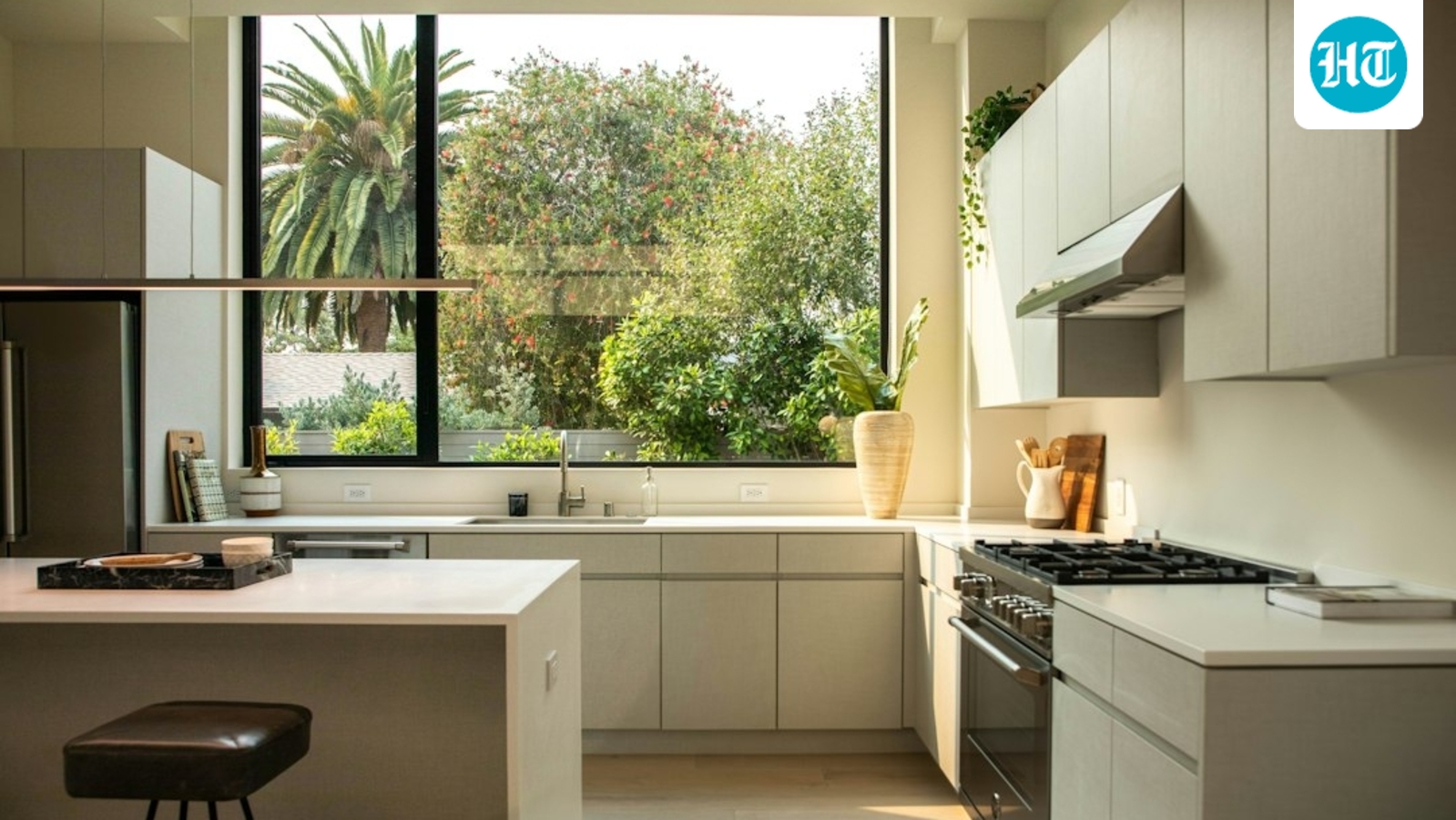
The difference between a kitchen that merely looks organised and one that genuinely works lies in the thinking behind what is not immediately visible: how storage is planned, how weight is distributed, how movement happens and how the space responds to the way a household cooks. In an interview with HT Lifestyle, Monica Chawla, creative director at Essentia, shared tips to design a kitchen that works well.
Also read | Decorating your first home? Interior designers share 10 common mistakes to avoid for a stylish and functional space
1. Design storage around what the kitchen actually carries
According to Monica, storage should begin with an inventory of real life, not a catalogue of cabinet sizes. Indian kitchens routinely accommodate heavy cookware, pressure cookers, large serving vessels, grain containers, appliances and provisions purchased in bulk.
Deep drawers designed to take substantial loads, tall storage for bulkier items and internal organisation for smaller essentials can make these demands easier to manage.
2. Plan the kitchen around the person using it
“Ergonomics can have as much influence on a kitchen’s usability as its layout,” highlighted Monica. Worktop height, cabinet proportions and the positioning of frequently used items should reflect the user’s height and cooking patterns.
3. Look beyond the finish when choosing materials
The material beneath a kitchen’s visible surface deserves as much consideration as the finish itself. Monica highlighted that precision-manufactured board, of the kind German makers such as Nolte Küchen build their cabinetry on, is a different proposition, offering consistent density, dimensional stability and properly sealed edges, qualities that matter particularly in humid conditions and high-use kitchens.
4. Let functionality recede into the design
Good functionality does not need to announce itself. “Handleless fronts, integrated organisers, concealed storage and uninterrupted cabinetry can accommodate extensive functionality while maintaining a calm visual language,” said Monica.
5. Treat engineering as part of the aesthetic
A kitchen’s design is ultimately experienced through use. Drawers need to open smoothly when fully loaded, hardware needs to withstand repeated movement, and cabinetry needs to maintain its alignment over years of daily use. This is where precision manufacturing becomes more than a technical consideration.
“The most successful kitchens do not separate practicality from aesthetics. They anticipate the weight of what will be stored, the movements of the person cooking and the demands placed on the space, while ensuring that these considerations remain visually understated,” concluded Monica.
