



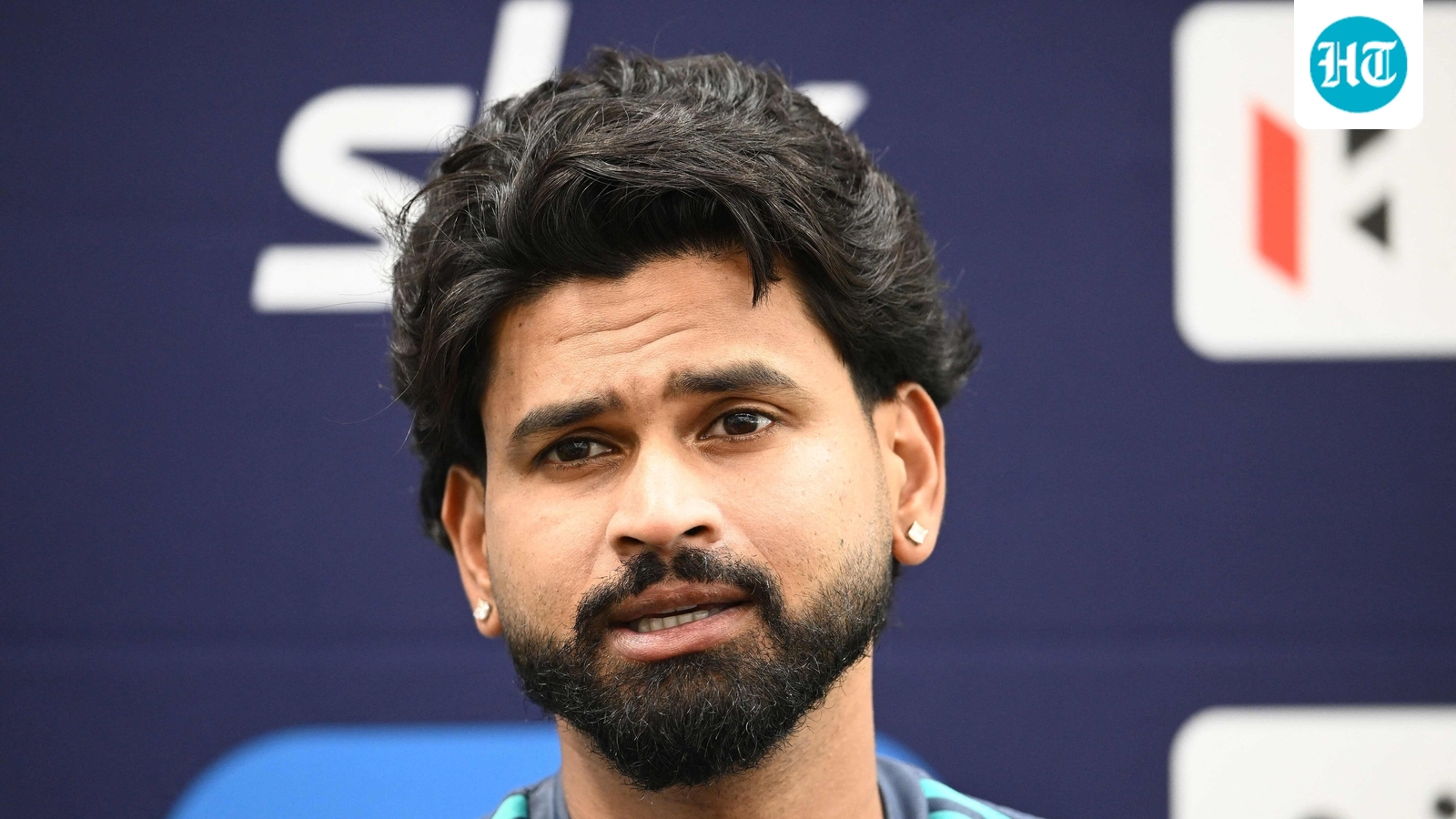
Kolkata: In June, Shreyas Iyer began a captaincy journey that took him from Ireland to England, Zimbabwe to India, and then Japan before another round of cricket brought him back home. Afghanistan played them in Delhi, before the West Indies series took them on a quick tour of the country, and now India’s T20 squad is in New Zealand for another assignment in a calendar that has offered little time to pause, let alone settle.
Less than 72 hours after landing in New Zealand, India are preparing for their first T20I, facing the familiar questions about jet lag, unfamiliar pitches and the challenge of adapting to conditions that have traditionally favoured seam bowling. For a team that has crossed borders almost continuously since the summer, this is another test of how quickly it can adjust.
The results along the way have been mixed. India have been humbled in Ireland and England, endured a stuttering home series against the West Indies and collected Asian Games gold in Japan. The New Zealand tour, with its reputation for testing conditions and a battery of fast bowlers in the opposition ranks, presents a different kind of examination. Iyer, however, is reluctant to treat the relentless schedule as an excuse.
“Right now, there is no challenge. I am not even thinking about it,” he said when asked about acclimatisation and the limited time available before the opening match. “We have been playing continuously. From Japan to India, from India to New Zealand. Continuously, we are used to it. So, in a way, this pattern has been set in our system.”
There is, admittedly, a cost to that routine. “We are getting less sleep,” Iyer acknowledged, before adding that the volume of cricket could also be beneficial. “But the more matches we play, the better it is for us.”
The challenge is particularly acute for a squad comprising eight or nine players visiting New Zealand for the first time. The captain has been here before and believes that, while the conditions are not entirely alien, the speed with which newcomers familiarise themselves with the pitches will be crucial.
“According to the conditions here, fast bowling suits better,” he said. “But on a given day, no one knows how the wicket will be. So, we will try to acclimatise as soon as possible. And once we have a good practice session, then every individual will get a fair idea about how to plan.”
India’s experience in England (they lost 0-4) has also reinforced the importance of reading conditions rather than arriving with fixed assumptions. Iyer suggested that the preparation of pitches could influence the contest, but ultimately a team must be ready to respond to what it encounters. For Iyer, that adaptability extends beyond the conditions and into the composition of the team itself.
With several batting options available, and players competing for places, the captain sees selection depth as an advantage rather than a complication. “It’s good in a way,” he said. “It also motivates the current team members that we have to perform consistently for the team.”
The Bhuvi factor
Bhuvneshwar Kumar‘s return offers India an experienced option in a bowling group that has featured several new faces. For Iyer, the value of the senior seamer lies not only in his ability to execute a plan but also in his understanding of the demands of the shortest format. “We were lacking that, especially after the IPL. We had a lot of new bowlers” Iyer said, referring to the experience Bhuvneshwar brings to the attack.
The captain also pointed to the bowler’s recent experience in franchise cricket as evidence of his continuing relevance in T20 cricket. “He has a very good idea about how to dominate this format,” Iyer said.
With conditions likely to encourage pace and movement, that knowledge could prove important as India attempt to negotiate another unfamiliar environment. The captain’s broader assessment of squad depth applies equally to the bowling attack: competition for places should encourage consistency, while experience can help a changing group find its bearings.
The learning continues for Sooryavanshi
The presence of Vaibhav Sooryavanshi, one of the most talked-about young batting talents, offers another indication of India’s interest in preparing players for international cricket before they are required to shoulder its full demands.
Iyer was clear that exposure to the environment should not be confused with an immediate opportunity in the playing XI. India’s established openers, he noted, have been scoring consistently and were part of the team that won the World Cup. “It’s important that talent like him should always be around the dressing room,” he said. “And he is very young. He has more years to get the opportunity.”
For now, Iyer feels, the tour can serve as an education in the demands of overseas cricket. Sooryavanshi can observe how the team prepares, understand the differences in conditions and begin to build the experience that might prove useful when he next travels abroad. “When he is coming overseas, he will get a fair idea of how to play in these particular wickets,” Iyer said. “Next time, whenever he comes in these conditions, he will be very well prepared.”
Also Read: Mitchell Santner wary of Vaibhav Sooryavanshi threat despite India’s opening conundrum
A captain willing to move around
Iyer’s own role is similarly governed by the needs of the team rather than a fixed personal preference. Having batted at No 3 and No 4, he has enjoyed success in different positions, but he does not believe that a preferred slot should dictate the batting order. “I feel that the team, in a particular situation, demands that you should be flexible,” he said. “I feel that I can bat at any number.”
His reasoning is practical. Different match situations demand different skills, and a player who can adapt gives the team more options. Iyer cited Ishan Kishan‘s recent run at No 3 as an example of a player making the position his own, arguing that there was little value in pushing himself up the order simply because he had previously succeeded there. “Every individual, whoever is in the team, has to be flexible,” he said. “Because conditions will demand, situations will demand, and whatever number you get, you have to be happy in that. It’s not like I will play in this only.”
That philosophy will be tested as India hop from one venue to another in a country where conditions can vary considerably. New Zealand have the advantage of familiarity with their grounds, Iyer conceded, but he sees no reason to regard that as decisive. “On a given day, competition is equal,” he said. “Whoever plays the best cricket is going to win.” For a team that has spent months travelling, learning and adjusting, the challenge is to make that belief count before the next tour beckons.
