


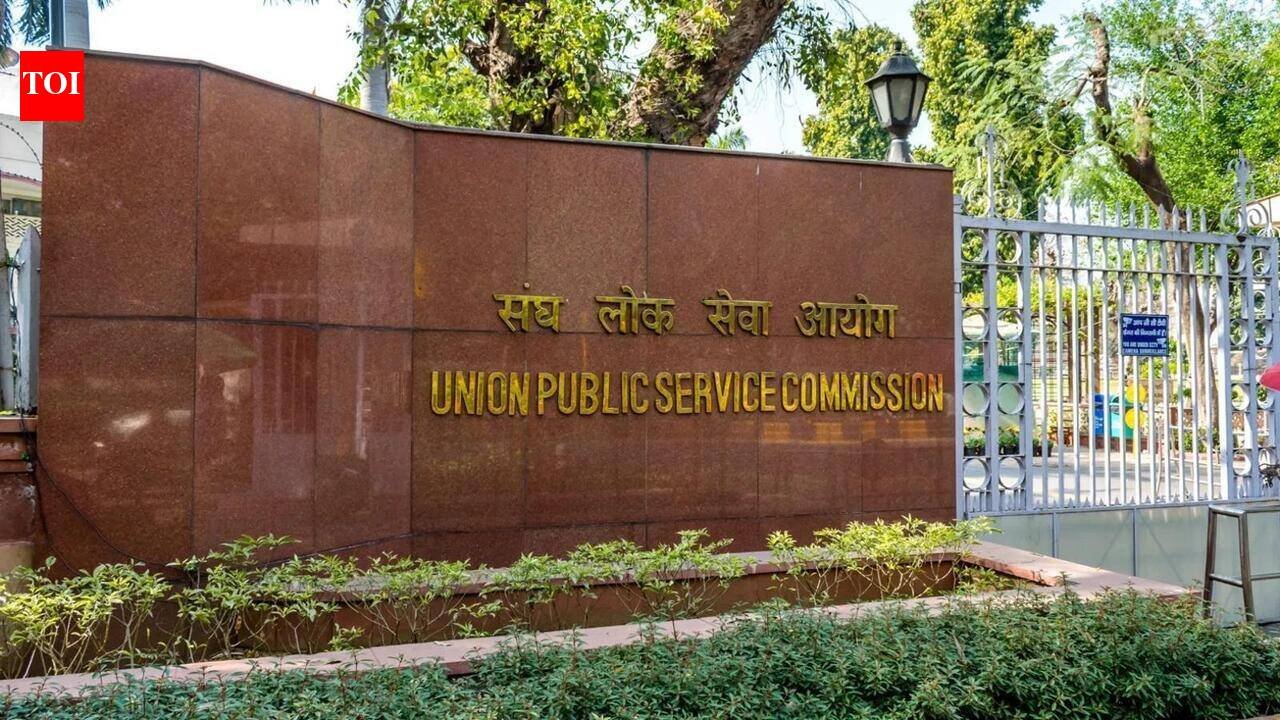
Patna: For generations, professional degrees in engineering and medicine were seen as the ultimate gateway to specialised careers. However, things have changed now with many of the country’s brightest young minds, after graduating from premier institutions, opting for careers far removed from the disciplines they spent years mastering, choosing the civil services over laboratories, hospitals and technical organisations.In recent years, most toppers of the Union Public Service Commission (UPSC) civil services examinations have come from engineering or medical backgrounds. Instead of rendering their services in medical or technical organisations, pass-outs from prestigious institutions such as the Indian Institutes of Technology (IITs) and the All India Institute of Medical Sciences (AIIMS) compete in civil services examinations and join the administrative services with a sense of great achievement.The latest UPSC Civil Services Examination annual report (2023-24), released last month, also indicated that 53% of the finally recommended candidates in the civil services examination were from engineering backgrounds, while 49% of medical science graduates reached the interview stage. Quite interestingly, 84% of candidates from engineering backgrounds chose humanities optional subjects for the mains examination.Even though exact state-wise figures for engineers and doctors are not officially published, a massive wave of youths from Bihar with professional degrees in engineering and medicine crack the UPSC Civil Services Examination (CSE) every year. Nationally, over 60% of successful UPSC candidates hold engineering and medical degrees, and Bihar heavily reflects this trend because of the state’s rigorous science education.According to rough estimates, the public exchequer spends anything between Rs 30 lakh and Rs 35 lakh annually per MBBS student. Over the typical 5.5-year course, this totals a massive Rs 1.6 crore to Rs 1.9 crore in subsidised taxpayer funds. Similarly, at premier institutes such as the IITs and National Institutes of Technology (NITs), the govt spends roughly Rs 5 lakh to Rs 6 lakh per student each year on operational and maintenance costs. Over a four-year BTech programme, this costs the state Rs 20 lakh to Rs 24 lakh per student.Beyond direct entry, state data highlights that at least 25% of serving Bihar Police Service and Indian Police Service (IPS) officers have BTech degrees, while others possess MBBS degrees. Govt jobs remain the highest attraction for Bihar’s youth, driven by a deep-rooted cultural desire for social prestige, financial security and permanent employment.Expressing concern over this ever-growing trend among engineering and medical graduates joining the administrative services instead of building careers in their chosen areas of training, Indian Medical Association’s former state president Dr Rajiv Ranjan Prasad said it is neither ethical nor proper on the part of talented youths to ‘misutilise’ the public exchequer created through taxes paid from the hard-earned money of the poor. He said, “It is neither ethical nor proper on the part of the talented youths to misutilise the public exchequer created through taxes paid by hard-earned money from the poor.” He added that through such practices, even talent is not properly utilised in ensuring the state’s all-round development.Rajiv said even otherwise, doctors and technocrats are invariably associated with major policy decisions of the state.
