










The numbers show real momentum. Bilateral trade has grown from roughly $8 billion to $18 billion in recent years, and both governments have set a target of $40 billion within the decade2,3. Today, coal, precious metals and mineral fuels lead South Africa’s exports to India, while India sends back refined fuel, vehicles and pharmaceuticals. Building a more industrial partnership on top of this strong trading base is the natural next step.
The complementarity is striking. South Africa holds the world’s largest reserves of platinum group metals and among the largest of manganese and chrome; inputs at the centre of the clean energy, electric vehicle and hydrogen supply chains every major economy is now racing to secure. India has built a globally significant scale in generics and pharmaceutical manufacturing, digital public infrastructure, and large-scale project execution. Each economy holds a piece of what the other needs, which is a rare and durable basis for trade.
Bohani Shibambu,Board Trustee of Brand South Africa.
South Africa’s position within the African Continental Free Trade Agreement makes it India’s most credible entry point into a continental market of 1.3 billion people. South African investment in India is still early, which means there is significant room to grow on both sides.
None of this starts cold. South Africa is home to Africa’s largest Indian diaspora; roughly 1.2 million people, about 3% of the population, anchoring commercial and cultural ties for more than a century. Close to 140 Indian companies operate in South Africa, employing more than 18,000 people, from Tata Motors and Wipro to Coal India, while Sanlam, Sasol and FirstRand have an established footprint in India4. The trust, knowledge and relationships are already in place; the new trade mechanism is what will scale them.
That trust runs deep because history, political relationships and solidarity laid its foundation. India and South Africa share a long history and rich cultural ties, beginning with the arrival of indentured labourers. Mahatma Gandhi spent twenty-one years in South Africa before leading India’s independence movement. It was in Johannesburg and Durban that he first developed the ideas of civil resistance, and in doing so, India gave South Africa an enduring, peaceful form of struggle that went on to shape the country’s own resistance to apartheid.That gift of solidarity was matched by principled action a generation later. In 1946, at a time when many nations were reluctant to take a firm stand against apartheid, India became the first country anywhere to sever trade relations with South Africa, choosing solidarity over the lure of the country’s mineral wealth. It was an act of defiance and unwavering solidarity that built a lasting legacy of trust, well before either country had much to offer the other economically.After 1994, the two democracies formalised that history into policy: the Red Fort Declaration of 1997 established a strategic partnership, the India-Brazil-South Africa Dialogue Forum followed in 2003, and South Africa’s entry into BRICS in 2010 gave the relationship its most prominent multilateral stage. Few bilateral relationships carry this much accumulated trust.
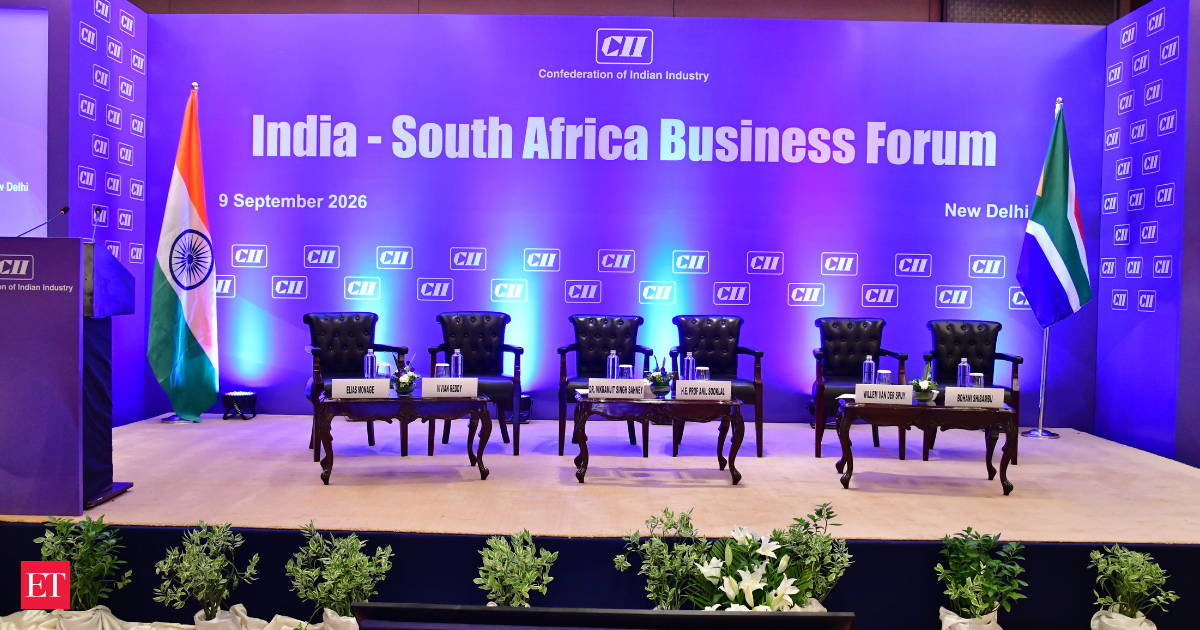
As the global economy evolves, new trade, investment and supply lines are needed to build resilience and unlock growth, and India and South Africa can draw on this long history, shared culture and solidarity to build dependable foundations for the future. The mechanism to do so has arrived: The Terms of Reference, signed this August, convert a standing political relationship into active negotiation, at the same moment India holds the BRICS chairship for 2026 under the banner of building for resilience, innovation, cooperation and sustainability. The India-South Africa Business Conclave held alongside the BRICS Summit brought that architecture to life, with sessions on mining and energy, infrastructure and tourism, agriculture and healthcare, and digital transformation; the sectors best placed to turn this mandate into agreements within a normal business planning cycle.
What is different this time is the alignment of a live negotiating mandate, a global stage in India’s BRICS chairship, and a South African economy well positioned to make the investment case on strong fundamentals. The case for South Africa and India as natural trade partners is clear: Strong economics, deep history and proven solidarity all point the same way. The mechanism to act on it now exists, and the businesses that move during this window will be building on eight decades of trust; a foundation that will only grow more valuable from here.
Reference/s
The article has been contributed by Bohani Shibambu is a Board Trustee of Brand South Africa.


