



The ongoing conflicts in Ukraine, on the borders of Israel and in the Persian Gulf have underscored the importance of indigenous defence technologies and a domestic industry to back innovation. India has been steadily working to become self-reliant in defence manufacturing. The country is now on a razor’s edge—designing, developing, and deploying homegrown defence technologies. For decades, dependence on imports constrained military readiness, drained foreign reserves, and limited geopolitical leverage.Today, the landscape is shifting. From nuclear deterrence to hypersonic propulsion, from anti‑drone systems to indigenous navigation satellites, India’s defence ecosystem is maturing. This transformation is not just about replacing imports—it is about building a layered, resilient arsenal that can withstand modern warfare’s pressures. Every year sets a new record for India’s defence exports. Once seen mainly as an arms buyer, India is increasingly viewed as a development and co‑production partner.
India’s technological might is expanding
Agni‑V ballistic missile
At the heart of India’s nuclear deterrent lies Agni‑V, a long‑range ballistic missile capable of striking targets beyond 5,000 km. With canisterized launch capability and composite propulsion, Agni‑V ensures rapid deployment and survivability. Its operational induction signals India’s ability to hold adversaries at risk across extended ranges; the missile can reach any part of China, reinforcing the credibility of India’s nuclear posture.
India’s nuclear submarine fleet and ballistic missiles
Complementing land‑based deterrence is India’s fleet of nuclear‑powered ballistic missile submarines (SSBNs). The Arihant‑class, equipped with K‑series submarine‑launched ballistic missiles, provides the sea‑based leg of the nuclear triad. By ensuring second‑strike capability, SSBNs make India’s deterrent survivable against a first strike. Expansion of the fleet, with more advanced SSBNs under construction, will further strengthen India’s maritime nuclear shield.
Anti‑satellite (ASAT) capability
In 2019, India demonstrated its ability to destroy satellites in low‑Earth orbit with a direct‑ascent missile. This ASAT capability places India among a select group of nations able to conduct space warfare. While India has pledged responsible use, the test underscored preparedness for a future in which space assets—communications, navigation, surveillance—are contested.
Air power and defence: fighters to shields
Tejas light combat aircraft (Mk1A/Mk2)
The Tejas programme is India’s most ambitious indigenous fighter project. The Mk1A variant, now in production, incorporates advanced avionics, an AESA radar, and composite materials. The Tejas Mk2, under development, will expand payload and range, positioning Tejas as a backbone of the Indian Air Force’s future fleet. Beyond technical features, Tejas symbolizes India’s ability to design and sustain a combat‑aircraft ecosystem.
Project Kusha
In 2012, the army warned the Ministry of Defence about obsolescence in India’s air‑defence network. Almost a decade and a half later, Operation Sindoor showcased how India’s air defence can perform. Project Kusha is an ambitious long‑range surface‑to‑air missile programme designed to intercept cruise missiles, ballistic threats, and hypersonic projectiles. With multi‑layered interceptors M1, M2 and M3 (expected ranges of roughly 150 km, 250 km and 350 km respectively), it aims to rival global systems while remaining indigenously controlled and adaptable.
Indigenous air‑defence systems (Akash, QRSAM, VSHORADS)
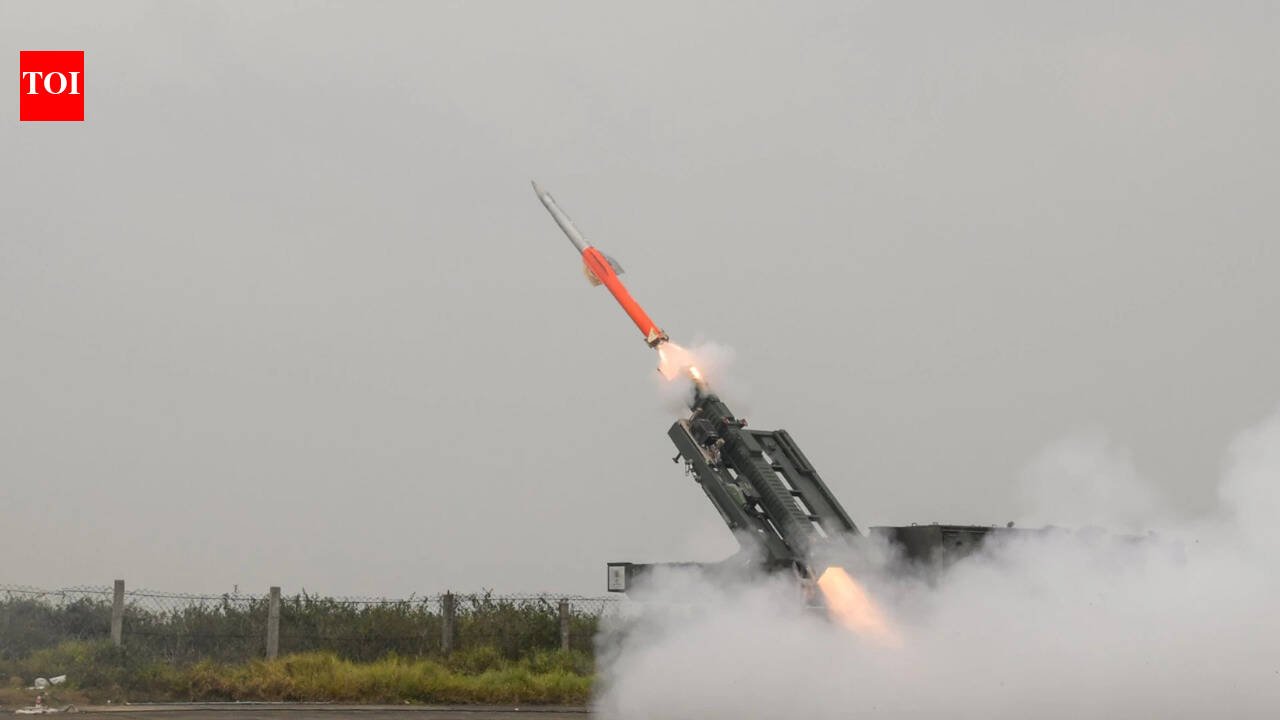
India’s layered air‑defence network is increasingly homegrown. The Akash missile system provides medium‑range protection. The Quick Reaction Surface‑to‑Air Missile (QRSAM) is designed for mobile battlefield deployment, while the Very Short Range Air Defence System (VSHORADS) offers man‑portable protection against low‑flying threats. Together, these systems reduce reliance on imports.
Hypersonic Technology Demonstrator Vehicle (HSTDV)
India’s HSTDV test marked a breakthrough in scramjet propulsion, sustaining speeds beyond Mach 6. This demonstrator lays the foundation for future hypersonic cruise missiles capable of penetrating advanced air defences. Hypersonic speeds reduce reaction windows and complicate layered defence responses. India’s entry into this domain places it alongside the US, Russia, and China in next‑generation strike capability.
NAVIC (Indian Regional Navigation Satellite System)
India’s NAVIC constellation provides indigenous navigation and positioning services tailored for regional coverage. For defence, NAVIC ensures secure, encrypted signals critical for targeting, communications, and mobility. By reducing reliance on foreign systems it enhances resilience against denial or spoofing. NAVIC’s integration into missiles, aircraft, and naval platforms strengthens operational autonomy while also supporting civilian applications.
Directed energy weapons (DEWs)
India is advancing directed energy systems such as high‑energy lasers and microwave weapons to counter evolving aerial and space threats. DEWs offer near‑instant engagement, low collateral damage, and cost‑effective interception of drones, rockets, and missiles. Lasers can disable optics or propulsion systems, while high‑power microwaves disrupt electronics. Integrated into air‑defence networks, DEWs add another protective layer and may, in future, serve as non‑kinetic anti‑satellite tools that minimise debris.
Micro‑satellite constellations
India’s defence architecture is moving toward constellations of small, agile satellites for persistent ISR, secure communications, and battlefield connectivity. Micro‑satellites can be rapidly deployed, replaced, or reconfigured, ensuring resilience against anti‑satellite attacks. Their distributed nature reduces single‑point vulnerabilities and enhances redundancy. Equipped with radar and electro‑optical sensors, they provide near‑real‑time situational awareness at relatively low cost.
Airborne Early Warning & Control (AEW&C)
The Netra Mk2 programme expands India’s indigenous AEW&C capabilities, offering extended endurance and advanced radar arrays. Mounted on larger platforms, these aircraft provide long‑range radar coverage and can track hundreds of aerial targets simultaneously. Acting as airborne command posts, they integrate data from fighters, ground stations, and naval assets to enable network‑centric warfare, strengthening autonomy in aerial surveillance.
Integrated Battle Management Systems (IBMS)
IBMS reflects India’s push toward digitised, AI‑driven command networks that link sensors, shooters, and decision‑makers in real time. By fusing inputs from radars, UAVs, satellites, and ground units, commanders can visualise the battlespace and allocate resources dynamically. AI algorithms can predict enemy manoeuvres, optimise logistics, and recommend strike options, reducing decision cycles from minutes to seconds. Indigenous IBMS ensures secure, customised architectures resistant to cyber intrusion and forms the backbone of joint operations.
Loitering munitions
India is developing indigenous loitering munitions—autonomous drones that circle battle zones before striking high‑value targets. These systems combine surveillance and precision strike, reducing risk to pilots and troops. Equipped with sensors and AI‑based recognition, they can neutralise enemy armour, artillery, or command posts with limited collateral damage. Scalable for frontline or deep‑strike missions and usable in swarm tactics, they provide cost‑effective, high‑impact options.
Unmanned Underwater Vehicles (UUVs)
India’s naval modernisation includes UUVs for mine countermeasures, surveillance, and anti‑submarine warfare. These autonomous platforms operate undetected in littoral waters, mapping seabeds, tracking submarines, or neutralising mines. With sonar and magnetic sensors, UUVs extend naval reach without risking crewed vessels and enhance maritime domain awareness in chokepoints like the Malacca Strait.
Indigenous Air‑Independent Propulsion (AIP)
India is developing AIP technology to extend the underwater endurance of conventional submarines. AIP systems allow submarines to remain submerged for weeks without surfacing, reducing detection risk. DRDO is working on fuel‑cell‑based AIP modules tailored for Scorpene‑class submarines. Indigenous AIP will reduce dependence on foreign suppliers and enhance stealth and endurance as a cost‑effective complement to SSBNs.
AI‑enabled decision support systems
India is investing in AI platforms that assist commanders with predictive logistics, threat analysis, and autonomous mission planning. These systems process vast datasets from satellites, drones, and sensors to forecast enemy movements, anticipate supply needs, and recommend strategies. Indigenous development ensures customised algorithms aligned with Indian doctrine and secure against cyber threats.
High‑energy materials & propellants
Autonomy in propulsion depends on indigenous high‑energy materials and advanced propellants—composite solid fuels, high‑performance liquid propellants, and energetic oxidisers. Domestic production reduces reliance on controlled imports. Advances in metallurgy and nanotechnology are producing more efficient, stable, and safer propellants, translating into longer‑range missiles, faster interceptors, and reliable launch systems.
Challenges ahead
Despite these successes, challenges remain. Funding bottlenecks often delay projects, while semiconductor and propulsion dependencies constrain autonomy. Integration timelines are uneven—for example, Tejas Mk1A inductions have been slowed by delays in meeting Air Force specifications. Conventional submarine fleet expansion also requires sustained effort. Operational doctrines must evolve to integrate hypersonics, drones, and space warfare into joint planning.India’s indigenous defence technology roadmap is no longer merely aspirational. From the ocean depths to outer space, India is building layered capabilities that blend deterrence, offensive power, and multi‑domain dominance. The immediate challenge is scaling prototypes into mass deployment, ensuring interoperability, and sustaining funding.


