



Karim Kharbouch was just 13 years old when he left his family’s estate in Casablanca, Morocco, and moved to the South Bronx, New York, with his parents and younger brother. Two years after moving to the US, the family began struggling financially and his father decided to return to Morocco shortly before his youngest brother was born. His mother stayed on with the family and young Karim soon found himself as the family’s sole breadwinner. Rap was one of his favourite hobbies growing up, but it soon evolved into much more.

Strolling through the streets of the Bronx, where he learned English, Karim began his career as a battle rapper in his teens, setting him on the path to becoming French Montana. Three decades later, he has collaborated with Drake, Lil Wayne, Rick Ross and several other heavyweights of hip-hop. Known for his catchy hooks, infectious club rhythms, stellar beats and gritty New York street rap, the artist has since gone global while staying true to his roots – and his love for Tupac.
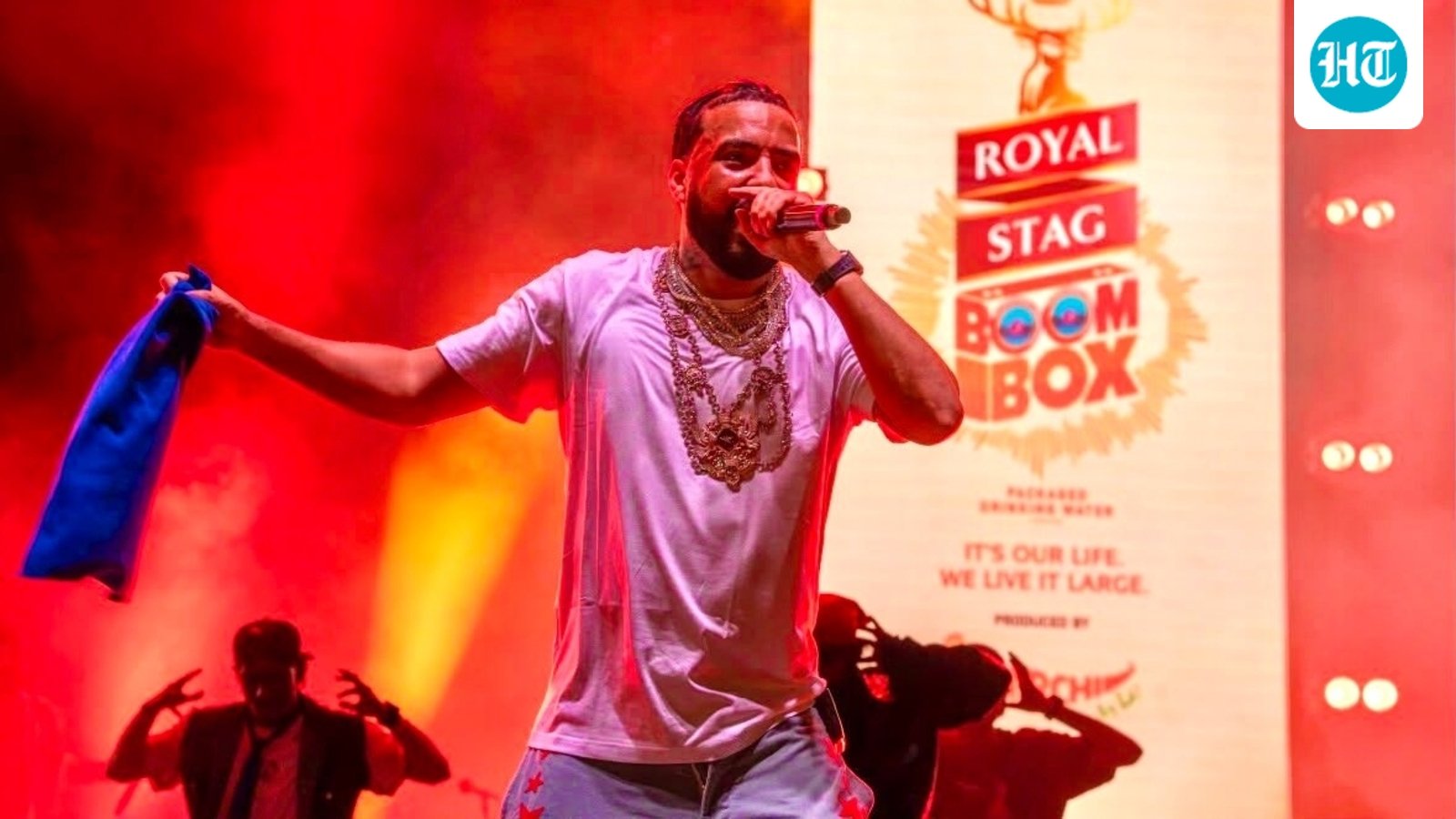
On August 22, the “Unforgettable” and “Pop That” hitmaker headlined Seagram’s Royal Stag BoomBox at Gachibowli Stadium in Hyderabad. Following his performance, HT Entertainment spoke to French Montana about how his Bronx roots shaped his music, the moment he told his mother she would never have to work again because her son had made it, and how the changing face of hip-hop can be likened to the digitisation of currency.
Here are excerpts from the interview.
What made you want to be part of Royal Stag BoomBox?
Having humble beginnings – coming from the Bronx, New York – and taking that plane for 24 hours to somewhere else in the world, to see somebody enjoying my music from a whole different side of the planet, brings a different joy to me. It shows me that I’ve come a long way.
As someone who has performed for audiences all over the world, how has your experience been with the crowd in Hyderabad?
I think India is getting bigger and bigger with hip-hop. From the last time I was here to now, I feel like there’s more love for hip-hop. I feel like music is the only language that the whole world speaks. So every time I come here and connect with India, it just shows me that the hip-hop crowd is growing.
You were born in Casablanca and moved to the Bronx as a teenager. How has growing up between those two worlds influenced your work?
It’s a culture shock! It’s a culture shock, and you have to embrace every culture and add your own flavour to it. I feel like when I went from Casablanca to the Bronx, it’s almost like I brought my own style to the Bronx style. And now, coming from the Bronx to India, I took the Bronx and added a little India style to it. You know, it’s beautiful to be able to adapt to every part of the world that they put you in.
As someone who came to America as an immigrant and built a career in one of its most competitive industries, what does the idea of the American Dream mean to you?
The idea of the American Dream is being able to tell your mother she doesn’t have to work ever again. Telling your father he never has to work ever again. Being able to set the blueprint for other immigrants that think there’s no hope – really show them that if somebody like me did it, you can do it also. It’s not easy, it’s hard. But you can do it. It’s possible.
So, I have a documentary called For Khadija. It’s on Paramount Plus. It shows the immigrant story of me and my mother, her sacrificing and coming to America until she got her papers. And now she’s living good. She has about three houses, four houses, and she never had to work again.
“Unforgettable” became a global phenomenon. Is there any other song in your catalogue that you think deserves the same level of recognition?
I think that every song is beautiful for the time that it comes out. Because Afrobeats was just coming out when “Unforgettable” came out. When “Shot Caller” came out, at the beginning of my career, I think that’s the song that broke me.
Right now, I feel like, with the style of music and me adapting, “You Left Me” is my biggest hit. We just went number one in New York. But I think different times fit certain music. “Unforgettable” is definitely one of my favourite moments.
You’ve been part of so many different musical eras and collaborated with a variety of artists. How do you think hip-hop and its audience have evolved over the years?
I think it evolved. And I think that being able to live through the golden era, I feel like you appreciate hip-hop more. And to see where it’s going, to see how the kids are loving new sounds, it’s almost like crypto and dollars. It’s like, you know, there’s a new world. Some people still want to touch their money. Some people love digital money, which is crypto.
So it’s kind of like the same thing with music. The world is adapting, and we’re adapting to it. But of course, I love the golden-era music. I love the Biggies, the Tupacs, all the way up to 2010. I feel like the game is adapting, but I’m one of the people, including my peers, who are trying to keep that sound and that feeling together.
What do you think your younger self would find most surprising about your career today?
Well, that I was wrong. Yeah, I was wrong all along. And whatever plan I had, the Creator, Allah, had a better plan than mine. And I wish, if I could tell my younger self – it’s to have patience. No rush. You know, I feel like He will always have a better plan than the plan that you have.
What have you had to change about yourself, and what have you deliberately refused to change, in order to remain relevant across multiple generations of people?
I think there’s only one you. If you try to be like somebody else, you will never get nowhere because there’s only one you. The more you be like yourself, the further you will get in life, because nobody can be like you. So I feel like that’s what I try to always tell myself: just always be French Montana, just copy my style and make sure I expand.


