



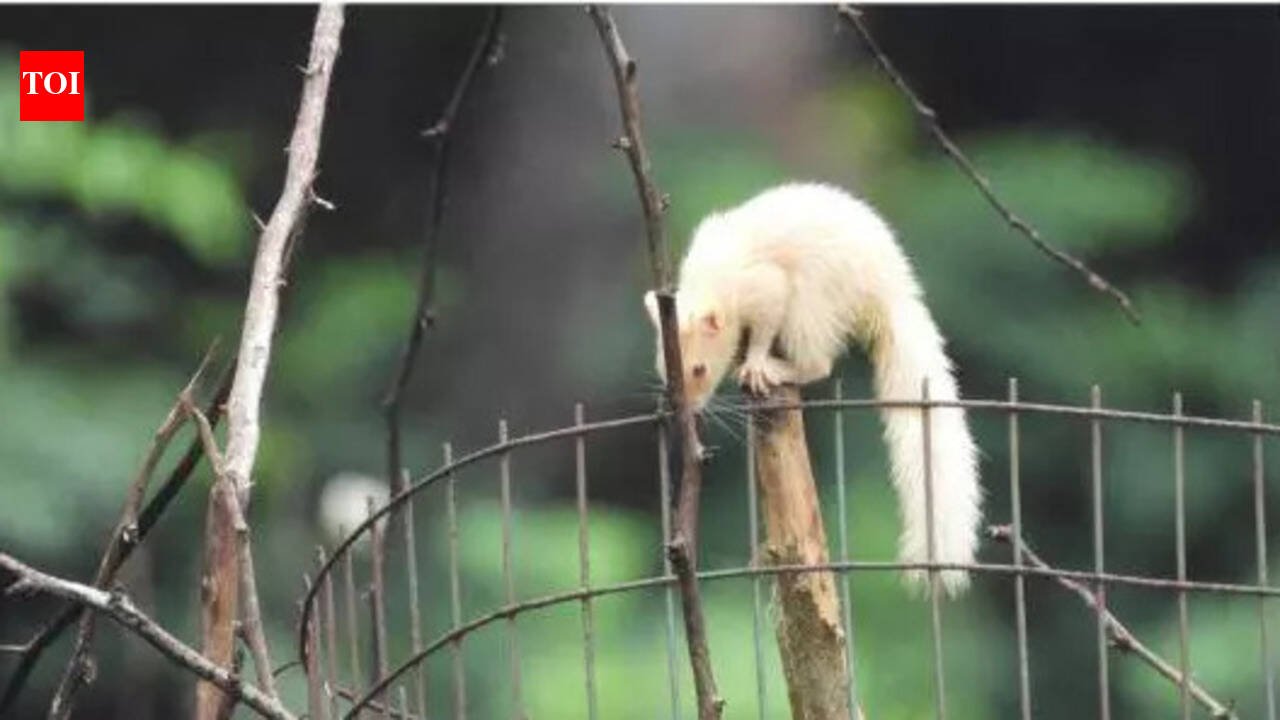
Chennai: If you are at the Arignar Anna Zoological Park in Vandalur, and if you are lucky, you may spot a freeranging albino Indian palm squirrel with reddish eyes amidst the greenery.A researcher from The Gandhigram Rural Institute documented an Indian palm squirrel (Funambulus palmarum) in what he claimed was the first recorded case of albinism in the species from the city. The albino squirrel was recorded on Sept 13, 2025, inside the Nilgiri langur enclosure at the zoo. The observation was reported in a short scientific note published in the zoo’s journal.The researcher observed that the squirrel exhibited a uniform white coat and reddish eyes, characteristic of albinism. The animal was seen climbing a tree during the day at around 11.02 am; the sighting lasted about 20 minutes.“This is the first photographic evidence of albinism in F. palmarum in city fauna. The squirrel’s activity and movements were similar to normal conspecifics (member of the same species). No other albino individuals were observed in the vicinity,” said S Jeswin, the author of the paper.Albinism is a rare genetic condition caused by the absence of melanin, the pigment responsible for colour in skin, fur and eyes. Such colour mutations, including albinism, leucism and melanism, occur due to genetic changes affecting pigmentation.The Indian palm squirrel is a common rodent species in southern India and is widely adapted to urban and rural environments. A 2017 study recorded leucism, a genetic condition causing partial or total loss of pigmentation, in the species. However, albinism in the species is extremely rare, the researcher said. A 2015 study recorded albinism in Funambulus tristriatus, or the jungle palm squirrel found in the Western Ghats.The researcher said albinism is rare in wild mammals because it reduces survival against predators and lowers fitness. The survival of such individuals is often limited due to poor camouflage capability. “However, the persistence of this albino squirrel in an urban habitat suggests reduced predation pressure in the zoo setting,” he said.


