



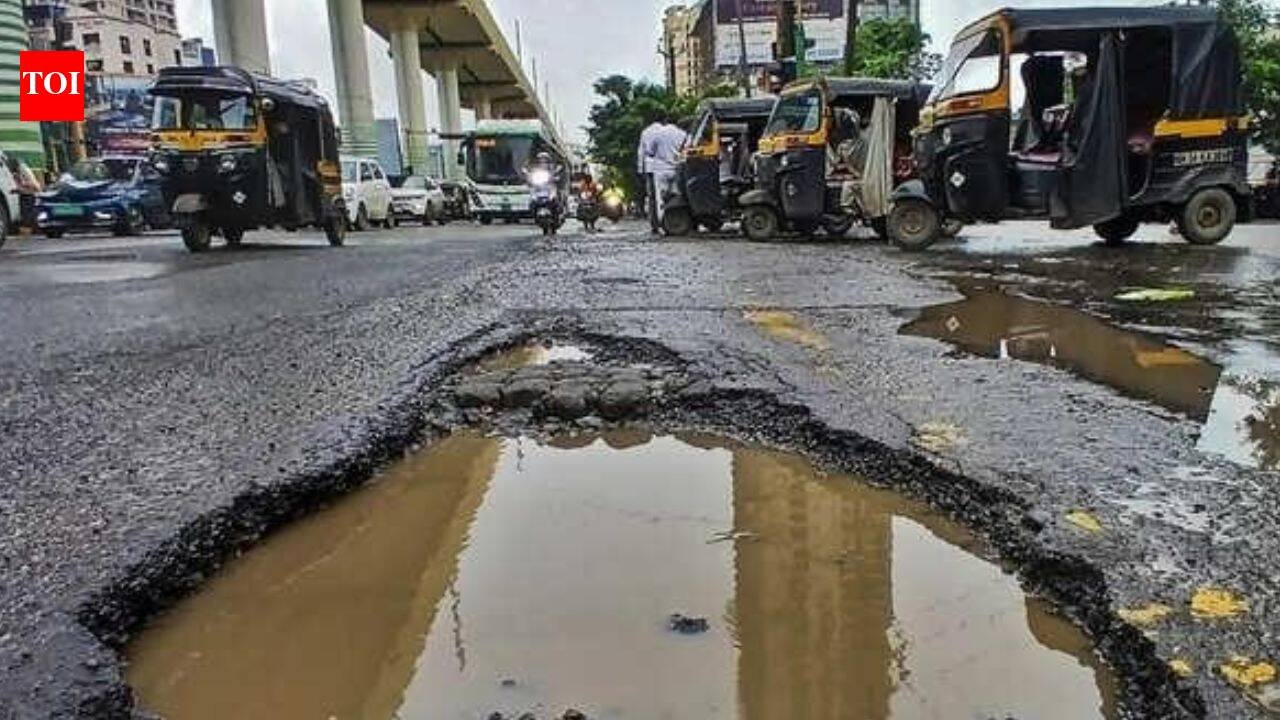
India is pondering the pros and cons of E20 petrol, but another issue of fuel efficiency is staring it in the face — its roads.From streets in metropolitan cities to national highways, potholes and broken road surfaces are silently burning millions of litres of fuel every year. Every time a driver slams on the brakes, swerves to avoid a pothole, downshifts or accelerates again, the engine uses more fuel than it would on a smooth road. Multiply that by India’s more than 350 million registered vehicles and the result is a huge but largely ignored drain on the nation’s fuel economy.E20 petrol (petrol mixed with 20% ethanol) has been discussed mostly for mileage, emissions and vehicle compatibility. Many motorists have voiced worries that the lower energy content of ethanol may result in a small decrease in fuel economy, while the government says the blend reduces reliance on imported crude oil and lowers emissions. And whichever side you are on that debate, the one fact that is undeniable is that no fuel can deliver its best efficiency if it is being burned on bad roads. India’s potholes are, in many ways, the country’s biggest avoidable fuel leak.
Secret fuel thiefFuel economy is a function of constant speed. Modern engines are built to run at maximum efficiency with smooth acceleration and minimal unnecessary braking. Potholes destroy the rhythm.Drivers approaching damaged roads instinctively brake hard, shift to lower gears, crawl over uneven surfaces, steer around craters, and then accelerate again. Each of these actions consumes even more energy from the engine. In heavy urban traffic this cycle can repeat itself dozens of times within a few kilometers.This relationship has long been understood by engineers. The rougher the road surface, the greater the rolling resistance, and the more energy is lost through tyres and suspension systems. A lot of the engine power is lost in soaking up the shocks over and over again rather than pushing the car forward efficiently. That is why road quality is considered one of the most important, but most ignored, factors affecting fuel efficiency.Science is unequivocalThere are many studies which have proven the direct relationship between the road roughness and the fuel consumption all over the world.In the US, research by the Transportation Research Board (TRB) found that increased pavement roughness could increase fuel consumption by 2-3% for passenger vehicles and 1-3% for heavy trucks depending on vehicle type and operating conditions.Similarly, the World Bank’s Highway Development and Management (HDM-4) model – used by governments around the world to evaluate road projects – acknowledges that poor pavement conditions are a major contributor to higher vehicle operating costs, including fuel consumption.There is a very simple reason. The rolling resistance, suspension movement, and repeated acceleration are increased by rough roads. Those losses mean that the engine has to work harder, using more fuel to go the same distance.
Invisible fuel loss in IndiaToday, India consumes more than 50 billion litres of petrol annually, making it one of the largest petrol-consuming markets in the world. That is not counting the much larger amounts of diesel fuel used by commercial vehicles.If bad roads add just 2% to petrol consumption – the low end of estimates from international studies – the country could be wasting some 1 billion litres of petrol every year. In theory, the loss is 1.5 billion litres a year if the fuel penalty reaches 3%.The average retail petrol price is around Rs 95 per litre. The financial loss is: 2% more fuel consumption: 1 billion litres = Rs 9,500 crore per year.1.5 billion litres = Rs 14,250 crore every year. 3% extra fuel use.These are indicative estimates as not every km of road in India suffers from bad potholes or bad pavement. They do, however, show the staggering magnitude of fuel that could potentially be saved through systematic road maintenance.However, some estimates suggest that rough roads and potholes may be wasting 8–10 billion litres of fuel (petrol, diesel) annually.
And this is petrol only.India uses far more 90 billion litres of diesel a year, much of it to power trucks, buses, farm equipment and commercial vehicles. The bad roads also contribute to the consumption of diesel. So the total loss of fuel in the country is likely to be considerably larger. The cost is much more than the fuel.And that was just the start of the fuel waste.Hitting potholes can damage shock absorbers, suspension systems, tyres, wheel bearings, steering components and wheel alignment. Repeated impacts reduce the lifespan of the parts, compelling motorists to shell out thousands of rupees for avoidable repairs.The costs are even higher for commercial carriers. Higher fuel consumption, vehicle downtime, slower deliveries and increased maintenance all add to the cost of logistics, which is passed on to consumers in the form of higher prices.And then there’s the human cost.Every monsoon, two-wheelers, cars and heavy vehicles meet with accidents due to potholes. Motorists slam on brakes at risk of being rear-ended and riders trying to steer around deep potholes often lose control. Bad roads are not just an infrastructure problem, they are a public safety issue and an economic liability.The E20 debate is not seeing the bigger pictureIndia’s push for E20 is aimed at reducing dependence on imported crude oil, helping farmers and reducing emissions through higher ethanol blending.The public debate has largely focused on whether E20 reduces mileage because ethanol has less energy than petrol. That is an important discussion, but it ignores a much bigger and more immediate opportunity.Even the most sophisticated engine running on the most perfectly blended fuel cannot get optimum mileage if it spends half its journey braking for potholes, crawling over broken surfaces and then accelerating again.In other words, improving roads could lead to better real-world fuel efficiency for all vehicles on the road, including those running on E20, conventional petrol and diesel. This makes road maintenance one of the easiest and most immediate fuel conservation strategies in India.Better roads mean lower emissions tooEvery extra litre of petrol burned unnecessarily creates more carbon dioxide. If improved roads lower fuel use, they lower greenhouse gas emissions, even if only by a small percentage, without consumers having to buy new vehicles or switch fuels.Poor road maintenance allows avoidable emissions. That undermines those efforts at a time when India is investing heavily in cleaner fuels, electric mobility and renewable energy. Road quality should thus be a part of India’s climate strategy, and not just a civic convenience.The cheapest fuel saving policy may already be in place. Governments often encourage drivers to save fuel by keeping their tires properly inflated, avoiding rapid acceleration and turning off engines at long traffic lights.All of these are helpful, but one of the most important factors affecting fuel efficiency is under government control – the quality of public roads.It’s much cheaper than rebuilding badly damaged roads. Better construction standards, more rigorous quality audits, and higher accountability on the part of contractors, together with timely pothole repairs and better drainage, can dramatically reduce long-term costs while improving vehicle efficiency.Technology can help. Artificial intelligence, drone mapping, satellite imagery, road-scanning vehicles and citizen reporting apps can detect pavement failures before they turn into dangerous potholes.A smoother path to energy securityIndia’s infrastructure aspirations include expressways, electric vehicles, blending of ethanol and reduced dependence on imported oil. But one of the simplest ways to save fuel goes largely ignored.Pothole-fixing isn’t just about making journeys more comfortable. It helps to save fuel, reduce import bills, cut emissions, lower vehicle repair costs, improve logistics and save lives.The debate on E20 is about how to make better use of fuel in India. But perhaps the answer is not just in the fuel tank – but under the tyres.A smoother road for millions of Indians each day, with better mileage, lower emissions, fewer breakdowns and safer travel. Sometimes the most effective energy policy is the simplest. Repair potholes. Fuel economy Save a bit of money. Save India.


