



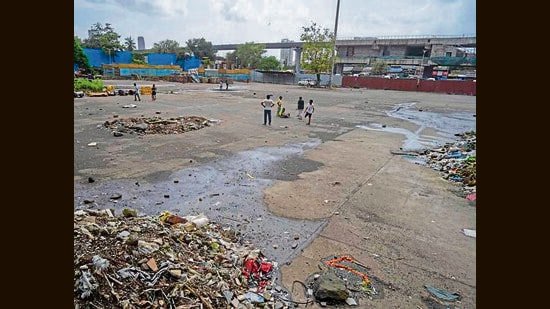
MUMBAI: In a bid to reduce traffic congestion in the city, chief minister Devendra Fadnavis on Friday issued directives to the Brihanmumbai Municipal Corporation (BMC) to work on redeveloping all the five defunct octroi checkposts at Mumbai’s entry points. The check posts will be turned into integrated transport hubs for intercity buses with dedicated parking and passenger facilities, which will help prevent long-distance buses from entering the city and creating traffic jams in it.


At present, there are five octroi checkposts in the city: at Dahisar, on the Eastern Express Highway at Mulund, LBS Marg at Mulund, Airoli on the Mumbai-Navi Mumbai border and Mankhurd. Before the Goods and Services Tax (GST) was introduced in 2017, these checkpoints were where octroi was levied on goods entering Mumbai in commercial vehicles. Octroi was one of the BMC’s largest sources of revenue, generating nearly ₹6,500 crore annually.
After the implementation of GST, the land parcels owned by the BMC have remained unused, prompting plans to repurpose them for public infrastructure projects. “If passengers board and alight at these locations, private buses may no longer need to travel into Central Mumbai, thereby helping to ease traffic congestion within the city,” Fadnavis said in a review meeting on Friday, ordering the sites to be transformed into modern transport hubs equipped with passenger amenities.
The issue was discussed during a presentation on the modernisation of Mumbai’s public transport infrastructure. BMC commissioner Ashwini Bhide provided an overview of the project, while BEST general manager Sonia Sethi outlined plans for the redevelopment of BEST depots and properties.
At present, long-distance buses entering Mumbai often travel deep into the city, particularly through areas such as Dadar, Sion and Chunabhatti, contributing to traffic congestion on highways, arterial roads and flyovers. The buses typically make multiple pick-up and drop-off stops within city limits, adding to traffic bottlenecks.
To address this issue, the proposed multi-modal transport hubs are expected to serve as terminal points for long-distance private buses entering Mumbai. “Buses arriving from other parts of the state and the country can terminate at these five locations, which means they may no longer need to enter the city’s core areas,” said a senior official who attended the meeting.
The transit hubs are expected to be equipped with passenger amenities such as ticket booking counters, waiting lounges and dedicated parking facilities. “The hubs are also likely to be integrated with other modes of transport, including metro services and private vehicles, enabling seamless last-mile connectivity,” the official said.
In addition to transport infrastructure, the hubs may include commercial and recreational facilities such as shopping malls, food courts, banquet halls, restaurants, hotels and auditoriums, transforming them into integrated mobility and commercial centres.


