



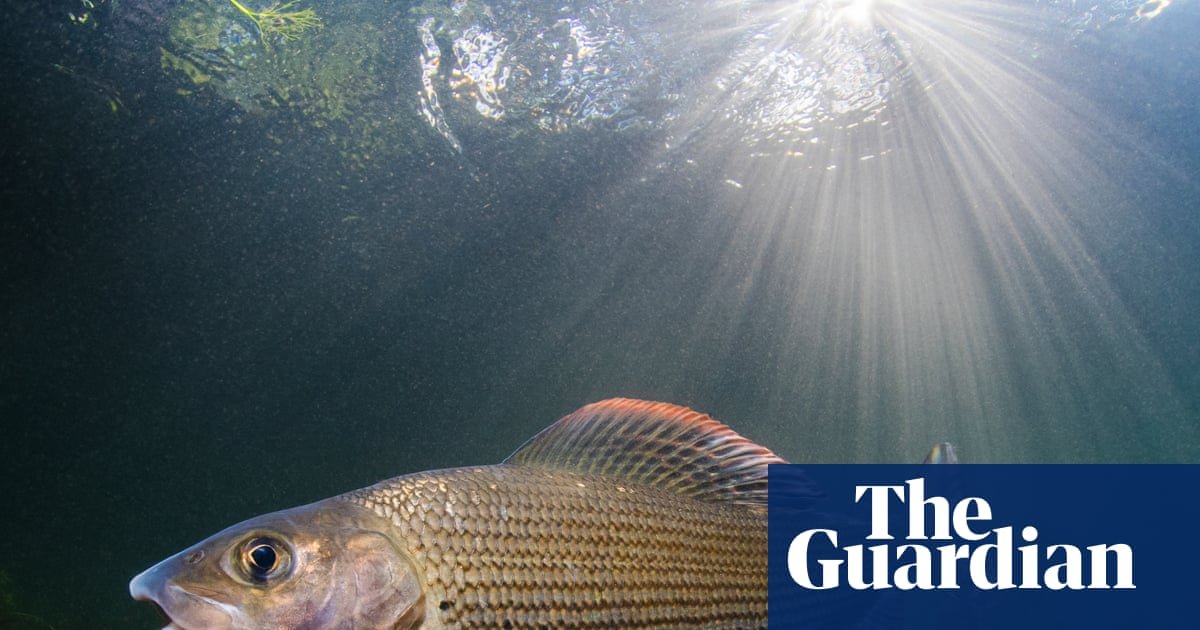
With its iridescent pink scales and elegant dorsal fin, the grayling is known to anglers as the “lady of the stream”, yet the society fighting for its protection has never been led by a woman, until now.
Angling, and fly-fishing in particular, has always been a very male-dominated sport. The fly-fisher’s club in Mayfair, London, where anglers meet to lunch on dover sole and drink fine wine, did not allow women to cross the threshold even as guests until 2024.
One of Britain’s few high-profile female anglers, Marina Gibson has said she’s faced sexism from men in the fishing world. “I was constantly reminded that some people would always resent my presence in fishing simply because I was young, blond and female.”
But Dr Marnie Lovejoy, a criminal lawyer who has been appointed the chair of the Grayling Society, hopes to forge a new path for female fishers. She has had the backing of the former rockstar turned river campaigner Feargal Sharkey, who is the honorary president of the society.
“Women have been less likely to get involved, perhaps because it is traditionally male dominated,” she said, “but if you look at historic texts, a lot of fly-tying was done by females – there were some nuns who used to fish as well.” Fly-tying is the process of creating artificial fishing flies by attaching materials such as feathers, fur, thread and tinsel to a hook.
Lovejoy, originally from Switzerland, has “always loved the outdoors” but got into fly-fishing a few years ago as she was inspired by a “wonderful female instructor” on a river in Hampshire near where she lives. She hopes to inspire other women to get fishing.
“Fishing is a wonderful activity and it makes no difference whether you are a woman or a man,” she said. “We need to open up new communications channels, we had a Facebook site which wasn’t really active. We have to do things on Instagram, we have to visually show what it is all about. What is fly-fishing about, what are grayling about? Not every woman will enjoy angling, but it’s important to show that women are involved and hopefully inspire others to follow suit.”
Lovejoy intends to hold more events to get women involved, and also wants to increase youth membership, highlighting that young people can join the Grayling Society for free.
“Being at the river is something really special for me. There is something about flowing water, the ephemeral nature of it all. It’s constantly changing and it’s a comforting setting, you can let go of your worries,” she said, “I have a very busy mind and am constantly slightly on edge. When I am in a river it all is quiet, it is meditative.”
Unlike the Atlantic salmon and its cousin the brown trout, the humble grayling has been ignored and even persecuted. These fish thrive in the gin-clear chalk streams of England, which are some of the rarest habitats in the world.
“Grayling were for a long time considered to be competitive with brown trout,” Lovejoy said. “Because of that, they were seen as vermin and fished out of rivers and chucked away and culled. That is based on a misunderstanding, they have slightly different habitats and different ecological niches they occupy.”
Rather than competing with trout, the fish could be key to saving its more famous neighbours. “Grayling are very reactive to changes in water quality. If you have tiny increases in pollution or chemicals, grayling are the first to suffer. They act as a canary in the coalmine if you will,” she said.
Lovejoy’s first task as chair will be to set up a grayling map, using catch-and-release data from members to show where the fish is struggling, and overlaying this data with other metrics such as sewage overflows.
“With this data, you will see a picture of where grayling are in trouble and where they have to be prioritised,” she said, “This would act like an early warning system.”
Lovejoy is frustrated with the lack of action in protecting England’s rivers, which are constantly being polluted with sewage by water companies, agricultural runoff and pollution from roads. “I am very lucky [that] I still fish rivers where there are plenty of fish, but there are definitely declines in grayling. I am frustrated.”
As well as promoting women in angling, Lovejoy wants to lift up this under-appreciated fish and give the grayling a voice.
“It is a beautiful fish, with a beautiful dorsal fin, which is very colourful … absolutely stunning,” she rhapsodised. “They are known as the lady of the stream. They are very elegant, very charismatic and they absolutely deserve the same respect as salmon and trout.”


