



England had its back against the wall.
Norway had taken the lead through Andreas Schjelderup, and the humidity rolling in from the Atlantic had drained Thomas Tuchel’s side of its usual fluency. Erling Haaland, Martin Odegaard and Alexander Sorloth were turning every transition into danger, and England looked unusually uncertain.
Then the ball came to Jude Bellingham.
There will always be debate over the television camera cable that FIFA insists did not interfere with play. History rarely lingers over such details. It remembers who seized the moment. As half-time approached, Bellingham met Anthony Gordon’s pass with the certainty that has come to define his World Cup, dragging England back into a quarterfinal that had begun to slip away.
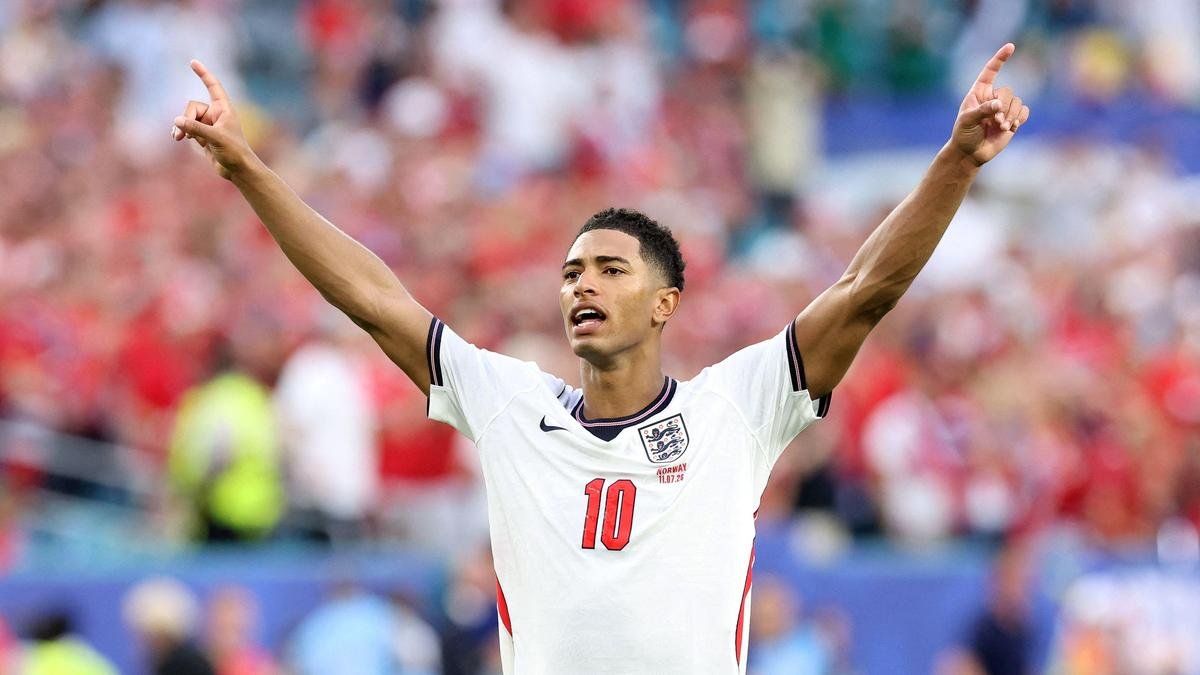
And then came the celebration. Not towards the bench. Not into a pile of teammates.
He sprinted towards the centre circle, leaped into the Miami night, clenched his raised fist, and roared into the stadium. For a brief moment, it was just him and the England supporters who were already singing Hey Jude, each acknowledging what the other had slowly realised over the past month.
England had found its player. When England drifted again as the game moved into extra-time and Norway sensed another opportunity, it was Bellingham who reacted first to Orjan Nyland’s spill, stabbing home the winner. He had already scored twice in the hostile atmosphere of England’s round-of-16 victory over Mexico.
Four decisive knockout goals in a single World Cup have done more than propel England into the semifinals. They have elevated Bellingham from England’s brightest young footballer into the player the nation now turns towards in difficult moments.
But sporting heroes are never created just by numbers. Statistics earn admiration, but shared moments create affection.
Roger Federer did not become synonymous with Wimbledon simply because he has lifted eight trophies at the All England Club. He became part of the tournament’s soul because generations of spectators came to feel that English summers were somehow incomplete without watching him walk onto Centre Court.
Sachin Tendulkar’s greatness is in his runs, but his place in Indian life was built because millions unknowingly measured chapters of their own lives alongside his career. The greatest sporting icons stop being merely athletes and become our companions.
England may be witnessing the beginning of that relationship with Bellingham.
The soundtrack has followed him throughout this World Cup. ‘Hey Jude’ begins with a handful of supporters before swelling into tens of thousands of voices. By the final refrain, Bellingham almost always turns towards them, raising his arms, smiling and sometimes singing along. It is one of those rare moments when football briefly stops feeling transactional. The chants are no longer celebrating goals and victories. They are celebrating belonging.
At 23, he has become the emotional centre of this England side. Harry Kane remains the captain. Declan Rice continues to provide balance. Yet when England needs someone to alter the course and mood of a match, teammates and supporters look towards Bellingham.
Jude Bellingham in the colours of Birmingham City.
| Photo Credit:
FILE PHOTO
His rise has been remarkably swift. Raised in Stourbridge, Bellingham grew up under the influence of his father, Mark, a prolific non-league striker who balanced football with a career as a police officer. Discipline accompanied talent. Birmingham City handed him his debut at 16 before retiring his No. 22 shirt when he left for Borussia Dortmund, a decision mocked in some quarters but one that now appears prophetic.
Germany accelerated his education. After three seasons and a Bundesliga Player of the Season award, he moved to Real Madrid for a fee that could rise close to £100 million. Madrid immersed him in an environment where pressure is permanent and excellence assumed, but he has thrived in a cauldron that has consumed many gifted players before him.
This World Cup has revealed how naturally he inhabits responsibility. He wants the ball when others hesitate. Every challenge matters to him. Every goal is celebrated with the emotional honesty of someone who understands what the occasion demands.
That confidence was evident after the final whistle in Miami.
Tuchel initially described England’s performance as “sloppy” and admitted his side had been fortunate, later clarifying that while he loved his players’ resilience and refusal to lose, he expected much higher standards from them.
But it was Bellingham, rather than one of the team’s senior members, who politely disagreed.
“Maybe he doesn’t know what it’s like to play in these types of conditions against Haaland, Odegaard, Antonio Nusa and Sorloth,” he said. “You’re not going to win every game popping the ball and making a thousand passes. Sometimes you have to win dirty.”
There was no rebellion in his words, merely perspective. Tuchel spoke as the perfectionist coach searching for better football. Bellingham spoke as the player who had dragged England through 120 draining minutes and understood that World Cups are often survived before they are mastered.
Perhaps that, too, is part of becoming a sporting hero.
Not simply producing brilliance but persuading everyone around you that when the moment arrives, you will somehow find a way.
As Hey Jude echoed around another American stadium and Bellingham turned once more towards the supporters singing his name, it became clear that England had found more than the player carrying it through this World Cup.
It had started falling in love with the footballer who may define its next decade.
Published – July 14, 2026 09:47 pm IST


