


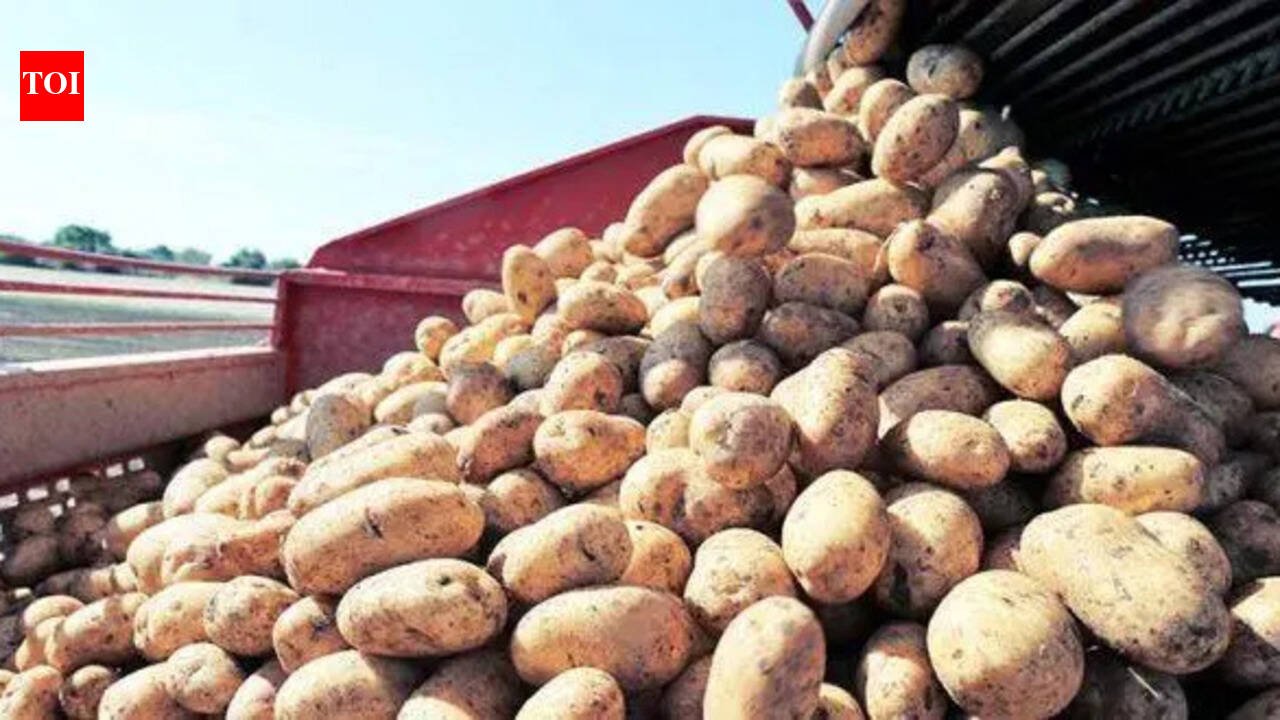
Ludhiana: Despite the International Day of Potato celebrating the theme “Where potatoes grow, livelihoods flourish,” a devastating market crash has forced numerous farmers in Punjab to plough their standing crops back into the fields. With market rates failing to cover basic production costs, growers chose to destroy their produce rather than incur further financial losses through harvesting.The crisis underscores the extreme vulnerability of the state’s vegetable growers, who operate without any govt safety net or assured pricing. While the administration repeatedly urges a shift away from traditional paddy and wheat, farmers who attempt crop diversification find themselves entirely exposed to volatile market fluctuations.The maths behind the lossAccording to local growers, cultivating potatoes requires an initial investment of approximately Rs 45,000 per acre. Harvesting adds an immediate burden of Rs 10,000 per acre, alongside supplementary expenses for bags, labour for filling and loading, transportation, and potential cold storage fees.Farmers require a minimum price of Rs 1,000 per quintal just to break even, but market offers during this crash dropped to less than half of that amount. Harpreet Singh of Akhara village noted that spending money on harvesting made zero economic sense, as the final rates would not even recover the operational expenses.Demands for legal assurances and export openingsThe ongoing crisis reflects a much broader failure within the agricultural diversification framework. Farmer Jaswant Singh highlighted a deep disparity in the supply chain, pointing out that growers often receive less than one-fifth of the retail market price, while arhtiyas (middlemen) and sellers pocket the primary profits. He maintained that sustainable diversification is impossible unless the govt introduces a minimum support price (MSP) or a similar protective mechanism.Additionally, growers emphasised the need for a robust international marketing and export framework. Farmers suggest that opening trade routes, such as facilitating potato exports through the Wagah border, would give local produce access to a year-round global market, effectively preventing domestic gluts from depressing local prices.
