



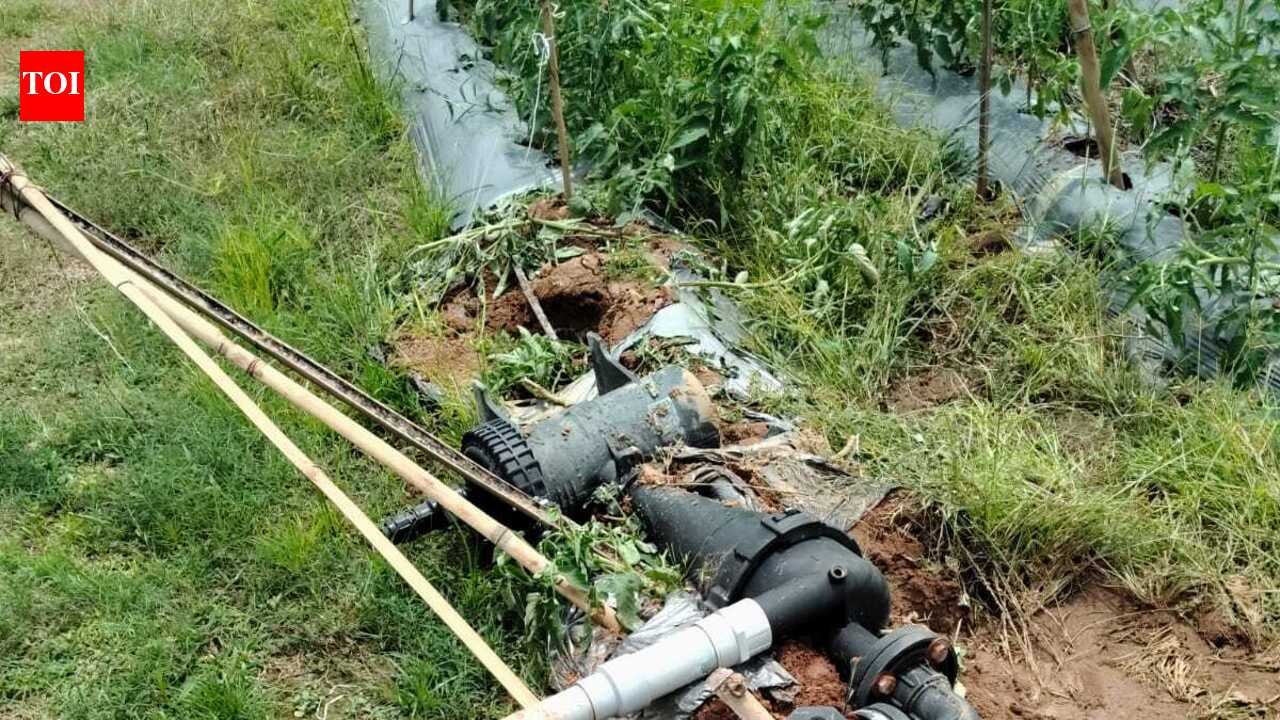
Hazaribag: For friends Anil Kumar Mahto and Arun Kumar Mahto, both in their 30s, farming was more than a livelihood. It was a last shot at financial independence after years of unsuccessful job hunting despite being educated. That dream was shattered four days ago when a herd of 24 elephants destroyed their 10-acre leased farm at Banshi village under the Tatijharia block, leaving them burdened with debt and without a harvest.Residents of Tatgawan village, the duo had leased 10 acres of land and invested borrowed money in cultivating tomato and cucumber crops. They hoped a successful harvest would help them repay loans and build a sustainable source of income.“The plans collapsed after the elephant herd entered the farm and flattened crops. Months of labour and investment were wiped out within hours,” said Anil.The elephants also damaged farm infrastructure. Borewell and irrigation pipelines were uprooted and water tanks, fertilisers, pesticides and other agricultural inputs destroyed. “We borrowed money and worked day and night to raise the crop. Today, neither the crop stands nor do we have any means to repay the debt,” rued Arun.Their ordeal reflects a larger human-elephant conflict unfolding in Tatijharia. A herd of 24 elephants has been roaming in the area for around two weeks, damaging crops, boundary walls, and houses across Khaira, Mahuatand, Bada Dharbhanga, Godhiya, Kesra, and Dudhmatia villages.Forest department teams have launched operations to monitor and drive the elephants away from human settlements. A forest department team led by forester Vidya Bhushan is tracking the herd. “All efforts are being made to guide the elephants back to the forest area,” Bhushan said. An awareness vehicle and a special elephant-driving squad have been deployed in the affected areas.The affected farmers have demanded an immediate on-the-spot assessment of losses and adequate compensation for damaged crops, irrigation infrastructure and agricultural equipment.


