


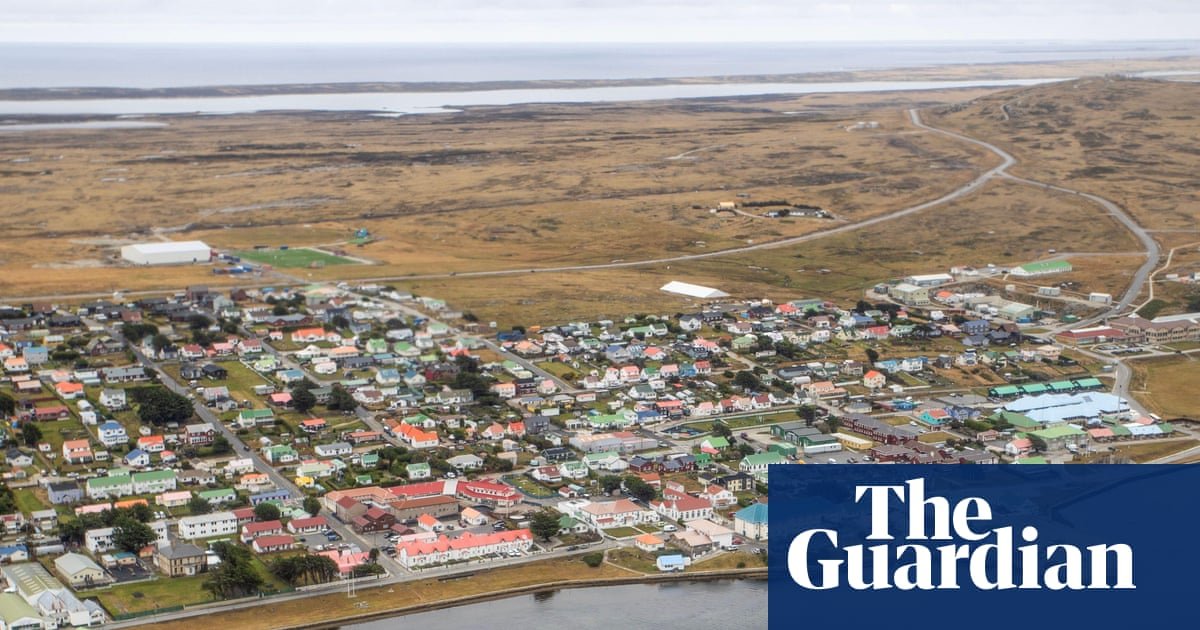
Javier Milei’s threats to the Falkland Islands make it even more important that Andy Burnham increase defence spending immediately, according to the Labour chair of the defence committee.
Tan Dhesi said the comments by the Argentinian president this week show why the government should raise military spending to 3% of GDP by 2030. But he said Burnham’s plans remain mired in confusion after the prime minister appeared to reassure him that the 2030 target would be hit, only for Downing Street to later retreat.
“It’s important the prime minister and the chancellor don’t defer those decisions to next year,” Dhesi told the Guardian. “We’ve seen Germany publicly expose Russia for the drone incident [in Leipzig]. Now we’ve got a threat from Argentina saying they are looking to take over the Falklands. We owe it to the Falklands – they say it’s their right to self-determination. It’s important that we also defend them from this threat.”
Dhesi was speaking after a turbulent week in geopolitics and defence policy. The Labour MP appeared to have secured a promise by the prime minister on Wednesday that the UK would spend 3% of its economic output on defence by 2030, at an estimated additional cost of £10bn a year.
During Burnham’s first prime minister’s questions since taking office in July, Dhesi asked him whether he backed the 2030 commitment, warning “vibes alone just isn’t going to be enough”.
He was speaking soon after the chancellor, John Healey, declined to sign up to the 2030 target, even though he resigned from Keir Starmer’s government over the issue. Burnham replied that he had “made that commitment”, only for No 10 to say the prime minister was not making a firm commitment.
The government instead has signed up to a longer-term Nato target of spending 3.5% on defence by 2035.
“There was no clarity [on the government’s defence policy], that’s why I asked the question,” Dhesi said. “There was a clarification post-PMQs that there isn’t an agreement to reach 3% by 2030. I wasn’t aware of [any] clarity [on this question], and that’s what was reconfirmed afterwards. We’re still in a similar situation. My question is valid and important for the country.”
Later in the week, Donald Trump appeared to call American support for Britain’s sovereignty over the Falklands into question. The US has traditionally remained neutral on the islands’ ownership, while accepting Britain’s de facto control, but the president suggested this could be changed in retaliation for the UK’s lack of support for his war in Iran.
“Don’t forget, you get a big percentage of your oil from the strait of Hormuz, and you weren’t there to help me,” he told GB News. “Your country was not there to help me.”
after newsletter promotion
His comments about the islands have emboldened Milei, who said on Thursday night “winds of change” favourable to his country’s claim to the islands were “blowing around the world”.
He added: “The US is considering this change of position because it knows that Argentina has a reliable partner, aligned with western values, in a strategically important position that can be a valuable ally in the decades to come.”
He also said companies developing oil “behind the back of the Argentine government” would be barred from doing business in Argentina.
Ministers in the UK condemned Milei’s comments on Friday, saying the Falklands would remain British for as long as the people who live there wanted them to.
