



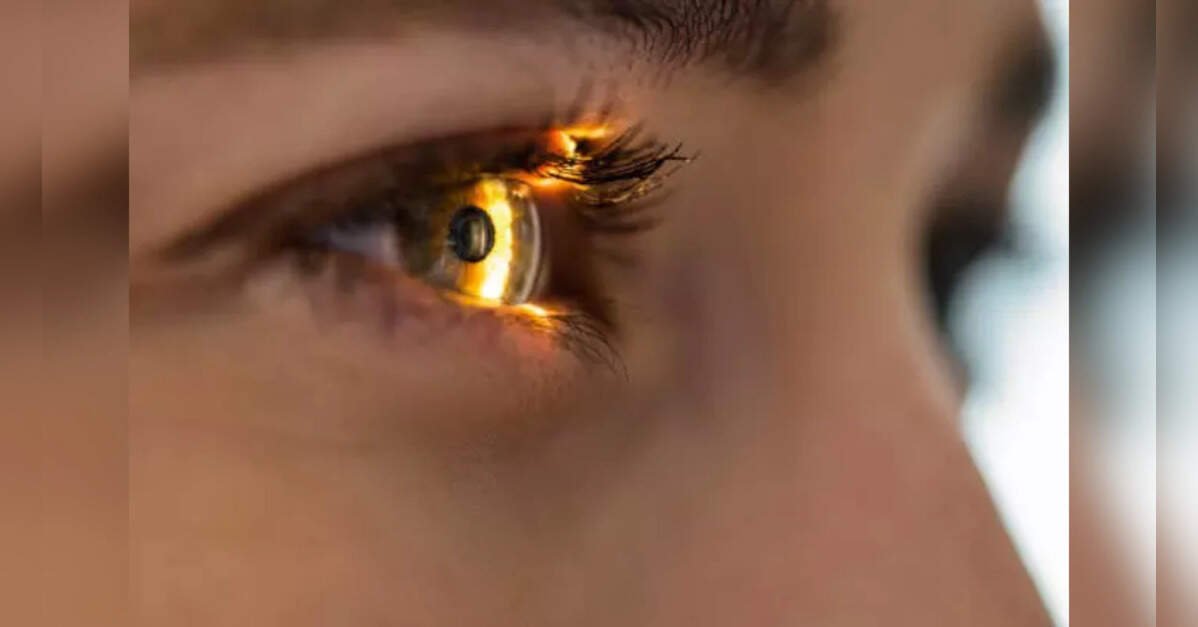
New Delhi: From weddings, concerts to nightclub dance floors, laser lights have become almost impossible to escape. What was once a novelty is now a default element of celebration, expected and even essential. But as these beams turn increasingly inevitable, eye specialists are beginning to flag a less visible consequence, one that may outlast the moment and in some cases leave a lasting imprint on vision itself.
While precise data remains limited, ophthalmologists say the number of reported laser induced retinal injuries is rising globally, a trend increasingly visible in India as well.
According to Dr. Mahipal Singh Sachdev, Chairman and Medical Director, Centre for Sight Group of Eye Hospitals, the true burden may be higher than reported. “There is no centralised data collection system, and many cases are either missed or misdiagnosed. However, tertiary eye hospitals have seen a clear increase in such injuries over the past decade,” he says, attributing this rise to the growing and often unregulated use of high powered lasers at public events.
A similar pattern is being observed clinically by Dr. Daraius Shroff, Medical Director, Shroff Eye Centre, highlight that younger individuals are particularly vulnerable.
“The exact incidence is not known, but reported injuries have increased significantly worldwide. Children are especially at risk, as laser pointers are widely available and often treated as toys. In some cases, children even engage in dares like staring directly into the beam, which can result in serious and sometimes permanent vision loss,” says Dr. Shroff.
He adds that doctors are increasingly seeing cases of retinal bleeding following exposure at nightclubs and weddings, settings that are typically frequented by younger audiences.
Laser exposure thresholds are far lower than most people assume. Dr. Shroff explains that any exposure above 5 milliwatts is hazardous, and even lower powered lasers in the range of 1 to 5 milliwatts can be harmful if viewed directly. He cautions that lasers used in concerts are often extremely powerful and should never be looked at directly, even through cameras or binoculars, which can amplify the damage.
Building on this, Dr. Minal Sharma, retina specialist, Dr Shroff’s Eye Centre points out that safety guidelines for laser use at public gatherings are frequently ignored. She explains that ideally, lasers should not exceed 1.5 watts, should be positioned at least 2.5 meters above the floor, and must remain in continuous motion to avoid prolonged exposure.
In practice, however, these norms are not consistently followed. She adds that while all lasers are dangerous when directly viewed, different wavelengths can affect different layers of the retina. Blue lasers are more likely to damage the superficial retina, leading to conditions such as macular holes or bleeding, while green lasers can penetrate deeper and damage inner retinal cells.
Dr. Sachdev adds that green lasers, which align with peak visual sensitivity, can increase retinal exposure, while blue lasers, with their higher energy, are capable of penetrating retinal tissue. Together, these factors make certain wavelengths particularly concerning in real world exposure scenarios.
Laser exposure primarily affects the macula, the central part of the retina responsible for sharp vision. Dr. Shroff explains that damage can appear as bleeding over the macula or even a macular hole. Mild cases may resolve without surgical intervention, but more severe injuries often require treatment and can lead to long term visual impairment.
Dr. Sachdev notes that while many patients do experience partial or full recovery over time, particularly in milder cases, a significant proportion, estimated at around 20 to 30 percent, may sustain permanent retinal damage, especially following direct or prolonged exposure to high powered lasers.
To assess the extent of injury, clinicians rely on imaging tools such as Optical Coherence Tomography (OCT). Dr. Sharma explains that OCT allows doctors to visualise cross sections of the retina, helping determine the depth of injury and the presence of bleeding. These findings, along with clinical examination, play a critical role in guiding treatment and predicting outcomes. In more severe cases, structural damage to the photoreceptor layer or macular holes may be observed, often correlating with poorer visual recovery.
When it comes to treatment, early intervention can make a meaningful difference. Dr. Shroff emphasises that prompt diagnosis and timely care improve the chances of visual recovery, although observation with close monitoring remains appropriate in select cases. Dr. Sachdev adds that while clinical evidence is still evolving, early anti inflammatory treatment in some cases may help improve outcomes.
A major challenge, experts agree, is that these injuries are often underreported. Limited awareness, delayed medical consultation, and the absence of structured data collection systems mean that the true scale of the problem may be significantly underestimated.
Explaining the underlying vulnerability, Dr Sharma notes that the retina is a delicate structure without a protective outer layer, unlike the skin. Additionally, the eye’s optical system, particularly the cornea and lens, focuses and concentrates incoming light onto the retina. By the time a laser beam reaches the retina, its intensity can increase many thousand fold, making even relatively low power lasers potentially dangerous.
Despite international safety standards laid out by organisations such as the International Electrotechnical Commission (IEC), enforcement remains inconsistent. Dr. Sachdev points to a clear disconnect between existing guidelines and real world usage, calling for stronger enforcement, better public awareness, and updated regulations, particularly for high powered lasers used in entertainment settings.
As laser lights become an inseparable part of modern celebrations, experts stress that awareness and caution are essential. While the spectacle may last only seconds, the damage, if it occurs, can last much longer.


