



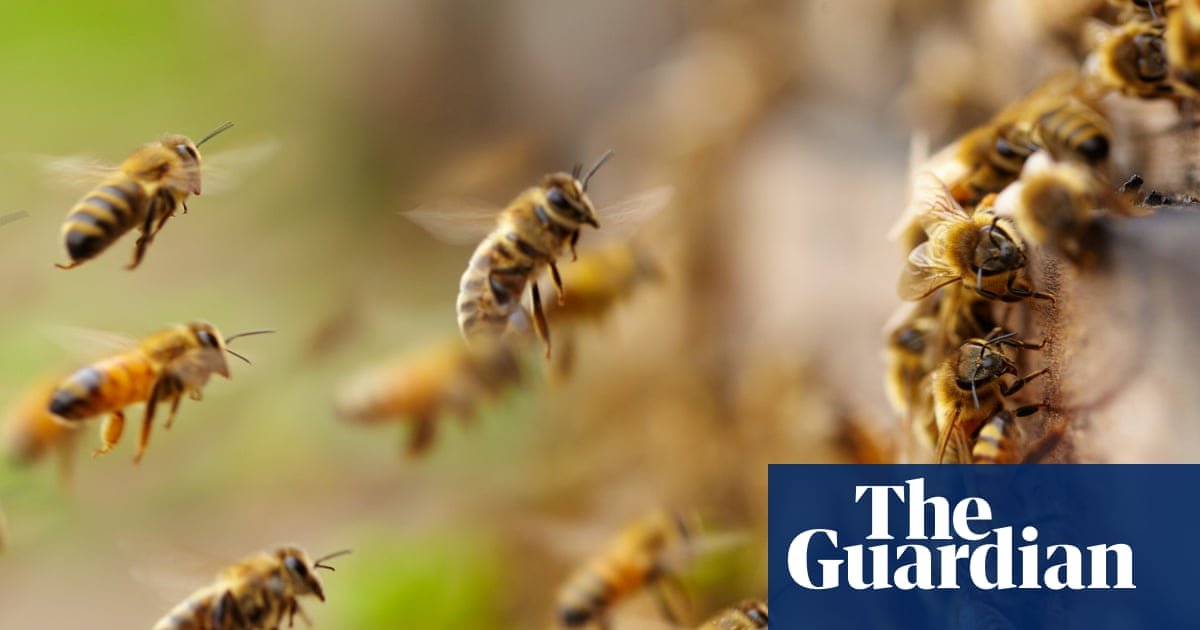
After a series of record-breaking US heatwaves, the 2026 bee swarm season in North America has started 17 days earlier than last year, pushing beekeepers to adapt to a rapidly shifting season while raising new questions about how honeybees are responding to the climate crisis.
According to a new report published by Swarmed, a tracking network of more than 10,000 beekeepers, focused on safe and ethical honeybee relocation, this year’s unusually early swarm season follows several years of record colony declines worldwide.
Bee swarming is a natural reproductive process that typically occurs in spring in response to overcrowding and limited space within the hive. During swarming, a colony splits into two or more groups as the original queen leaves with approximately half of the worker bees to establish a new hive, while the remaining bees stay behind to rear a new queen.
Honeybee overcrowding has already become a problem for wild bees. Because honeybee populations are artificially elevated, they often outcompete wild bees for nectar and pollen, especially in environments where resources are limited. This places additional pressure on wild bee species, which are already experiencing far steeper population declines.
The early start to this year’s swarm season follows the largest honeybee die-off in recorded US history, when beekeepers reported losing more than 60% of their colonies last year. Such an impact has hit the US agriculture sector particularly hard, as it relies heavily on bees for crop pollination, which contributes roughly $15m in added crop value.
Recent research has pointed to the parasitic varroa mite, which appears to be increasingly resistant to the chemicals used to control it, allowing the pest to spread viruses by attaching itself to worker bees.
Mateo Kaiser, Swarmed’s managing director, said: “We saw a very warm winter in the west this year and … this is having an impact on bees. They are waking up earlier and in many parts of California, they are building up their populations already in January, December, and that is leading to swarms way earlier than normally.”
Kaiser pointed to the growing threat posed by the varroa mite, alongside the role the climate crisis may be playing in shifting bees’ reproductive cycles – changes that are increasingly forcing beekeepers to rethink how they manage colonies through the year.
Explaining how the mites weaken hives, Kaiser said: “As the baby matures, the varroa mite is eating the fat body of the bee and so a weaker bee is born and the colony overall is weaker and more susceptible to disease.”
He noted that bees traditionally stop laying eggs during winter, creating a natural pause that helps suppress mite populations by limiting places for them to reproduce. But warmer and shorter winters may be disrupting that cycle, with some colonies now breeding year-round and swarming earlier than usual – conditions that could also accelerate varroa mite reproduction.
“If we are seeing all of a sudden … [that] the bees are laying eggs all year round because the climate is warming, and they are swarming earlier because of it, then this may also point to varroa mites reproducing at unprecedented rates … It will be interesting to look at how this early season connects to this year’s winter losses,” he said.
Echoing Kaiser, Noah Wilson-Rich, a behavioral ecologist and founder of the bee health non-profit the Urban Bee Lab, said: “In terms of the environment, in terms of the blooms, the timing is what is shifting with climate change.”
Drawing on Swarmed’s data, particularly from regions experiencing hotter winters and lower precipitation, Wilson-Rich said earlier springs were allowing flowers to bloom sooner, pushing beehives to mature and reproduce earlier as well.
“They are hitting their fertility point much sooner in a way that matches those other floral patterns of timings that we’re seeing and expecting,” he said.
Those shifting environmental timelines are expected to drive beekeepers to rethink long-established management practices, from when they inspect colonies to how they prepare for swarms and changing bloom cycles. Experts say adjustment is especially critical as managed bee populations directly support broader ecosystems and agriculture.
For Wilson-Rich, the consequences extend far beyond honey production or hive management, as he points to the vital role bees play in maintaining the environment itself.
“Because bees, as pollinators, promote plants that take in about half of the atmospheric carbon that humans release from our day-to-day activity and turn it into oxygen, we can think about an atmosphere with more bee declines that will be altered to have even more carbon and less oxygen to breathe,” he said.


