



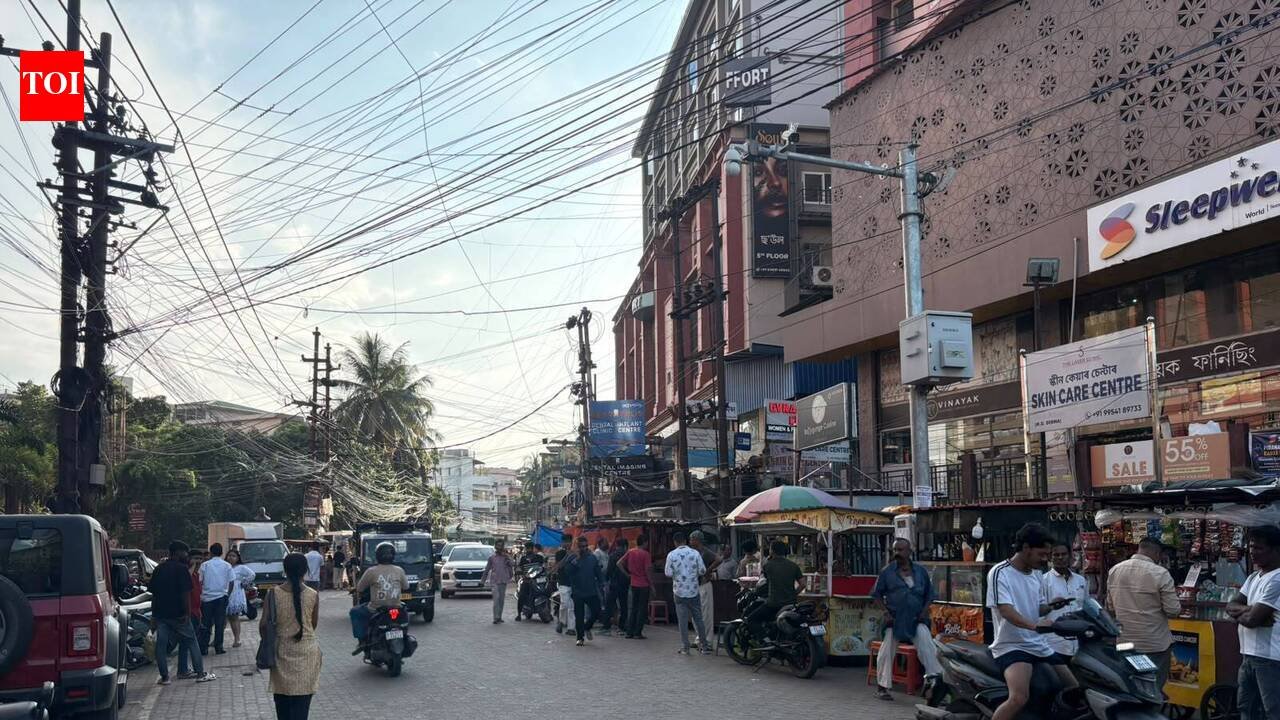
Guwahati: Over the past few months, Guwahati Municipal Corporation’s (GMC) eviction drives have become increasingly frequent. However, the drives have had little lasting impact, as fresh encroachments often appear soon after an area is cleared. In the absence of a permanent solution, the civic body remains caught in a cycle of eviction and re-encroachment.Recent drives have been conducted in several areas, including Bhangagarh, Ulubari and Sijubari. Officials said the drives were undertaken in response to complaints from local residents. However, a recent visit to some of the cleared sites showed that unauthorised vendors had returned. The civic body acknowledged that lapses had allowed the cycle to continue.“Even though eviction drives are being carried out, we have not yet been able to declare certain areas as no-vending zones. As a result, we confiscate vendors’ carts, but once one vendor leaves, another comes in and resumes business. Continuous eviction is not a solution, as they are people too. Until we are able to establish appropriate vending zones, however, we have no option but to continue with these drives,” a GMC official, speaking on condition of anonymity, said.The official also said the shortage of manpower to monitor unauthorised vending was another challenge, with the civic body often requiring police assistance during eviction drives.A recent Supreme Court judgment has underscored the duty of municipal corporations and other local authorities to demarcate, construct, maintain and safeguard footpaths and other pedestrian infrastructure where roads exist.Meanwhile, street vendors’ associations said vendors often returned to evicted locations because these were established, high-traffic areas where they could earn a steady daily income.“These people are earning their bread, and evicting them without the authorities conducting a proper survey is wrong,” said Devajit Senapati, general secretary of the All Assam Street Vendors Association.He also questioned the reliability of earlier surveys on the basis of which Town Vending Committee (TVC) identified 81 vending zones.“Although a few areas have been designated as vending zones, the question is whether these locations attract the same number of customers and provide vendors with the footfall necessary to sustain their incomes. The current number of vendors is also unclear, as we have heard that another round of surveys may be conducted. If that is the case, why not involve street vendors’ associations in the survey process?” he asked.


