


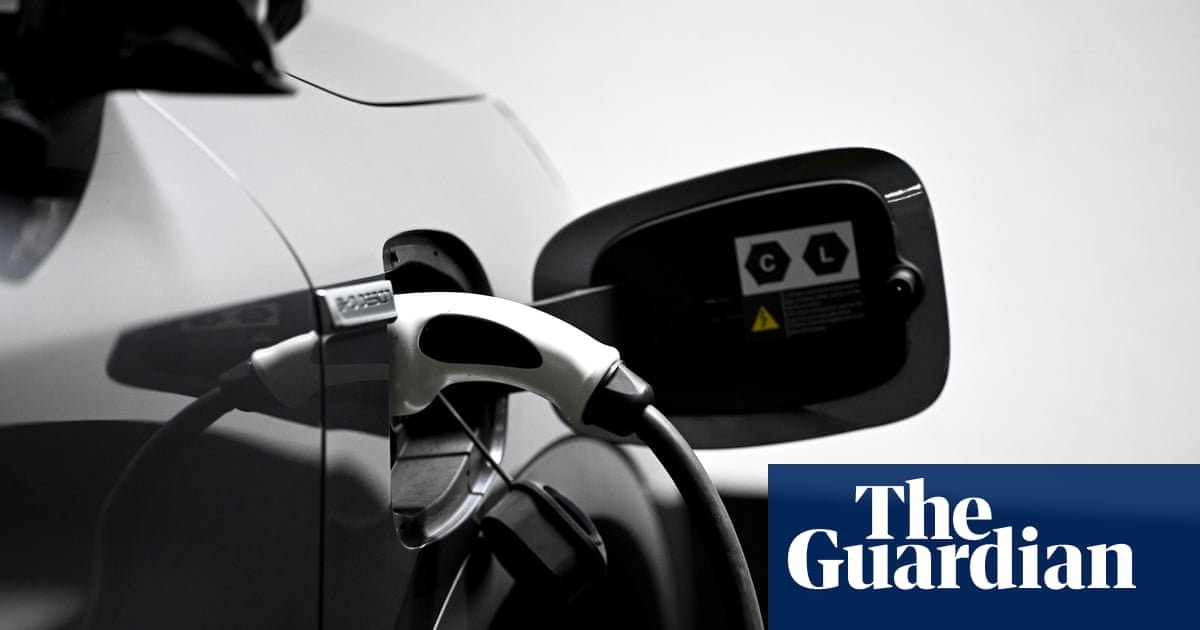
Electric vehicle sales in Australia exceeded petrol cars for the first time last month as a transformation driven by high fuel prices and government policy encouraging clean car uptake accelerated.
More than 27,000 EVs were sold in August, a new record for a single month and representing 24.9% of new cars sold. The climate-friendly technology surpassed both petrol vehicles (nearly 26,000 sold) and diesel cars (23,600).
If plug-in hybrids were added, the proportion of new cars with a plug jumped to 36% of sales.
The rise in EVs has been helped by two factors – the war in Iran pushing up oil prices and making running a petrol car significantly more expensive, and the introduction last year of a federal vehicle emissions standard that required auto companies to cut average tailpipe emissions year-on-year. The latter has triggered a big increase in the number of models of low and zero-emission cars available at a range of prices.
Australia had previously trailed most OECD countries in EV take-up, and the technology has been the focus of political scare campaigns, including former prime minister Scott Morrison claiming in 2019 that introducing a vehicle emissions standard would “end the weekend”. They made up less than 2% of sales just four years ago and about 8% last year.
The climate change and energy minister, Chris Bowen, said EV sales surpassing petrol cars was a “landmark moment”.
“Australians have seen through the scare campaigns and are voting with their wallets for cars that are cheaper to run, cleaner and reduce their exposure to international petrol price shocks,” he said.
Toyota was Australians’ most popular car brand in August, followed by Chinese EV manufacturer BYD and trillionaire Elon Musk’s Tesla. Five of the top 10 brands were Chinese: BYD, GWM, MG, Geely and Cheery. The Tesla Model Y was the most popular new model, with more than 6,400 sold.
The Electric Vehicle Council said there had been a “structural shift in the way Australians choose their cars”, with both economic and environmental benefits driving the change.
after newsletter promotion
The council’s chief executive, Julie Delvecchio, said there were now nearly 200 EV models on offer. “The priority now is to make the benefits of going electric accessible to more Australians, including people in regional communities, apartment residents and the 30% of Australians who rent their home,” she said.
The Federal Chamber of Automotive Industries CEO, Tony Weber, said consumer choice and competition were rapidly reshaping the new-vehicle market and infrastructure settings needed to keep pace.
“Accessible and dependable charging will remain critical to consumer confidence, particularly on highways, in rural and regional areas and for motorists without access to charging at home,” he said.
