






Hyderabad: Deeptech startup EON Space Labs has secured an Indian patent for its indigenously developed miniaturised space telescope-based imaging system — MIRA — that is all set to fly aboard TakeMe2Space’s MOI-1A, billed as India’s first orbital computing satellite.The patent has been granted by Indian Patent Office for the Hyderabad-based company’s invention titled ‘A Miniaturized Telescope-Based Imaging System’. MIRA and MOI-1A are hitching a ride on SpaceX’s Transporter-18 mission scheduled for Oct 1, 2026.
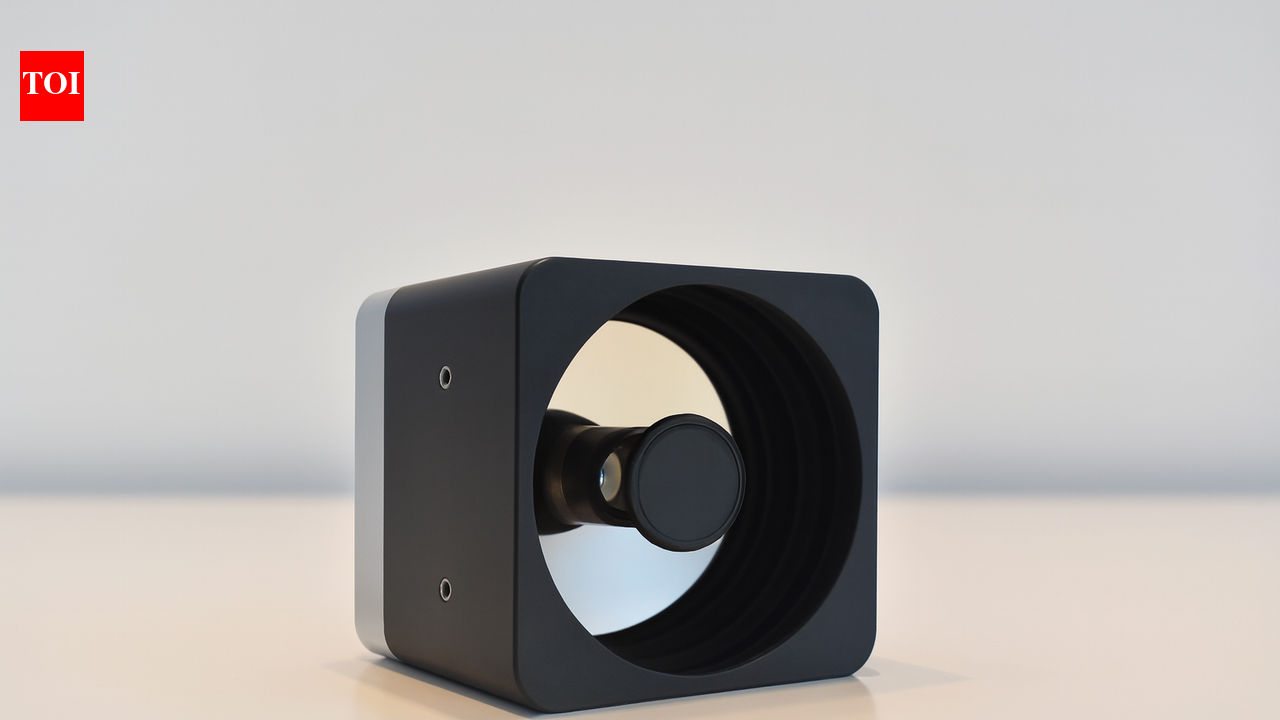
The miniaturised space telescope-based imaging system — MIRA — developed by Hyderabad-based EON Space Labs that is set to fly onboard SpaceX’s Transporter 18 mission on Oct 1, 2026. MIRA is integrated with another Hyderabad-based startup TakeMe2Space’s MOI-1A satellite, which is billed as India’s first orbital computing satellite.
MIRA is an advanced yet compact imaging system that weighs 502 gm and is carved from a single block of fused silica. The system offers enhanced stability, reduced vibration sensitivity, and high-quality imaging that can help satellite operators provide commercial services for agriculture, marine monitoring, mining, supply-chain management and insurance, EON Space Labs said on Monday.MIRA is certified space grade as per NASA standards and can deliver high-definition multispectral Earth observation imagery in an ultra-compact package, it added.The payload’s integration with a low-Earth-orbit computing satellite highlights growing ‘Make in India’ capabilities and potential export opportunities in space, defence and surveillance markets, EON Space Labs said.Under the defence ministry’s Innovations for Defence Excellence (iDEX) framework, the company is already using its patented technology to develop ultra-long-range electro-optical systems for Indian Army and Navy.Sanjay Kumar, co-founder of EON Space Labs, termed the patent a critical milestone in the company’s journey to reduce import dependence on optical imaging technologies and build compact, high-performance systems for commercial and defence Earth observation requirements across space, aerial and ground domains.Punit Badeka, co-founder, EON Space Labs, said the company’s long-term strategy is designed to support technology sovereignty and exports to friendly nations while advancing indigenous mission-ready optical solutions globally.This is MIRA’s second attempt at orbital flight after the first attempt in January 2026 aboard ISRO’s PSLV-C62 mission failed. Although an upper-stage anomaly prevented payload deployment, the company said the mission validated the system’s mechanical integration, spaceflight packaging and hardware readiness.EON Space Labs said it is also preparing another orbital deployment aboard ISRO’s Small Satellite Launch Vehicle, a mission that is planned later this year.Apart from MIRA, the company is also developing a handheld multisight system, engineered with custom multi-layer optical coatings and specialised materials that bypass the need for germanium, for long-range defence surveillance.


